
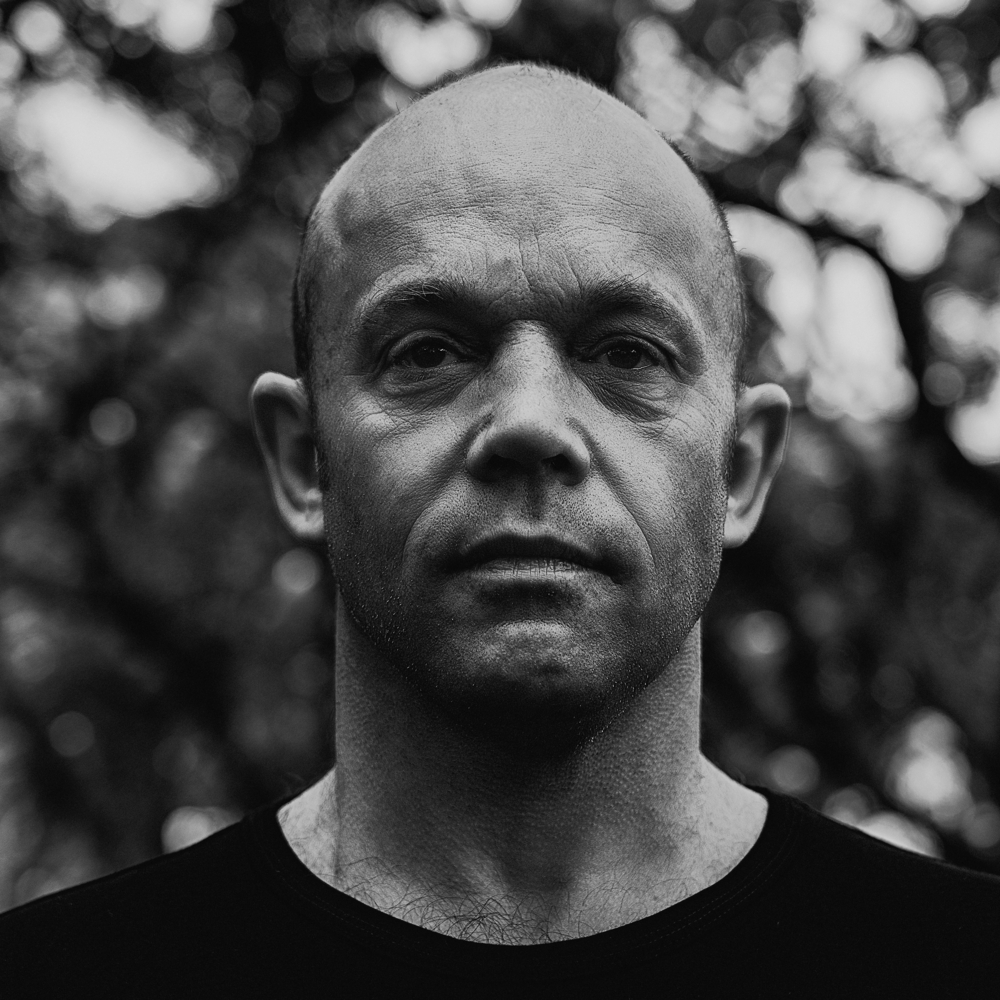
Hamish Cameron has made an album: Strange Love.
On the surface, that sounds simple: thirteen songs gathered into a single release. But these songs weren’t written in one burst or one era. Some have been with him for more than twenty years; others arrived only recently. Together they form something closer to a long-exposure photograph – a life in music slowly gathered and finally put in one place.
I’ve known Hamish for a while and we’ve played music together, so this wasn’t an interview with a stranger. But that was partly the point; wanting to understand how these songs ended up side by side, the musicians and relationships around them, and what it means to reach this stage of life with a body of work that has taken decades to surface.
One of the things I like about Hamish is how grounded he is – a chippy by trade, makes things with his hands – and that practicality carries through into how he talks about music. There’s no romanticising the creative life. He knows what it is to work full-time, raise a family, fit music around everything else, and eventually have your body tell you that building might be becoming a younger person’s game. He talks about all of it matter-of-factly the same way he talks about music.
The album wasn’t planned. “It started out as a song and then it was another song and then it was another one,” he says. After thirteen songs and several years, he looked up and realised: Oh hang on… I’ve made a thing. It feels very Hamish. No grand strategy, no declaration that he was making an album. Just working on the thing in front of him until, eventually, there’s enough of it to step back and look at.
He talks about writing as going to whatever is sitting on top emotionally – exploring it, working out why he’s feeling it, and turning it into a song, “a touchstone to remember where you’ve been.” These aren’t songs making a point about his life so much as markers along the road. Family threads run through the record, and Hamish reflects on how we’re shaped by what comes before us, the people, families and experiences that settle into us. I sense the builder in him here too: stripping back to the framing, asking what we’re made of and what’s been layered over time.

It’s much like songwriting, he says. Taking a 20,000-word story and finding the three-and-a-half-minute version. Knowing what matters, what doesn’t, and which detail carries the weight of everything else. There’s something builder-like about that too: having the right materials, then knowing what to do with them. I’m picking that’s why the people around the music matter so much to him.
When I ask about Sam Johnson, who engineered, co-produced, and collaborated on the album, Hamish talks about the ease of their relationship – shared interests, shared instincts, even shared geography in odd ways. There’s an intuitive understanding between them. Then there are musicians like Rob Ju (drums) and Tobias Wright (bass), relationships that stretch back years. Hamish realises, as we’re talking, that Toby may be the only other bass player who has played on his original music throughout his whole musical life.
This leads us to record shops – one of my favourite parts of the conversation. Hamish remembers the shops he used to visit in Whangārei – Tracks and Tapes and Musicor – the people behind the counters like Dave Ryan, the music nerds who knew their stuff, the conversations and recommendations. Picking up a CD or record, turning it over, reading the liner notes to see who played on it. Sometimes buying something because he liked the artwork, or because Pino Palladino played on it. And then he says something that gets right to the heart of how he relates to music: “I’ve always been interested in what’s behind the music. I’ve never just been interested in the noise.”
That might be the key to Hamish. He wants to know what’s underneath things – who played the drums, who wrote the song, what the lyrics mean, what brought the musicians into the room together. He and his friend Paul Atkins have apparently been doing this since high school: listening to records and wondering who was playing what, what was going on underneath, what the deeper meaning might be. That curiosity is present in his own album too. There’s a lot of life behind these songs – friendships, musical relationships, years of playing and listening, working, raising a family, earning a living, growing older.
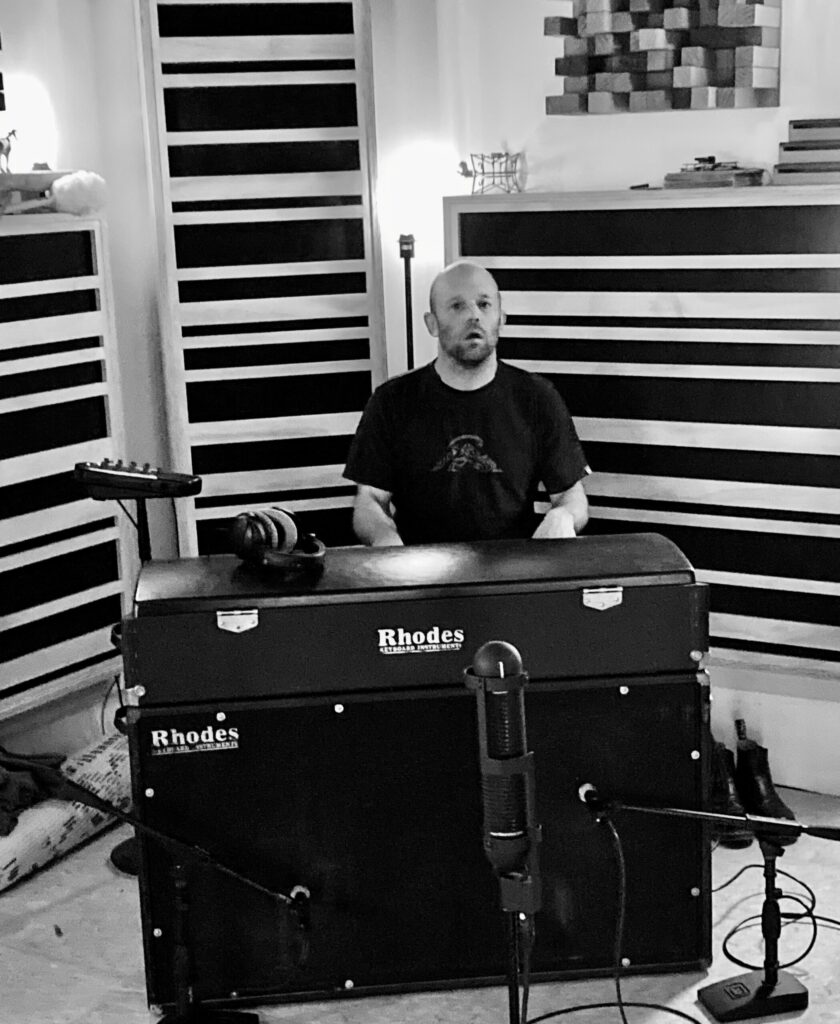
Even the way he talks about great musicians tells you something. He mentions Rob’s natural ability, but quickly pulls back from the idea of “natural talent” because it can make you forget the hours of work behind it. And then he comes back to listening. You can be a great player, he says, but if you’re not a great listener… He doesn’t finish the sentence, doesn’t need to. Listening seems central to Hamish’s musical life – listening to other musicians, to records, to the people around him, to whatever’s happening inside himself. And then doing the work.
Hamish isn’t particularly interested in the idea of being an “artist” as an identity. He’s a person who makes things. He builds houses. He builds songs. He builds relationships with musicians. He builds a body of work over time. Perhaps only now is he stepping back far enough to see what he has built. Twenty-two-year-old songs sit beside recent ones. Long friendships beside newer collaborations. The practical world and the creative world, which have always existed alongside each other, finally meet in the same place.
What I hear in the album is what I recognise in Hamish: grounded, curious, thoughtful, funny, practical, and genuinely interested in people. There’s an affection for craft and for the people who know theirs.
Maybe that’s what I like most about this record. It doesn’t feel like someone trying to prove something. It feels like someone who has been making things all his life, finally standing back and saying:
Oh. Look. I’ve made a thing.
There are thirteen songs here. But there is a lot of life sitting behind them. So take a listen. And maybe listen again.
There’s plenty behind the noise.
Tickets & Info: available by email.

Related Acts:
About the interviewer Juliet McLean

Juliet McLean is a Taranaki-based songwriter, performer and music reviewer with a passion for Aotearoa’s diverse and evolving music scene. Drawing on her own experience as a musician, she brings a thoughtful, honest and artist-centred lens to her reviews.
More by Juliet McLean
EP Review: Through The Page
MNZ Interview: Delaney Davidson

Gig Review: Little Gay In @ Asgard, New Plymouth – 16/04/2026

Album Review: Everything Is Alright
Gig Review: Ladi6 @ Butlers Reef, Ōakura – 07/02/2026

MNZ Interview: Ladi6

Gig Review: Festival of Lights @ Pukekura Park, New Plymouth – 9/01/2026
Gig Review: Trip Change & Lost Tribe Aotearoa @ Festival of Lights, Pukekura Park, New Plymouth – 8/01/2026

Gig Review: Ny Oh @ Festival of Lights, Pukekura Park, New Plymouth – 4/01/2026