Mossi Releases ‘Taonga Ki Te Ngakau’ – A Journey Home into Te Reo Māori
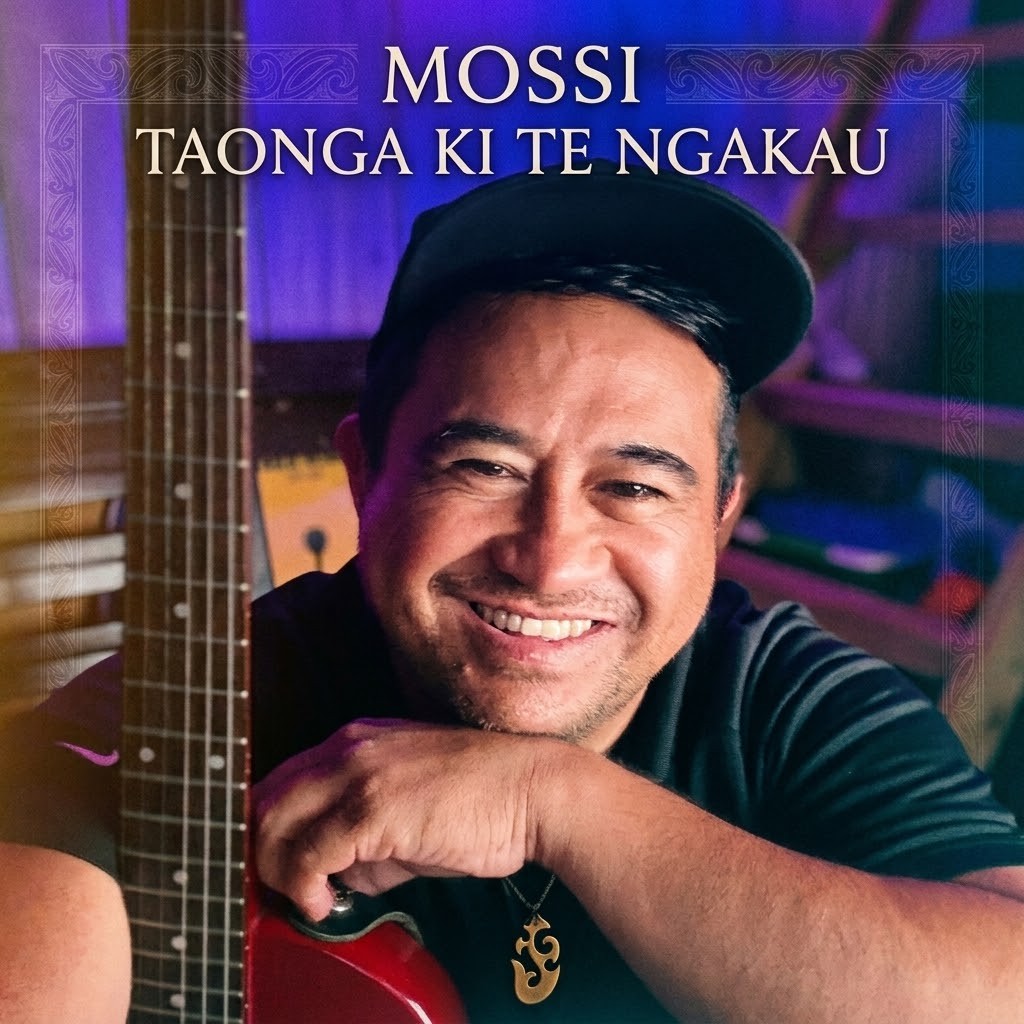
Did you know that the voice of Brobee – the beloved green character from the global phenomenon Yo Gabba Gabba! and Apple TV+’s Yo Gabba GabbaLand! – belongs to a Māori artist living right here in Aotearoa?
Amos Tutanekai Watene (performing under the artist name Mossi) is of Māori descent (Ngāti Kahungunu) and is currently living in Tāmaki Makaurau. Despite being raised in America, Watene made the life-changing decision to relocate to New Zealand, embarking on an intentional journey to discover and reclaim his ancestral heritage, connect with his whānau, and learn the language of his forefathers.
That journey of discovery, heartache, and resilience has sparked an outpouring of deeply personal music. In June, Mossi released his raw and reflective album, 45yom, chronicling major life changes, relationship transitions, and the everyday realities of navigating life as a single father. Now, he follows that milestone with his latest single, Taonga Ki Te Ngakau – a waiata that turns his personal reconnection with te ao Māori into an open invitation for everyone. By intentionally writing the title Taonga ki te Ngakau without a macron and translating English grammar literally (“Treasure to the heart”) without the foundational “He” or appropriate possessive particles (o / nō), his hope is to express a classic beginner transliteration vibe. It reflects someone feeling the sentiment deeply while still thinking in English sentence structures – where his journey has begun, but not where it ends as he grows in the language of his heart.
Taonga Ki Te Ngakau moves fluidly, describing the language as he rama i te pōuri (a light in the dark) and he here i te iwi (a bond that unites the people). Rather than viewing the language through an exclusive lens, the song reminds listeners: “Ehara i te mea mō te toko iti, mō te katoa tēnei taonga” – this treasure is not for the few; it is for everyone.
“My hope is that this song can tell the story of how I feel about the language, and that it resonates with others in Aotearoa, Māori and non-Māori alike,” Watene says. “It’s an open invitation to learn it, and to make it a language of the heart – that it will be a benefit to anyone who chooses that path.”
Watene’s cultural reclamation extends far beyond the studio. Currently completing his teaching qualifications, he is set to graduate in December, bringing his music, voice-over background, and passion for te reo Māori and tikanga directly into the classroom to inspire the next generation.