
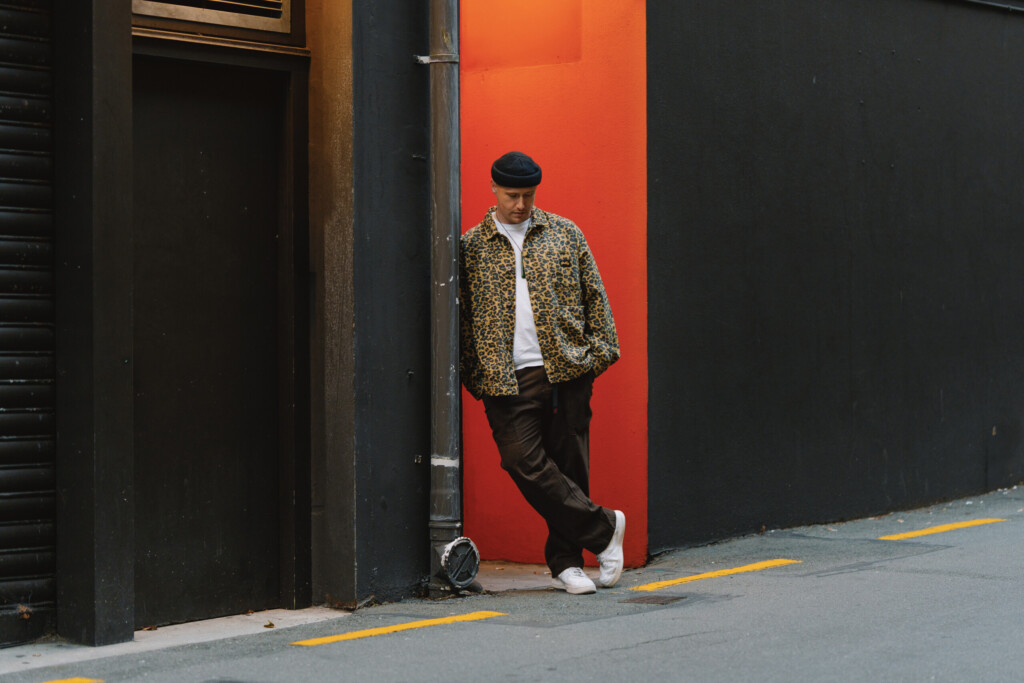
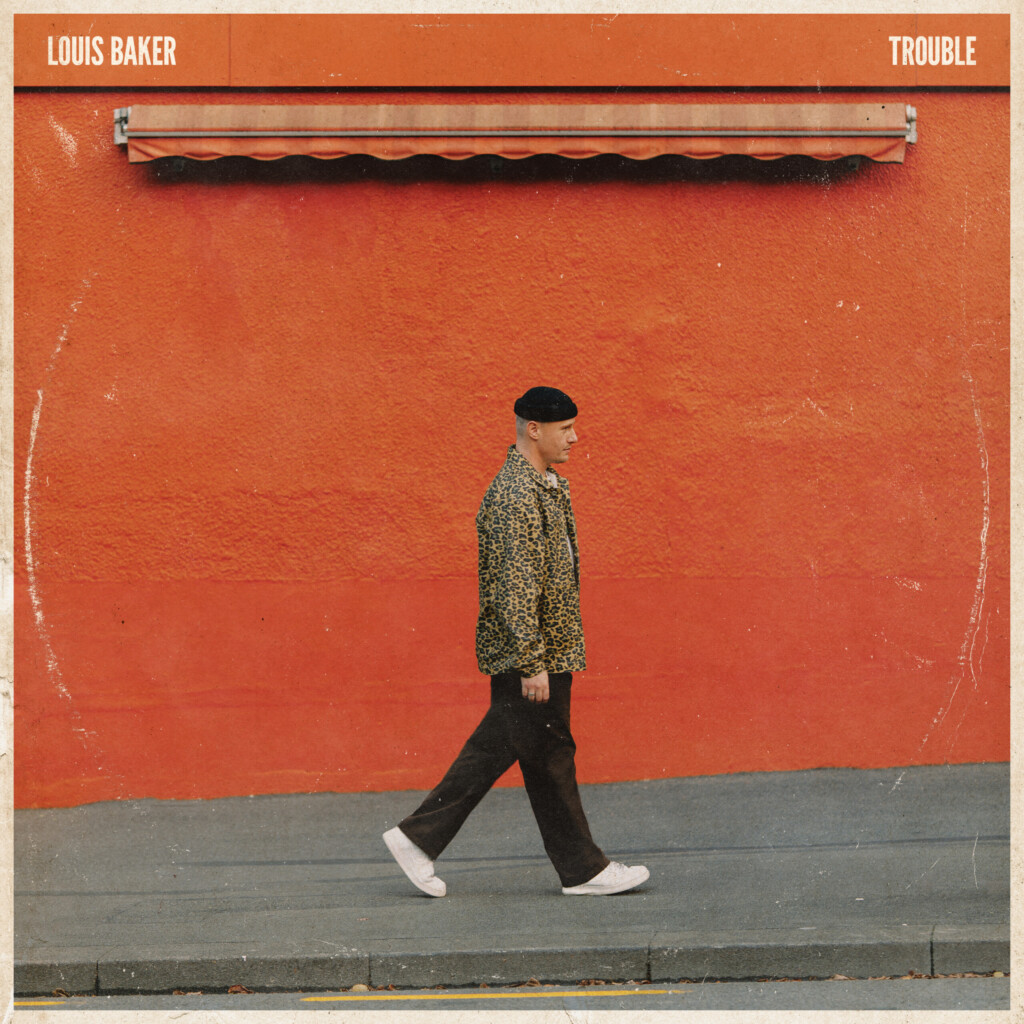
Louis Baker has spent more than a decade carving out his own space in Aotearoa’s contemporary soul scene. With his second studio album, Trouble, he feels more assured in that space than ever. Written, produced and arranged from his Titahi Bay studio across 2024 and 2025, the nine-track album brings together retro-soul influences and contemporary production, with warm analogue textures, expressive guitar, Wurlitzer keys, strings and understated grooves sitting beneath Baker’s rich, resonant vocals. The album draws on a period of personal growth, moving through love, grief, community, resilience and self-reflection. But Trouble also feels like a snapshot of where Baker is now: more confident in his instincts, comfortable working independently, and willing to follow the feeling of a song rather than trying to prove anything. After years of writing, recording, collaborating and touring, there’s a clear sense that he’s learned to trust the process and let the music lead.
Ahead of the release of Trouble and his first headline tour since 2021, Baker talks about the experiences behind the record, the people who helped shape it, finding his confidence as an artist, and where he’s headed next.
Trouble feels like a very assured record, but also like one that came from a particular period of change. What was happening creatively and personally between 2024 and 2025 that shaped the album?
There were a lot of experiences and things that helped shape the record Trouble. I was on tour with Fat Freddy’s for their UK/EU summer tour, then again for the UK/EU Slo Mo album tour in 2024–25. I made some general health and lifestyle decisions that have kept me healthy, and spent a lot of time exploring, writing, recording and producing in my home studio. Over that time, we’ve lost some friends, which has been challenging, but we’ve also had a lot of silver linings that we’re very grateful for. It really does encapsulate two years of life – growing up and seeing the world as a 30-something-year-old.
You wrote, produced and arranged the entire album from your studio in Titahi Bay. Did working so independently change the way you approached the songs, or give you a different sense of ownership over the record?
There are pros and cons to working alone. You have to find a different level of resilience and stamina when you’re doing everything yourself. It all lands on you. That can be great for finding and unlocking the sonics in my mind, but it’s also about finding the energy to keep yourself going – keep the endurance. It’s about the long game and feeling proud of your art at the end. It’s not a race, although I do set myself time restraints at times. Necessity is the mother of invention, and it’s amazing what you can create when you know you’re short on time. There’s also a certain solace I find in the independent, solitary nature of producing and writing a record on your own. There have been many other people who I’m honoured to have grace the record – be it on an instrument, in project management, or design and art direction, they have all contributed to make Trouble what it is today.
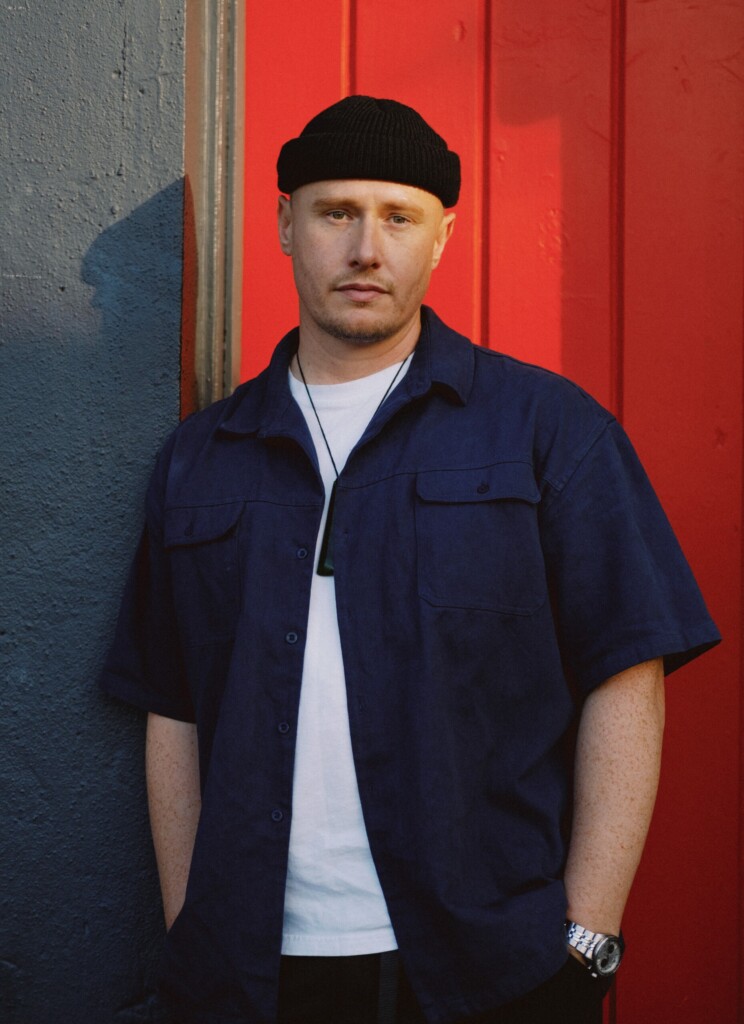
The three singles have each revealed a different side of Trouble. Did you deliberately choose All We Need, Trouble and Mighty Tree to show the breadth of the album, or did that variety only become clear once the record was finished?
It’s true that things do reveal themselves in time. I think you get a gut feeling about a song which then guides you to want to release that one as a single instead of another. Each song speaks to you differently and sums up a different moment in time, or experience. I generally have a good idea of which ones feel like they work as singles and which ones that don’t. You never know what people will like, you just have to follow your instincts. The singles stick out, they say their own thing and you know they’re the right ones because they sound like and say what you want to say. And they give the breadth of the album. Some songs, like Trouble, straight away you know you want to release it and give it its own life; others appear once the album’s finished.
There’s a really strong musical identity across the album, with retro-soul influences, analogue textures, expressive guitar, strings and Wurlitzer alongside more contemporary production. Where did that sound come from for you this time around?
You are what you eat, and music is no different. I’m inspired by a lot of different types of music and love to explore and be open to all types and genres. For this record in particular, for Trouble, I listened to a lot of Marvin Gaye, Gil Scott Heron, Curtis Mayfield, Michael Kiwanuka, Aaron Fraser. I get pretty geeky and fixated on how things sound, from sample selection, to mixing drums, to guitars and bass sounds, harmonic saturation, and how it feels together. How to glue it together to give it the feel and energy that I want on the record. To bring the things I love about the old school, analog vintage vibes to a modern contemporary thing.
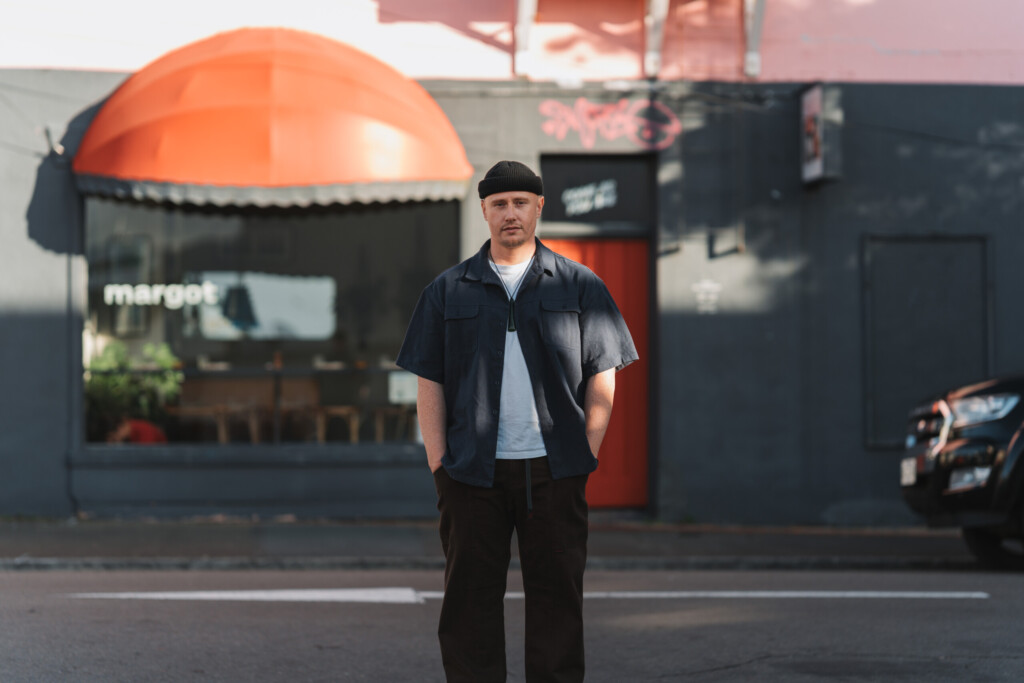
Trouble brings together a really impressive group of musicians from around Aotearoa. You’ve always seemed to thrive through collaboration. What do you think makes a great musical collaboration, and has your approach to working with other musicians changed over the years?
I think all great collaborations start with respect and a mutual shared love of music. Over the years I’ve certainly learnt to speak my mind and be more open in the studio. You get a feel for what works. And I think when I first started out collaborating I was too much of a perfectionist. I’ve learnt to work hard on the craft but keep the mojo alive. You’re always searching for an energy or sound to produce that energy and it feels great when you find it. These things can take time but one thing I love about collaboration is that shared search and connection in the music that you can only have with creating something with other people. You both have your own experiences that help to form this music.
Trouble moves through quite a wide emotional landscape. When you’re building a body of work like this, how conscious are you of creating a sense of movement between the songs rather than simply putting together your strongest individual tracks?
I make a bunch of songs and then we weave the story together because of what I’m wanting to share or say. There are tracks that didn’t make this record but might make the next one or might never see the light of day. So for this record there wasn’t an obvious concept. More a collection of musings, songs that have been created in the last two years that say who I am and how I see the world. Art is an extension of self, and I think Trouble has captured that essence.
Looking back over the last decade, what feels most different about the way you approach your music now compared with when you first started, and how has that found its way into Trouble?
I think I’ve learned to be more confident in myself. I’m talking about a quiet confidence that I feel within myself. Not having to prove anything, just follow the feeling in the music and let that guide you. I think when you first start creating, writing songs and releasing them, there’s a beautiful ignorance, an innocence that you don’t necessarily find again. Everything has its light and dark.
This will be your first headline tour since 2021, with a mix of intimate solo shows and full-band performances. Has the time away from headline touring changed the way you think about the experience you want to create for an audience?
I was on the road a lot with FFD through 2023, 2024, early 2025, opening shows and being a guest on tour with them, which has given me more drive to get back overseas and go again. I’ve learnt a lot over this time and developed better systems as an artist and musician, better lifestyle choices, and a deeper sense of who I am. Knowledge of self. The time away has taught me a lot about audience connection and the types of shows I want to be playing here for this Trouble tour. I’m super excited about getting out on the road again and touring around Aotearoa.
You and Jordan Rakei have a longstanding friendship and musical connection, having worked together on your previous album Open as well. What was it like bringing that connection back into the studio for Never Give You Up (Pt.1), and what did Jordan bring to the song?
It’s always a joy hanging, working and writing with my friend Jordan. We wrote this at the end of a Fat Freddy’s tour in 2023 and had a great day creating together at his home in London. He always blows me away with his enthusiasm and love for music, and of course how talented he is. We have much shared love for artists. I look forward to sharing this one. This is actually a shortened version to a longer full-length version. I’m not sure if we will put it out, we’ll see what happens.
After making a record that feels so connected to where you are right now, what are you looking forward to exploring next? Has Trouble changed your sense of where you want to take your music from here?
There’s a huge connection between yourself and the environment in which you make your art, and home in Titahi Bay has certainly helped to frame that picture. You’re always learning. I’m looking forward to writing and recording a new record after this which I have already made a start on and some ideas are starting to flow so I will see where that takes me.
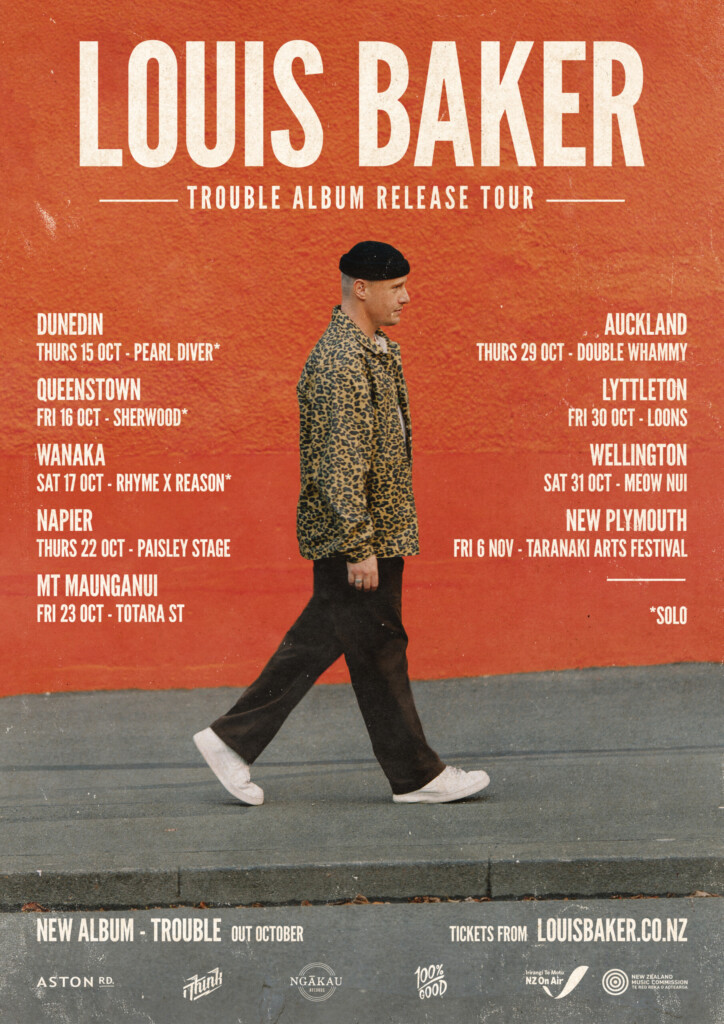
TICKETS & TOUR INFO from LouisBaker.co.nz
Tour presented by 100% GOOD & Aston Rd
Funded through NZ On Air and supported by the NZ Music Commission
Made with the support from NZ on Air
Find Louis Baker here – https://linktr.ee/louisbaker
Follow LOUIS BAKER: Official site | Spotify |Instagram | YouTube | TikTok
Related Acts:
About the interviewer Shannon Coulomb
Shannon Coulomb is a Head of Music and curriculum specialist working at a national level in music education. He is also a member of Auckland-based recording project Impostor Syndrome, exploring analogue-driven sound and psychologically charged songwriting.
More by Shannon Coulomb
MNZ Interview: Bleeders

MNZ Interview: Bottom Bunk Club
MNZ Interview: Cross Section S03 / E10 – Stephanie Brown / Play It Strange

MNZ Interview: Cross Section S03 / E09 – High Dependency Unit

MNZ Interview: Cross Section S03 / E08 – CRY WOLF

MNZ Interview: Cross Section S03 / E07 – Static
MNZ Interview: Cross Section S03 / E06 – Jazmine Mary
MNZ Interview: Cross Section S03 / E05 – Elleana Dumper
MNZ Interview: Cross Section S03 / E04 – Lisa Crawley