
<![CDATA[ ]]>
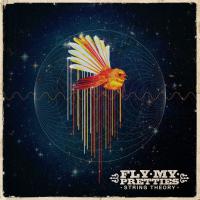
Welcome to the 6th recorded excursion from Barnaby Weir’s occasional collective who have certainly become something of a fixture for New Zealand music since 2004.
Fly My Pretties is an idea that has proved to have real legs, and not one that is showing any signs of losing momentum. A powerful part of this is the regular addition of new faces and perspectives, which when combined with ‘regulars’ gives the whole experience something of an evolutionary feel. String Theory is the thematic link/starting point for the songs this time around, with most of the writers approaching the theory as a way of exploring philosophical and personal ideas about the individual’s place in the universe. It doesn’t get as heavy as it sounds- as Ills Winter’s lyrical response says…”floating in space, thinking…..whaaaaaaat?”- But the darker lyrical approaches tend to be reflected in the more dense arrangements and instrumentations.
The intensity factor is high for most of the work, Tiki Taane perhaps topping the score with This Life, although A Girl Called Mo’s Mud and Stardust is up there as well. That’s not to say the work is without humour, but as mentioned before, certain darkness pervades throughout.
The value in doing this as a live album, and (crucially) live videos, is that the real strength is in the live performances. The focus is on crafting the music into tight, focused and precisely performed arrangements- the execution is where the magic is.
Are the songwriting influences a bit obvious? Yes, at times, frankly. Fans of Talking Heads, St Vincent or Massive Attack might furrow the odd brow. Balanced against that, though are moments like the nifty chromatic jumping in Still by Miloux, which does move away from the expected.
Certainly this is the “next step on the journey”, as it might be said. The concept of Fly My Pretties is held together by the flexibility element and, ironically, the format and time limitations imposed on the contributors. Limitations can force decisions, and it’s the solutions to problems that give the interesting results. Certainly there is great reward in using this album as a starting point to explore the work of the individual contributors.
More by Trevor Faville
Album Review: Catrina, Go
Album Review: Strange Love
Album Review: The Gift

Album Review: This First Day

EP Review: Let Go

Album Review: Wrap Me Up In Winter

Album Review: At Sixes and Sevens

Album Review: pastor al

Album Review: Everybody’s Watching and Nobody Cares

Album Review: Activate!

Album Review: Roads

Album Review: Under The Wharf
