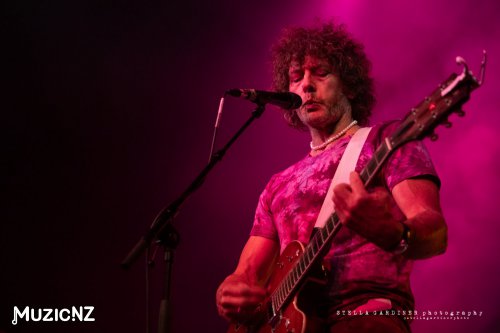
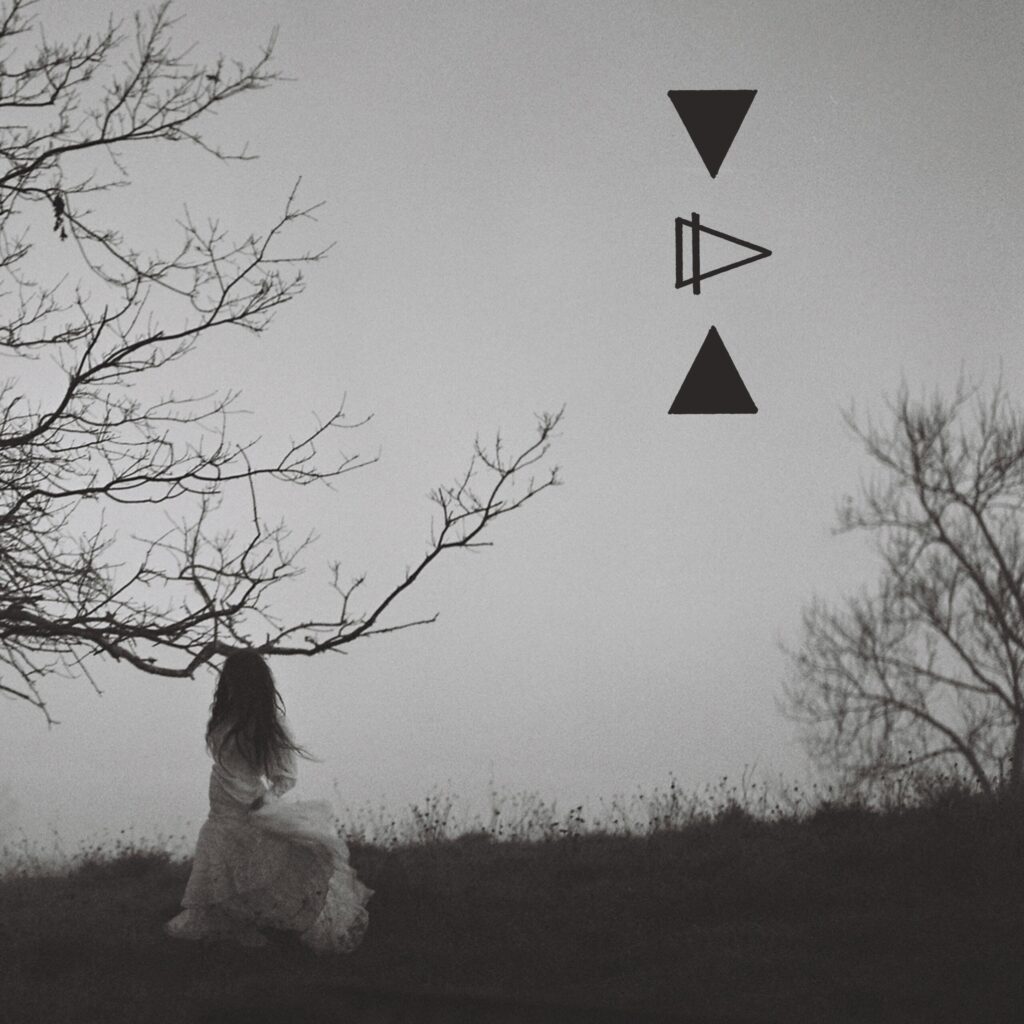
The atmosphere, the grit, the unmistakable croon. The staples of Reb Fountain once again pair with our rapidly polarising, and often baffling nature. The Ōtautahi musician’s seventh full-length album ushers in a call for solidarity and accountability with dark, dazzling pieces that will serve well to remind us of what we stand to lose. Brooding, raw, and deeply intimate, Water for Gasoline is a fine work of resistance and celebration. The character of this body of work, coupled with the live method of the album’s creation succeeds in invoking vast images of our current age in all of its radiant potential and ruinous flaws.
The lead and only single, Good People welcomes us into familiar territory with a sparse and eerie landscape underneath Reb’s beckoning voice. Lyrically, it’s likely the most simplistic of all the tracks, mirrored by the instrumentation, not really evolving until an unexpected reggae-infused bridge that’s fueled with further lyrics of unity; “We’re gonna celebrate the new world order, we’re gonna celebrate the dawn together” backed by the unmistakable voices of Tami Neilson and Dianne Swan.
“People will rise and the tyranny fall, we’re not free until we’re all free, love’s the key to us all”. They’re mantras we’ve all heard before since well before the time of Woody Guthrie, but the simplicity of lines like these thrive in the masses with their directness. Would This Land is Your Land, or Bob Marley’s Get Up, Stand Up have the same reach and effect if every line was a work of nuanced versification? With that in mind, I especially appreciate the titular line for the possible double-meaning of “Good people, tear the fascists down” as an instruction, or perhaps a statement, one that highlights the natural and obvious resistance that autonomous beings should have to authoritarianism.
The ominous atmosphere carries into a more familiar sound for Reb as Beautiful Lie commences. A sparse combination of keys, a swelling guitar and rim-click rhythm create a Nick Cave Anthrocene-esque intro that gives way to a groovy darkness that’s ripe for Reb’s commanding lyrics and melodic hooks. As with much of her work, I find myself particularly drawn to the bass line, so often the crucial piece that determines the feel of her songs, of which, the thumping line in Beautiful Lie chugs the tune along.
The use of sonic space, the simplicity of the arrangements, and dynamism of Reb’s voice creates a highly effective experience that, similar to Invisible Man from 2021’s Iris, I can already tell will be an early highlight of the album. It’s quintessential Reb Fountain, and without shunning the prior track and the album’s lead single, I can’t help but feel that it’s where the album truly begins.
The gentle nature of Swarm welcomes back the softer side of Reb’s songwriting with reflective lyrics to softly plucked acoustic guitars and drum brushes, all of which are characteristics carried over to Better, with both tracks lamenting the noise and labour that surround maintaining connection and composure in modern times. The latter offers a sort of self-bargaining with lyrics that speak of a relationship where one is convincing themselves that being with someone who makes them feel so alone is better than being alone itself. As if in conversation with herself, Reb sings simple, yet poignant lyrics; “When I close my eyes, I can pretend the pain is gone. Come on now, girl. Wake up. It’s time to move on.”
The live tracking and minimalist instrumentation provides a baseline for a raw, no-frills sound that the folk-noir predecessor How Love Bends seemed to shift away from. Without taking away from the previous album, it does feel that Reb’s songwriting on Water for Gasoline is enhanced by the spontaneity and evolution of the album’s composition, feeling closer to the focal point of the works: Reb herself.
With her vocal dynamism, Reb crafts distinctive characteristics to each song she writes, be they the angelic falsetto within the reflective Swarm that embraces the listener in a warm and pleasant contrast to the tormented words, or the rhythmic lyrics of The Gamble that turn hypnotic key and synth lines into an almost delirious sway.
The titular track slithers through the album’s midway point like a serpent, taking its time to deliver powerful, prophetic poetry over its mammoth runtime. Like 2020’s Don’t You Know Who I Am, this is Reb exposing one of the most compelling parts of her artistry, with bare-bones instruments that know exactly when to rise, fall, and dance to compliment Reb’s verses. It seems the sheer size of the song is like a blank page for lines that speak of spiritual awakenings, changed perspectives, and betrayal. “Went to eternity, came back here, singing sweet blasphemy while I was pulling you near. I’ll be dead and gone swearing never again. Don’t let ’em fool ya, there’s mice among men. Sometimes you just wanna scrub yourself clean. I keep asking for water and you give me gasoline.”
It’s a song that has the most to say, truly encompassing the overall themes of the album, apt to share its title, from the political commentary that insists it’s “time to organise”, and highlighting “blonde-coloured leaders, like a thief with a vice”. Similar to the lead single, Reb once again turns her words into a question of loyalty to our collective survival and prosperity; “who’s side are you on? The pauper or queen? How come we’re asking for water and getting gasoline?”
With an acoustic pulse and rock-growl akin to Patti Smith’s Dancing Barefoot, Reb delivers Pass The Bottle with contemplative mantras and motifs in a Cohen-esque, hymn-like fashion that has us hanging on every word.
All Eyes On You arrives with a welcome, upbeat groove of drums, piano, and funk-tinged bass lines to lay the groundwork for vocal lines in constant evolution. Once again, Reb’s phrasing is the pivotal piece for the overall feel of the song, with her double-tracked vocals never really hitting the same patterns more than once in the brief, yet snappy run. A vibrato-coated guitar solo adds to the slightly bizarre, rhythmic personality of the song, almost throwing the composition into a 60’s wobbly tape-reel territory. It’s the shortest track on the album, but it might be fair to say it has the most going on; jammed with dynamic and catchy lines that put it in the same stylistic realm as 2021’s excellent Lacuna with unmistakable experimentation in production and performances from Dave Khan, Simon Gooding and Earl Robertson.
The album rounds out with tenderness in the slowly rising Things that uplifts the mood of the record once more amongst warm guitar and lap-steel lines, soft percussion, and the soothing Grief is Like a Song. Reb leaves us with words of comfort and seeming reprieve from the carnage of modern times. The message of letting go in the closing words “when you’re feeling low, you’ll find shelter in surrender” brings a culmination to the themes of grief and the onward march with serene Dave Khan-imprinted vibrant, ringing guitar strums and softened piano lines.
Just shy of 44 minutes places Water for Gasoline at the higher end of Reb’s album’s run-times, but still manages the magic number of a 10-track record. It’s an effort comprised of longer pieces that take their time, basking in the spontaneous methods of their creation, never overstaying, but spotlighting oppressive attitudes and self-interests that unquestionably have. Themes of regret, facades, solidarity, and rebellion chime through some of Reb’s finest work, painting honest self-portraits of individuals and humanity as a whole. A confronting effort of artistry in confronting times, it’s littered with spell-binding atmospheres and poetry that, at times, sounds akin to a dark preacher ruminating on the state of what we put at risk, as well as the tiresome and regressive rhetoric that we are capable of overcoming.
Related Acts:
More by Tom Langdale-Hunt
Gig Review: Marlon Willams @ Òran Mór, Glasgow – 12/04/2026

Gig Review: Yumi Zouma @ The Garage, Glasgow – 23/03/2026
Album Review: No Love Lost To Kindness
Album Review: 200
EP Review: Digital Plastic Surgery

Album Review: Eliana
Gig Review: Crowded House @ TSB Arena, Wellilngton – 09/11/2024
Gig Review: Tami Neilson @ The Opera House, Wellington – 11/10/2024
Album Review: The Lighthouse
Gig Review: Devilskin @ The Hunter Lounge, Wellington – 13/06/2024
Album Review: The Rose of Jericho
Gig Review: Voom, Reb Fountain & Vera Ellen @ The Great Hall, Wellington – 1/06/2024