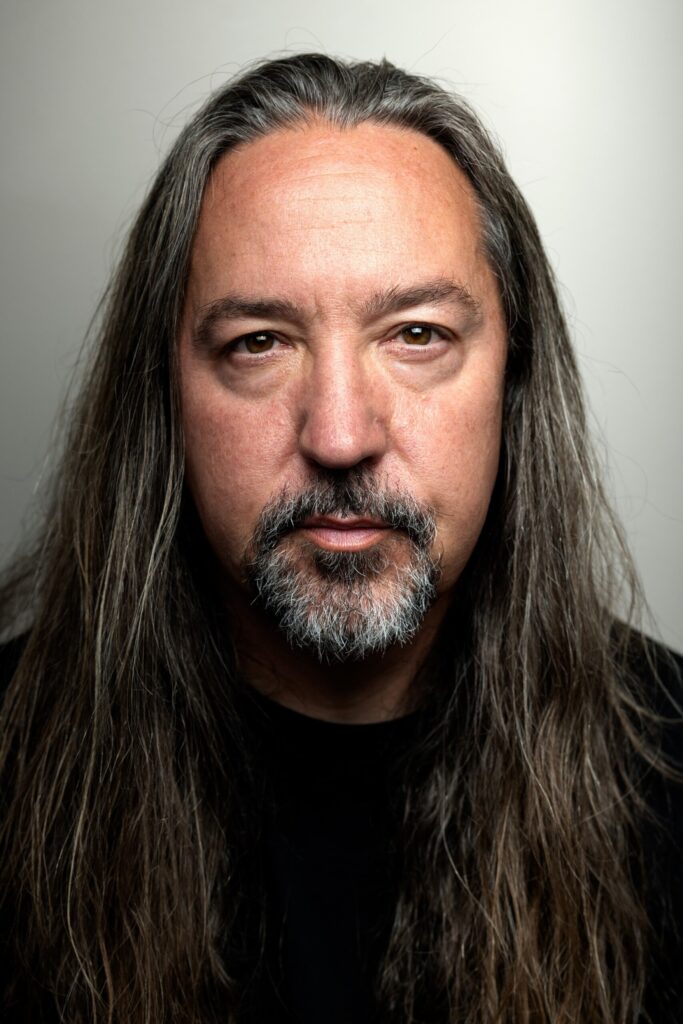
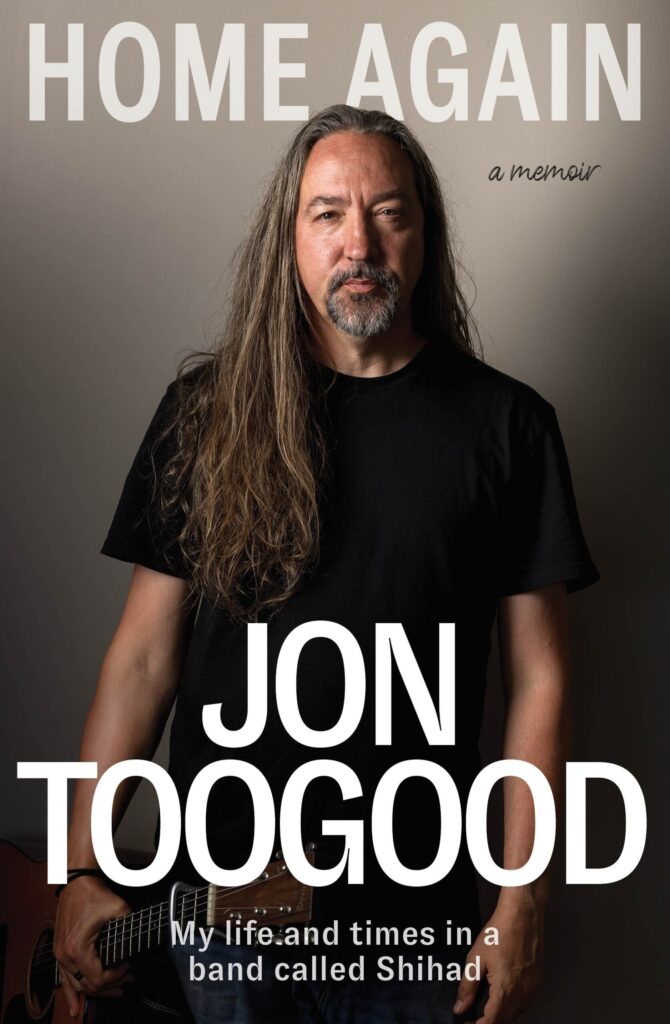
“One thing I’ve learned is that the place I feel most at home is in the fuzzy uncertainty of the unknown.” In Home Again: My Life and Times in a Band Called Shihad, Jon Toogood’s memoir with Karl Puschmann, that sentence becomes the emotional key to the whole story. It runs through a life lived at volume – through risk, grief, faith, family, self-doubt and reinvention – from the teenage charge of early Shihad to the quieter, stranger and more profound adventure of learning how to stay still.
Published by Hachette on 25 August 2026, Home Again follows Shihad’s rise, The General Electric, the Pacifier name change, tinnitus, depression and anxiety, the deaths of his parents, his marriage to Dana Salih, Islam, fatherhood, and the realisation that after nearly four decades on the road, Toogood no longer needs touring to feel alive. Last week, over the cyberwaves, Tim Gruar had a long catch-up with him about all of it.
When we speak, Toogood is walking around Heron Park near his home in Waterview, Auckland. “I just do sort of six to seven K’s walking around,” he says. “It’s got hills, it’s got all sorts of bits to look at.” Walking helps him order his thoughts. “Nature has always been my inspiration… wherever you look, you’re reminded that it’s not about you, which is really healthy for me.”
The book grew out of “months and months of conversations” with Puschmann, who shaped Toogood’s memories into short, punchy chapters without sanding off his voice. “They are all my words,” Toogood says. He first noticed Puschmann at the Taite Music Prize, when Shihad were being honoured for Killjoy (1995) and Puschmann delivered an impromptu acceptance speech on behalf of Chris Schulz. “It was the funniest thing of the night for me,” Toogood laughs. “I was like, okay, cool, I want to talk to him.” Together, they went back through childhood, his British immigrant family, music, grief, depression, touring, marriage and parenthood.
He wanted to go right back into his first memories of music – hearing the Beatles, raiding his siblings’ record collections, discovering the emotional voltage of songs before he had the words to explain it. Reading the audiobook later felt natural because, as he puts it, “it was everything that I’d said anyway.”
Honesty was essential. “Shihad’s music, like in my lyrics, that’s always been my place to be honest,” he says. That meant writing directly about mental health and the pain of spending the last three months of his father’s life with him while COVID kept him from his mother. “It was like sticking your hand in a fire every day you woke up.”
The memoir made him pause. “I’m a creature of the moment,” he says. “I’m always thinking about what’s next. I’m never thinking about what happened. This was an opportunity for me just to take a breath and look back.” That pause had already begun during COVID, when months of work disappeared and the road suddenly gave way to home.
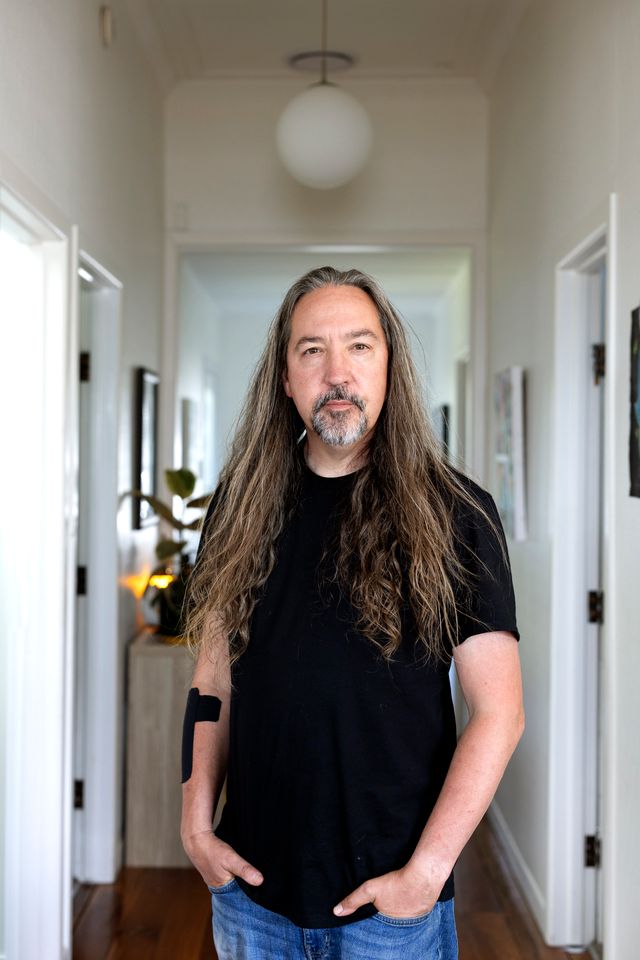
After his son Yahia was born in 2015, Toogood went into “protective dad overdrive”: “hustle, work, work, travel, work, home for a second, work – Shihad, solo, theatre show.” Then the pandemic stopped everything, and the cost became impossible to ignore. Looking through family photos, he realised “80 to 90%” of the pictures with his kids were FaceTime screenshots from hotels.
He married Dana Salih in Khartoum, Sudan, in 2014 after converting to Islam; that Sudanese connection also introduced him to Aghani al-banat music, which fed into Haja, his 2018 album with The Adults. Now home means Dana, their children Yasmin and Yahia, preparing school lunches, the family playing records in the lounge, and coaching his son’s under-10 Grafton cricket team. “That’s interesting to me,” he says. “It’s new. I’ve never done it.”
Shihad remains central to Home Again, but Toogood writes about the band less as myth than as work: curiosity, discipline, democracy and craft. Meeting Tom Larkin changed his life. “The universe put those two people together,” he says. Larkin had the records, the drive and the invitation: “You know how to play guitar. Listen to these records and let’s start a band.”
Toogood speaks warmly of his bandmates – Tom Larkin on drums, Phil Knight on guitar and Karl Kippenberger on bass – along with previous members Geoff Duncan, Geoff Daniels and Hamish Laing. And, of course, the band’s dear, departed manager, Gerald Dwyer. But he is honest, too. “(Sometimes) we argued like these were matters of life and death to us,” he says. “But we were always like a four-way democracy. Everything got put to the vote.”
That hunger lasted to the end. “For the last gig, Shihad were still, all right, you could probably do that a little bit better,” he says. “Songwriting is a craft, performing live is a craft, recordings are a craft.” They turned up early, watched support bands and asked practical questions: “How do you get that sound better? How do you get that riff tighter? How do you talk to an audience?”
He talks about guitars – his favourite Fender Telecaster Deluxe, Martin D-18 and D-28 acoustics – as tools, an attitude shaped by watching his father, a skilled cabinet maker. “My tool happens to be a guitar,” he says. Yet the ferocity people saw on stage was not always confidence. “Everyone would see me on stage with my teeth gritted and my eyes clenched shut… but a lot of it was fear,” he says.
The peak years were punishing. Around The General Electric, Shihad said ‘yes’ to almost everything because, after years of hearing ‘no’, they did not know how long the window would stay open. That meant leaping from PA stacks, chipping teeth, splitting lips, playing until his fingers bled, then doing another radio session, TV spot or industry obligations. “You’re always on, always on, always on,” he says. “And it catches up with you.”
There are plenty of war stories and “pinch me” moments in Home Again, from watching Tony Iommi tune up backstage when Shihad supported Black Sabbath to finding himself in Los Angeles eating pancakes with Steve Jones from the Sex Pistols. Then came the surreal Big Day Out encounter with Joe Strummer: “He’d come over and ask if we wanted to go and see a particular band… and we’d be like, **** yeah, man! I don’t care what band. I want to go and see them with Joe Strummer from The Clash!”
“I love playing live,” he says. “But I hate travelling and being away from my family. I hate it. I’ve done it for 37 years. I’ve got no interest in doing that. There is a new adventure here that I’m not prepared to give up.” It does not sound like retirement. It sounds like reorientation: away from proving himself, and toward being present.
Grief sits close to the surface. Love Is Forever (2024), dedicated to his mother Yvonne, helps him keep working through it. “It’s a heavy one,” he says, “but it feels good to sing that one because it helps me understand that grief.” Losing his father was painful but tangible because he was there. With his mother, locked down in Melbourne and saying goodbye by phone, “it just didn’t seem real to me.” A grief counsellor gave him a line that stayed: “You’re 50% in her DNA, just hold your own hand.”
Last of the Lonely Gods (2024) came from the same place: his parents gone, himself now “the last line of defence” for his children. “I had to follow my muse,” he says. “You have to write what is actually on your mind. Otherwise, it’s not real.”
The ‘Pacifier’ period remains complicated, but he now sees it with more compassion. The name change once buried the album under memories of industry compromise: the Viper Room show, awkward industry ‘encounters’ with celebs like Leonardo DiCaprio, haircuts, clothes, being told what to play. “Every time that record came up, it reminded me of all those awkward, uncomfortable things I hated about the industry.” Yet on the final Shihad tour, playing Pacifier (2002) front to back in Brisbane shifted something. “I finally can look at that album with a lot more compassion and love. It’s got some good songs on it.”
These days, music remains his mental health practice. He plays guitar for one or two hours a day, writes constantly, and keeps guitars in the living room, bedroom and office so they are never far from reach. “If you ever want to bypass that little monkey brain in your head chattering away and get to what your heart’s thinking or feeling, music’s the way to do it,” he says. He is also mentoring young songwriters: “I’m in a season where it’s about trying to share a little bit of the knowledge that I’ve maybe garnered over the years.”
He is grateful younger artists often have better language for mental health than his generation did. “I come from a generation of men that predated acceptance of speaking about it,” he says. The sensitivity that makes songs possible can also hurt. “Your heart’s outside your chest,” he says. “And that’s how you get to write a song that works. But at the same time, that also hurts a lot.”
Near the end of our conversation, Toogood has nearly completed his walk. The unknown now is not another tour itinerary, another airport lounge, another load-in, another hotel room, another sprint to prove Shihad belonged on the biggest stages. It is cricket practice, school lunches, family records, grief, writing, teaching, faith, love and the unsteady art of being present. “All those moments where you don’t quite know what you’re doing, but you’re just trying your best,” he says. “It’s new and it’s exciting and it makes you feel alive.”
The book ends on a full-circle moment. Backstage at Mānuka Phuel Full Metal Orchestra, Phil Judd turns to his daughter and says, “This is Jonny from Shihad, mate. They’re the best rock band to ever come out of this country.” In the middle of the night, Toogood texts Larkin: “Yo. Life goals complete, bro.” Really? Yeah, nah.
Home Again: My Life and Times in a Band Called Shihad is released on Tuesday 25 August 2026.
There will also be a number of book tour dates, with more to be announced over the coming weeks.
Off The Record with Jon Toogood
Tuesday 25 August 2026 @ Q Theatre, Auckland
Hosted by Charlotte Ryan
Jon Toogood: Home Again
Saturday 5 September 2026 @ The Piano, Christchurch
In conversation with Booker Prize-winning author Shehan Karunatilaka
I Wish I Wrote That with Jon Toogood
Saturday 5 September 2026 @ The Piano, Christchurch
With Grant Robertson, Elizabeth Knox, Pip Adam and Shehan Karunatilaka
Verb Readers and Writers Festival
Jon Toogood: Home Again
Saturday 26 September 2026 @ The Hannah, Wellington
In conversation with Nick Bollinger, includes songs, storytelling and book signing.
Jon Toogood: Home Again
Saturday 31 October 2026 @ Te Ao Mārama, Tauranga Library, Tauranga Arts Festival
In conversation with Karl Puschmann
About the interviewer Tim Gruar

Tim Gruar – writer, music journalist and photographer Champion of music Aotearoa! New bands, great bands, everyone of them! I write, review and interview and love meeting new musicians and re-uniting with older friends. I’ve been at this for over 30 years. So, hopefully I’ve picked up a thing or two along the way. Worked with www.ambientlight.com, 13th Floor.co.nz, NZ Musician, Rip It Up, Groove Guide, Salient, Access Radio, Radio Active, groovefm.co.nz, groovebookreport.blogspot.com, audioculture.co.nz Website: www.freshthinking.net.nz / Insta @CoffeeBar_Kid / Email [email protected]
More by Tim Gruar
Album Review: Motoring For Beginners
MNZ Interview: Capital City Big Band
MNZ Interview: Louis TM
MNZ Interview: Tourist
Album Review: Te Ngahere
EP Review: Welcome To The Dance Bunker

MNZ Interview: Ones To Watch: Fables
MNZ Interview: Ones To Watch: Heidi Simpson
MNZ Interview: Ones To Watch: Dawson