
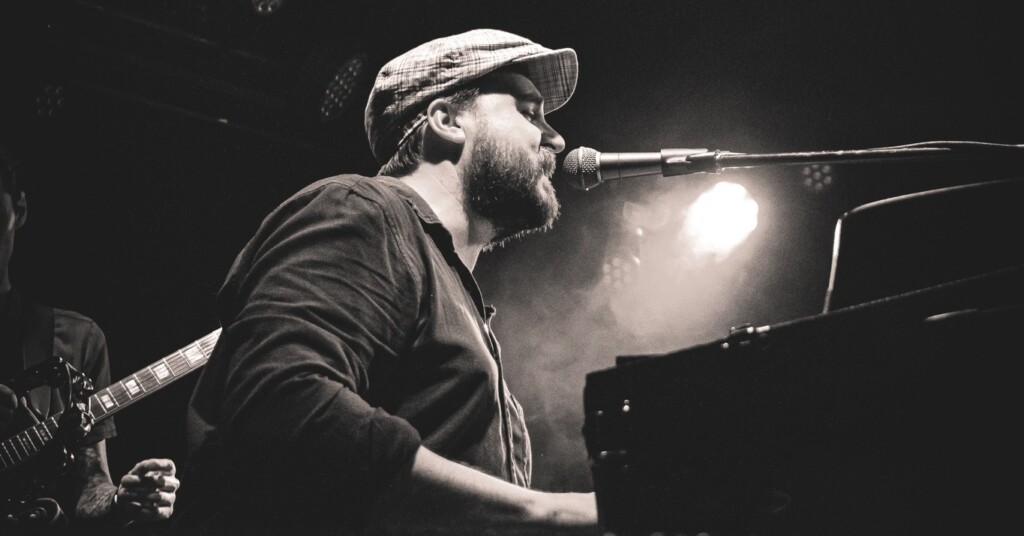
Louis TM has been simmering in Wellington’s musical back kitchen for a while now – working the keys, reading the room and slipping the secret sauce into other people’s records without demanding the spotlight. Then work with Ria Hall and Fly My Pretties came up, the curtain lifted, and a much wider crowd began asking: who is that sharp-suited soul man in the paperboy hat making that Wurlitzer purr so smoothly?
His fabulous 2024 debut, Shelter for a Broken Soul, confirmed the buzz: vintage soul with real grease in the gears, not second-hand nostalgia in a shiny jacket. Now Louis TM (Louis Thompson-Munn) is bringing his soul-jazz quartet to Moon Bar for the upcoming Wellington Jazz Festival, so Tim Gruar dialled up a vid call to find out what’s been simmering away – and what’s ready to boil over.
For roughly 15 years, he’s made himself indispensable before making himself visible: learning charts, backing singers and becoming the keyboard player you call when a song needs more than a few decorative chords sprinkled on top. Only later did he step forward, carrying all that stagecraft into classic soul, R&B, funk and jazz-retro-minded, perhaps, but never trapped in the dressing-up box.
“I started off in Wellington going through the School of Music jazz programme. So, you know, did my time at the factory.” The assembly line taught theory; the bandstands supplied the groove-time. “After that I was playing bands and just sort of getting stuck into being a working session musician.” The job sounds simple until you try it: find the pocket, hold up the singer and stop the arrangement from wobbling.
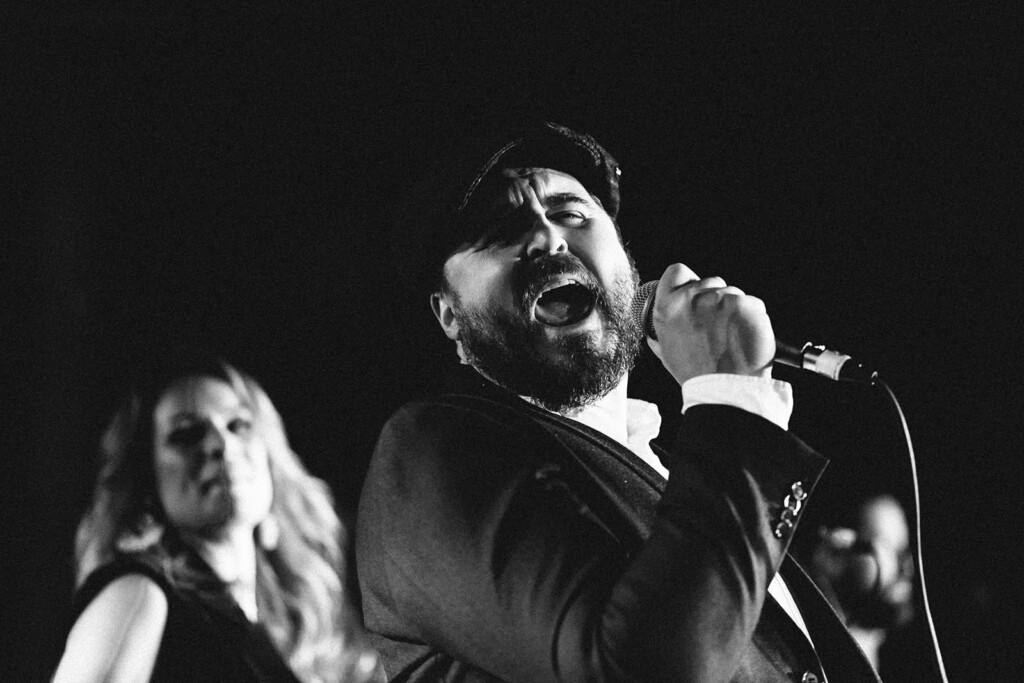
His credits read like a particularly good night out in Aotearoa: the Jive Kiwis, Wellington City Shake-’Em-On-Downers, Ria Hall, plus musical settings involving Laughton Kora, Barnaby Weir, Troy Kingi, Hollie Smith, Lisa Tomlins, Fly My Pretties, (long-standing Santana vocalist) Tony Lindsay and Roger Fox Big Band. He’s a jazz-trained player who knows soul does not need to flash its qualifications at the door; it simply needs to land.
His stint with Ria Hall took him to WOMADelaide and then into an almost science-fictional support slot for L.A.B at Mt Smart Stadium, facing about 20,000 people just as New Zealand briefly reopened while much of the planet remained firmly behind doors. “The whole world was closed, and New Zealand was the only one throwing a party,” Louis remembers. Inside the stadium, 20,000 people moved as one; overseas, audiences were largely watching concerts through bedroom screens and wondering which parallel universe had stolen their summer.
CubaDupa became another postcard from the weird side of history, making international news while “everyone was hiding under a duvet.” For a musician accustomed to stages with all the elbow room of a phone booth, playing inside that strange bubble of freedom made the applause feel borrowed from another reality.
Louis’ musical source code was written at home. His mother grew up partly in San Francisco and Canada; her father, David – Louis’ “Pop” – lectured at Berkeley and the University of British Columbia, and played piano when academia clocked off. “There was a piano in both my house and my cousin’s house,” Louis says, “so no matter where we were growing up, Pop would be sitting at the piano playing a jazz standard or two.” David also remembered Berkeley’s Friday lunchtime concerts by touring musicians. Music entered the family not as background decoration, but as repertoire, study and social ritual.
About a decade ago, Louis took that inheritance back to the source on an American “musical odyssey.” He connected with the Rodger Fox Big Band in Monterey, spent over a week soaking up New Orleans, followed the Mississippi north to Chicago, and reached Memphis and Stax – the house that Otis Redding, Booker T. & the M.G.’s, Sam & Dave and Isaac Hayes helped set on fire. He also just missed a service at Al Green’s famous church by one day: close enough to feel the glow, not quite “close enough” for the full sermon emersion, he laughs.
“I followed the Mississippi all the way from the Deep South all the way up to Chicago,” he says. “It was kind of an important trip that influenced a lot of my direction.” He wanted the tradition at “the real source” – alive in rooms, churches and cities, rather than sealed behind record-shop plastic. “It took a couple of years to seep in, but it was important to live the experience and see, smell and taste.” To him, that “authenticated” what he was writing.
All that apprenticeship eventually clicked into Shelter for a Broken Soul, his ten-song 2024 debut on Diver Records: classic-soul architecture fitted with modern emotional wiring. Louis cites Ray Charles, Wilson Pickett and Sam & Dave, alongside Aaron Frazer and Kelly Finnigan. His aim is not musical taxidermy – stuffing the past and posing it under glass. “You’ve got to create that sound where it stands here in this space and place.”
Recorded and mixed at Lee Prebble’s Newtown studio, The Surgery, the album puts Louis on vocals and keys, Chris Armour on guitar, Steve Moodie on bass and Nick George on drums, with backing vocals from Miriam Alice, Rachael Mair and Lisa Tomlins, plus Ben Hunt and Kaito Walley on brass. It is a compact crew with a wide-screen result: clever layering makes the small horn section swagger like a street parade.
His main instrument is a Wurlitzer 200A, a machine that can make a chord sound as though it has just stepped out of a smoky club. But period machinery is only half the trick. “The tools definitely help you get the sound,” he says, “but it’s also got to be in the playing… the intent behind it, as well as the gear.”
At The Surgery, even the empty space gets a credit: microphone choice, placement and distance become compositional tools. “You’re essentially mixing the band with the distance of the microphones,” Louis says, capturing the sound at source rather than rebuilding it pixel by pixel on a computer. Modern studios can feel “clean and a bit sterile”; Prebble’s room has scuffed-in warmth, and its owner is “a fantastic engineer and a lovely dude.”
His route into Fly My Pretties was classic Wellington networking: less corporate ladder, more highly musical web. He knew Barnaby Weir from “around the traps,” played alongside Laughton Kora in Ria Hall’s band, and shared another connection through James Coyle of The Nudge and Massey’s commercial music programme.
“I was doing my thing, I was also ‘sessioning’ and connecting with these guys,” he says. “Whatever comes of it… is all part of the connecting nature of the industry.” In other words: keep playing, keep turning up, and eventually the city’s musical circuitry lights up around you. It is a fitting route into a collective powered by collisions between established names and new voices.
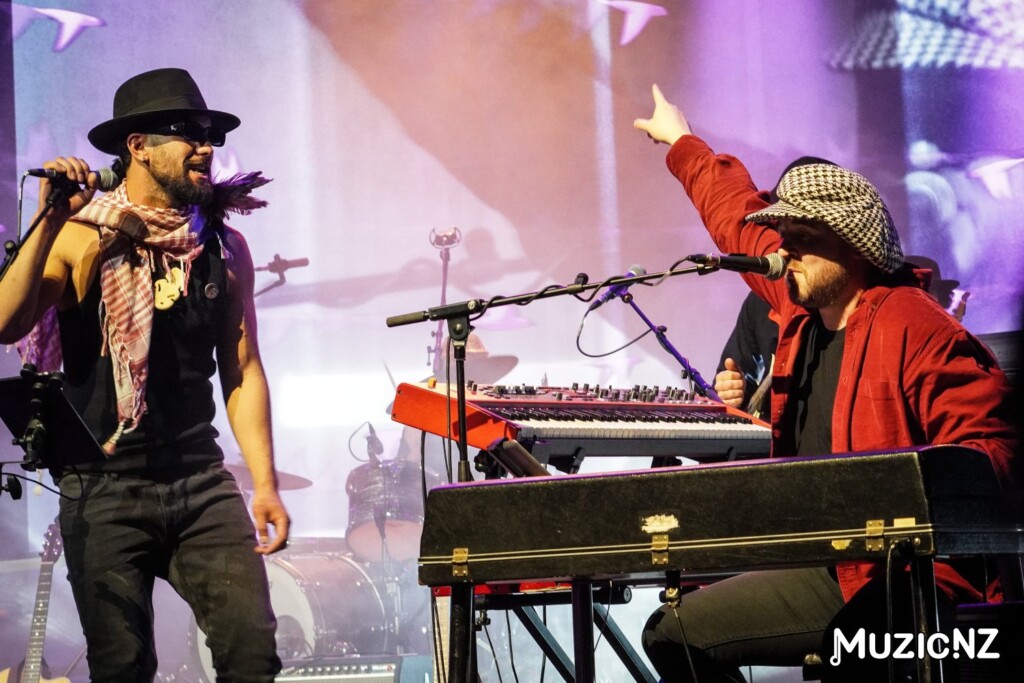
Photo Credit: Tim Gruar
He joined the cast of Elemental, Fly My Pretties’ seventh album, forged over one intensive week at Massey University and recorded live at the Great Hall. Louis fronts the soul-rich Take My Hand and See Me Flying. (I saw him there back in October 2024) captures the experiment’s warmth, nerve and beautiful possibility of everything going sideways.)
After his Wellington Jazz Festival set, Louis heads south to join Fly My Pretties at Oamaru’s Waitaki Arts Festival on Friday 16 October 2026, then boomerangs back for another festival show. “I’ll do my show, jump down, do the Pretties gig… then I’ll be back up here,” he says. The music is the fun part; the true endurance event, he jokes, is “all the admin prior to the shows.”
Louis has already slipped back into The Surgery with Prebble for another record. The band and rhythm tracks are down; vocals and fine-tuning will follow once he has had time to “stew on all of the tunes.” “We’ve laid down a bunch of new tracks,” he says, “but there’s so much more work to be done.” The pot, in other words, is on – but nobody is serving dinner early.
New music is provisionally due in 2027, perhaps with one or two songs sneaking out first on seven-inch vinyl. Louis is a collector – “Yes, sadly (laughs)” – whose shelves are led by soul, followed by jazz and Aotearoa releases. “One of the joys is putting on a real record,” he says. Naturally, the next chapter may arrive with grooves you can actually touch.
“The Wellington scene is a really cool, lovely, connected place,” Louis says. “You’d be hard pressed to find someone that’s not just as lovely as they are a good musician.” It sounds almost too generous until you follow the trail of introductions, shared stages and borrowed rooms that built his career. Louis TM’s music may glance in the rear-view mirror, but its engine is firmly in the present: turn up, learn the language, catch the sound at its source – and make the old machinery strut again.
Louis TM – Soul Meets Jazz, Wednesday 14 October 2026, Moon, Newtown, Wellington (as part of Wellington Jazz Festival 2026)
The 2026 Wellington Jazz Festival runs from Wednesday 14 October to Sunday 18 October 2026.
Related Acts:
About the interviewer Tim Gruar

Tim Gruar – writer, music journalist and photographer Champion of music Aotearoa! New bands, great bands, everyone of them! I write, review and interview and love meeting new musicians and re-uniting with older friends. I’ve been at this for over 30 years. So, hopefully I’ve picked up a thing or two along the way. Worked with www.ambientlight.com, 13th Floor.co.nz, NZ Musician, Rip It Up, Groove Guide, Salient, Access Radio, Radio Active, groovefm.co.nz, groovebookreport.blogspot.com, audioculture.co.nz Website: www.freshthinking.net.nz / Insta @CoffeeBar_Kid / Email [email protected]
More by Tim Gruar
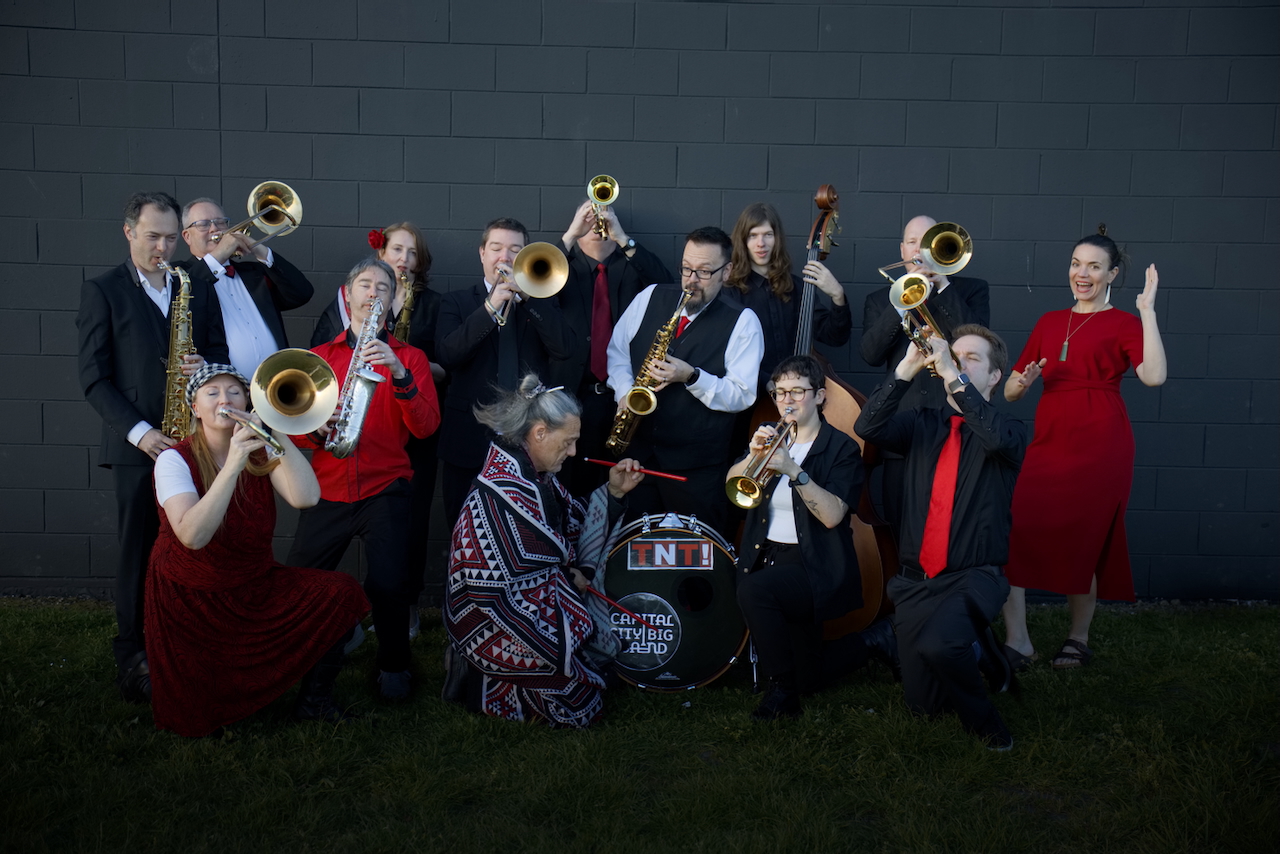
MNZ Interview: Capital City Big Band
MNZ Interview: Tourist
Album Review: Te Ngahere
EP Review: Welcome To The Dance Bunker
MNZ Interview: Ones To Watch: Fables
MNZ Interview: Ones To Watch: Heidi Simpson
MNZ Interview: Ones To Watch: Dawson
Muzic.NZ Interview: Hina
Album Review: Leap!