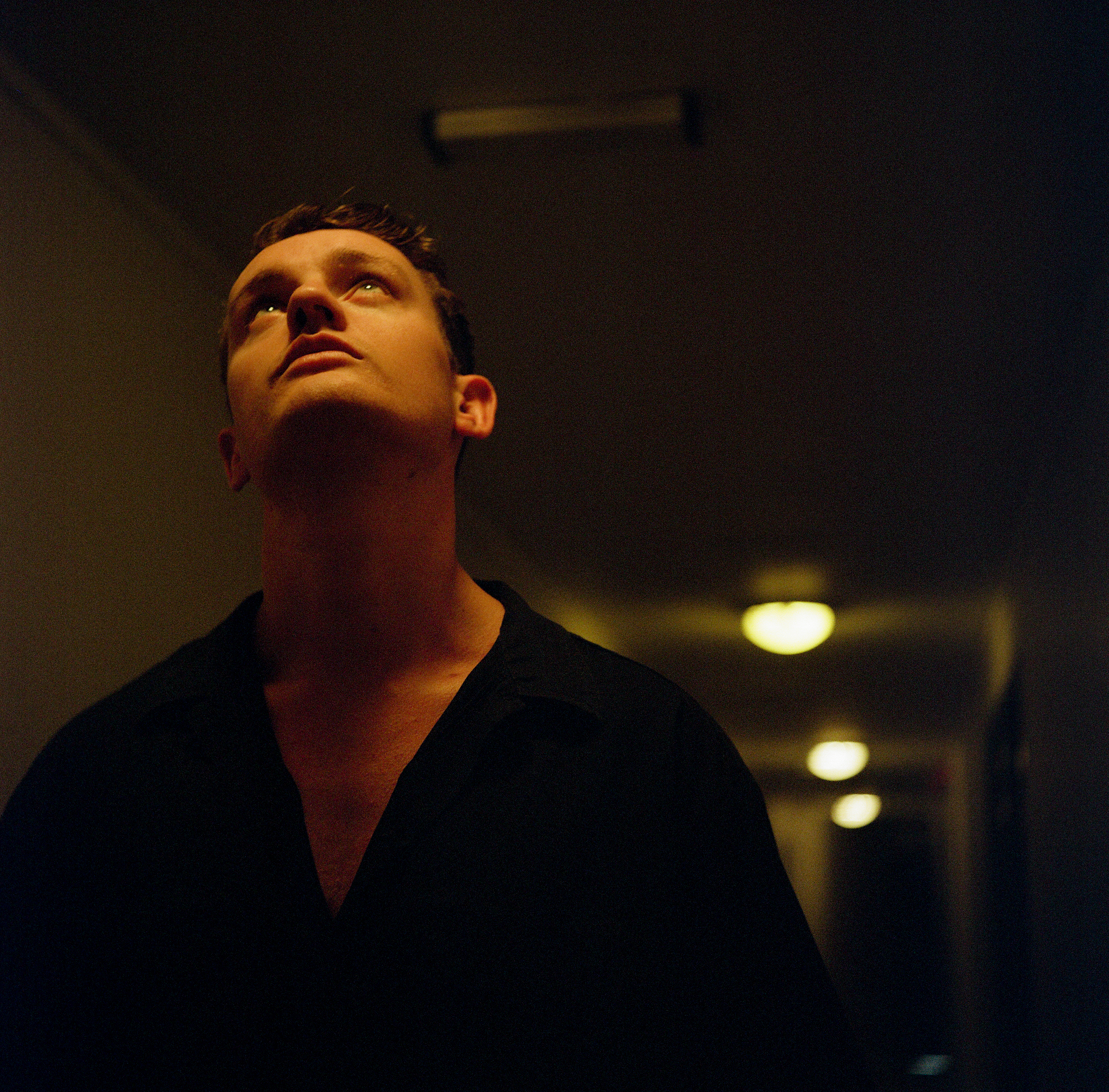
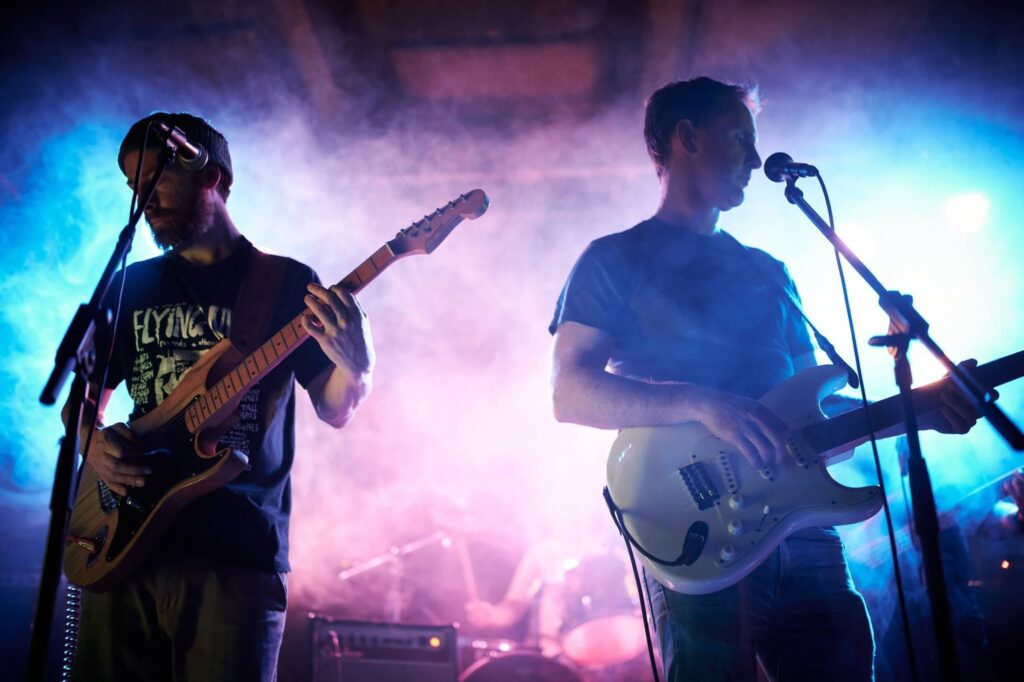
The last time I talked to Electric Tapestry, Nick Clark had just come through the kind of accident that makes you reassess the fragility of everything: gigs, bands, bodies, forward momentum. A cargo-bike slip on a greasy Wellington street had ended with his leg under a rubbish truck, tibia and fibula broken, the whole horrible moment landing like a dropped amplifier in the middle of the band’s story. Two years later, when we talk again, the tone is different. The Wellington psych-space-rock outfit are not just moving again; they are stretching out, recording, touring, changing shape, and somehow turning middle-aged domestic overload into something cosmic, loud, funny, and strangely moving.
“That ended a whole chapter on Electric Tapestry,” Nick says of the crash and the period around it. “I feel like there were probably four chapters to the band so far.” The first chapter, as he tells it, was almost comically pure: “It was just three dads, and we all decided to play guitar.” They met on Sundays, before Lockdown came along, and the songs arrived with the kind of unforced momentum bands spend years trying to rediscover. “Every time we met, we would sort of write something. We were pretty prolific.” Then COVID hit, and like every other band trying to keep the flame alive through closed doors and scattered homes, Electric Tapestry started emailing ideas, fragments and roughs back and forth.
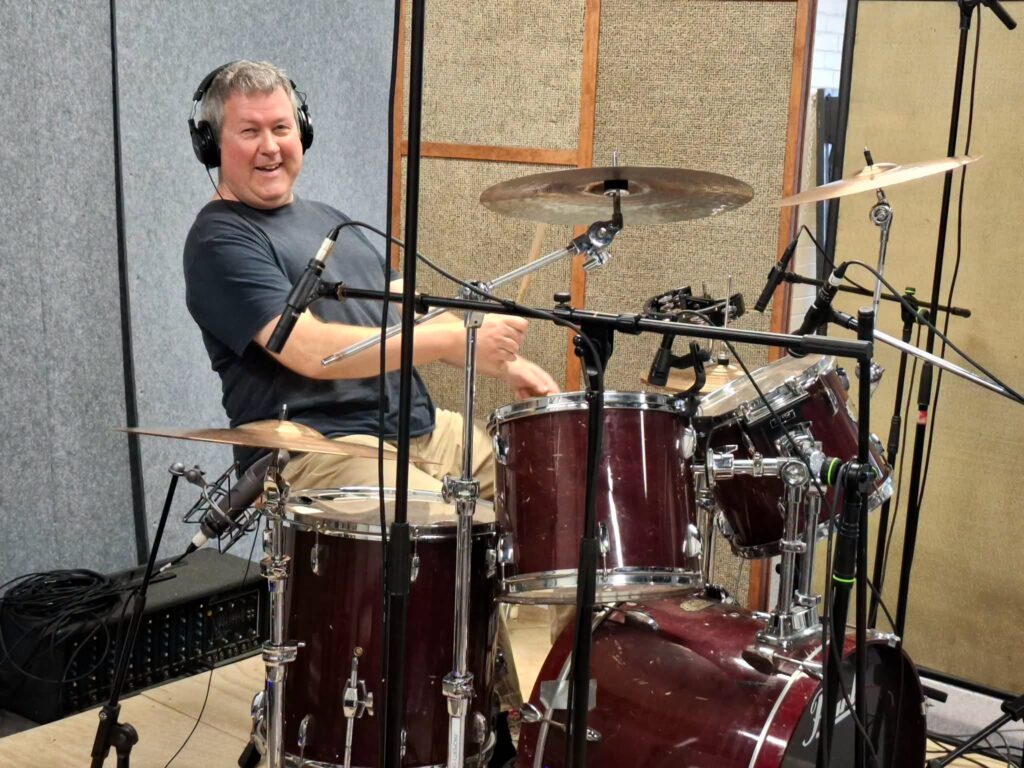
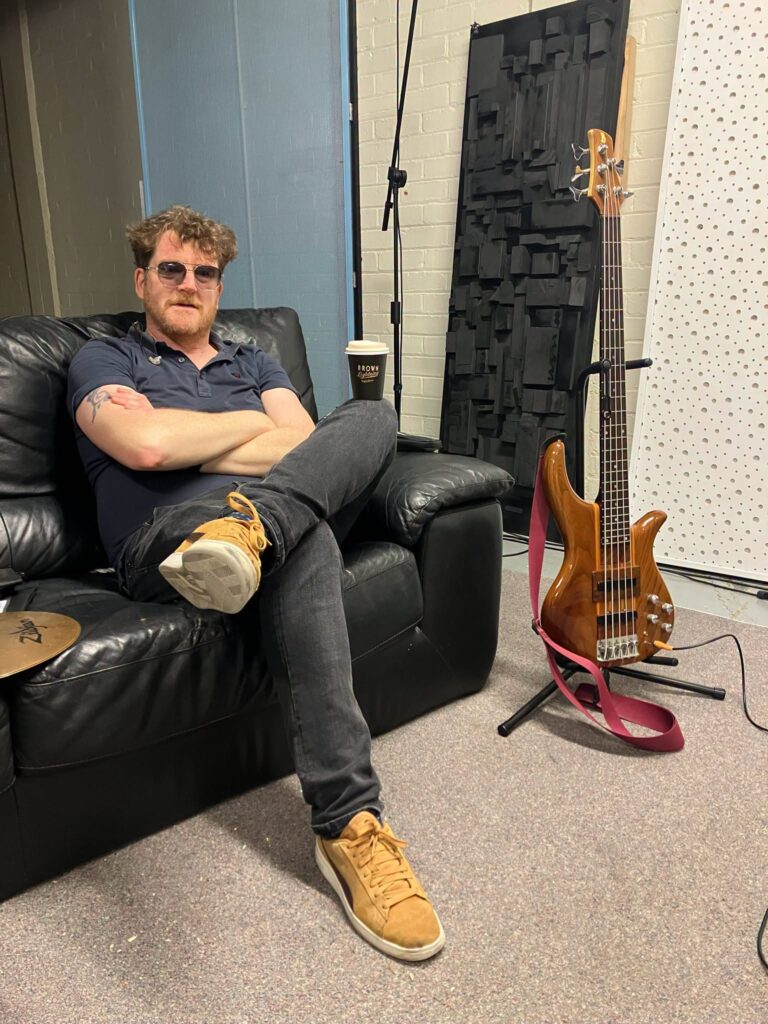
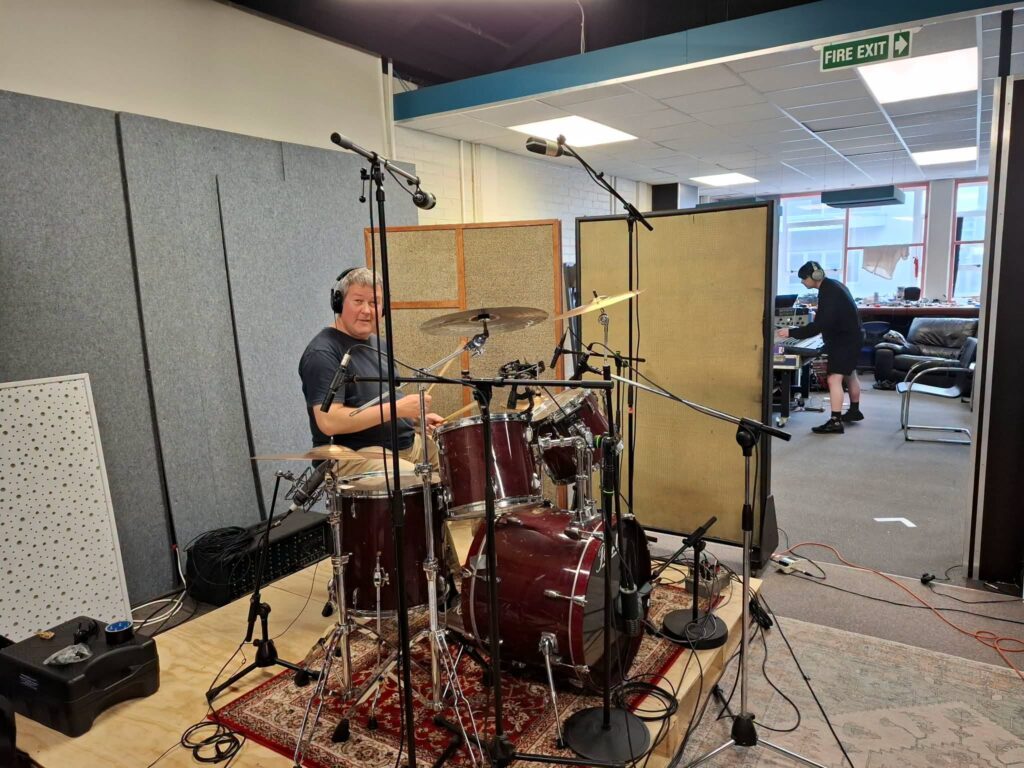
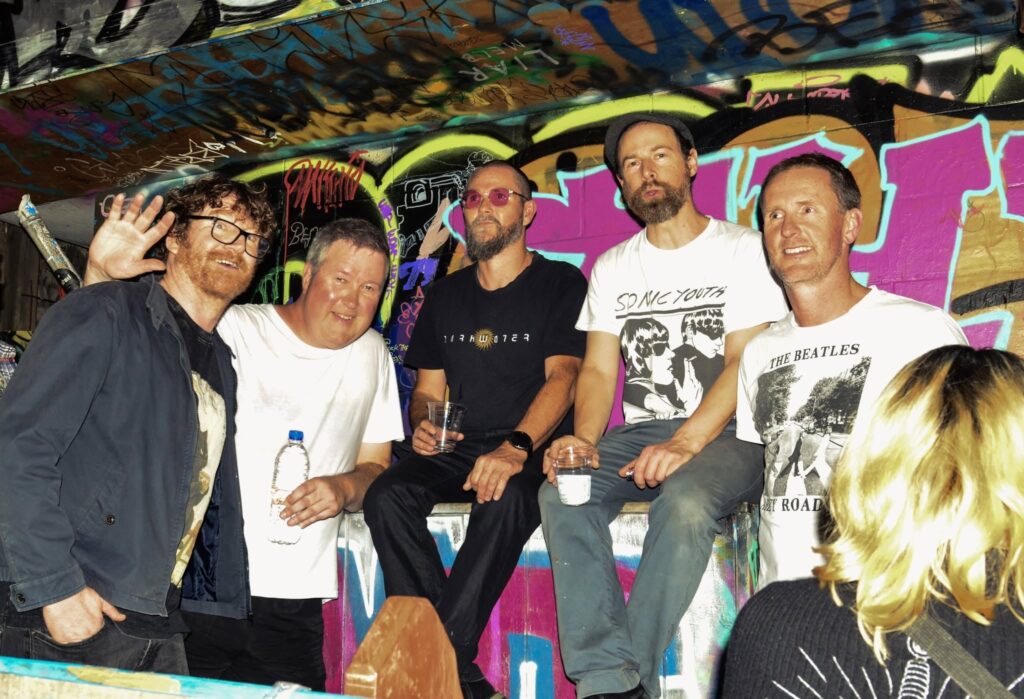
That original three-dad guitar-cell remains the weird, warm heart of the band, but the version now taking the stage is, by Nick’s count, Electric Tapestry’s fourth iteration. Line-up one was Nick Clark, Geoff Charleson and Aaron Percy: three fathers, three guitars, no drummer, no bass player, writing in that pre-lockdown Sunday haze. Line-up two brought in a Russian drummer and an American bassist, the period when the band recorded The Adrift EP in 2022. Line-up three had Volker Maas on bass and his son Gabe on drums, the configuration that carried the band through gigs and into the Massey University Studio sessions. The current line-up – number four, if you’re still counting – keeps the founding guitar triangle intact, with Nick Clark, Geoff Charleson and Aaron Percy joined by Matt Eyre on bass and Volker Maas now behind the drum kit.
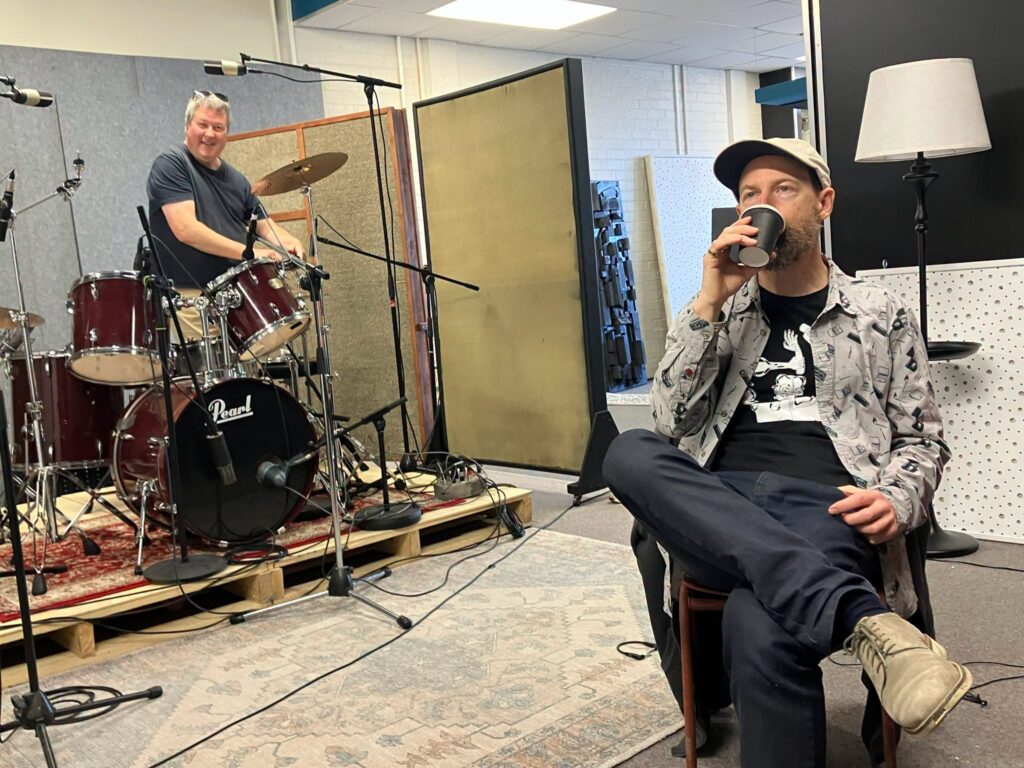
The line-up now feels settled in a way Electric Tapestry have not always been. After Gabe left, Volker shifted from bass to drums and Matt came in on bass, giving the band what Nick calls the current “dream line-up”. “Things have never been so stable,” Nick says. “We’ve just been doing heaps of gigs.” Stability, though, does not mean playing it safe. After working the Wellington circuit hard, the band sat down and asked the awkward question every independent act eventually faces: what now? “We had a bit of a meeting and decided, look, what are we doing? We’re just going to play pretty much every venue in town? We need to play somewhere else. We need to record an album. We need to up the ante.”
So, they wrote it down. A bit of a plan. Tour. Album. More ambition. And then, as often happens with Electric Tapestry, the plan became both practical and slightly mystical. “It just so happens we’re kind of doing them both at the same time,” Nick says. “We’re recording a whole album with the dream line-up, and we’re doing a tour.” That tour, which kicks off this weekend, takes them beyond the familiar Wellington orbit, up through Taupō, Napier and Whanganui. In Napier they are playing The Cabana, the long-running Shakespeare Road venue, as part of The Royal Variety Show 10, a 10th-edition Royal Show night built around bands, solos and a “Stars in Their Eyes” segment hosted by Greg Webb. The 2026 edition is billed as A Tribute to Michael McGruddy (singer from Insecure Delusion, a Hawkes Bay Tool cover band).
The Whanganui stop has its own charm. Electric Tapestry play Porridge Watson, a Drews Avenue café/bar with a reputation as one of the city’s more idiosyncratic small live-music spaces: quirky, intimate, craft-beer friendly, dog-friendly, queer-friendly, and close to the local gallery scene. It is not some anonymous black-box room but the kind of place where an afternoon show can feel deliberate rather than downgraded. “It’s actually a café,” Nick says. “It’s going to be an afternoon, right? It’ll still be rock and roll, but we are playing at 4pm so that we can go back to Wellington and then start our lives again.” The daytime slot makes sense for a band reckoning honestly with where they are in life: gigs, travel, kids, work, and bodies that no longer bounce back from 1am pack-outs.
Nick is clear-eyed about the strange economics of rock’n’roll in Aotearoa. “I don’t want to be a cynic,” he says, “but rock and roll, especially in this country, and alcohol are the same industry.” Older crowds might not look like youth-radio mythology, but they buy drinks, bring friends and keep venues interested. “Some of our advantage is that we do bring an older crowd of people who have more disposable income,” he says. “People at university don’t have the disposable income to buy four drinks at bar prices.” In other words, forty adults at an afternoon or early-evening show may not look as rowdy as a student pile-on, but they can still matter more at the till – and, for a touring band trying to make the numbers work, that is not nothing.
The recording history of Electric Tapestry already reads like a mobile map of Wellington weirdness, with each release tied to a room, a line-up and a particular level of glorious compromise. The Origins EP, released in 2021, came out of a friend’s leaky shed. “The rain came in and then all the stuff was destroyed off a computer, but we got our stuff off before it happened.” The Adrift EP, released in 2022, was tracked electronically, with instruments running directly into a mixer and drums played through triggers. Nick still has reservations. “It’s got kind of a synthetic sound to it that I don’t really like,” he says. “Very cold sounding.”
In response, the band swung the other way, recording Warship Across, the 2024 EP, in St James Church with microphones set up around the room. “We just set up in the altar,” Nick says. “I kind of like it. You can hear us moving around in these little creaks and stuff, but it’s very organic sounding to me.” It is the ‘Steve Albini’ principle at work: the room is not a flaw but an instrument, and human noise is not contamination but proof of life. “When you see a band, they’re playing in a room and people are moving and shuffling and coughing,” Nick says. “I don’t know why you need to pretend none of that stuff ever happens.”
The Massey University sessions pulled the sound back into a professional studio frame and produced the 2025 single Lion’s Breath, later connected to Orbiting Bodies. Now they are at Ragdoll Studios, a community-minded space connected to younger Wellington musicians, including Jackson from Adult Friends, a former student of Nick’s. The shift matters because each Electric Tapestry release seems to carry the fingerprint of the place where it was made. “We’ve gone from one extreme to the other,” Nick says, “recording in a rusty shed, then recording completely synthetically, then in a big, wide-open church, then professionally at Massey, and now professionally again at Ragdoll. Every EP sort of sounds different. It’s got a sound flavour and colour.”
The new album began less as a collection of songs than as a philosophical argument about what Electric Tapestry should be. Aaron wanted the band to embrace the lost-in-space zone: “Space rock, big lots of reverb, lots of mystery chords, epic guitar solos, cool lyrics, kind of Pink Floyd.” Geoff wanted songs with a little more radio possibility, a sheet of pop in the chaos. Nick, coming from a heavier background, wanted room to experiment. “I’d like to do some songs I play keyboard on,” he says. “Really use my guitars as a texture element. Sometimes I’m just going to play background noises, and sometimes, if you want me to do a solo, I’ll solo.” Song-writing, for Nick, often starts when language attaches itself to sound. “The music comes first, and that conjures up a word or a couple of words,” he says. “Then we write the lyrics based on the name of the song that’s developed.” From that loose manifesto came a batch of songs already carrying their own strange weather. We chat about a few of the new songs (yet to be released). There’s Please Don’t Be Kind, the keyboard-led recovery song from Nick’s broken-leg period; Happy Valley Landfill, “basically just like a love letter to my girlfriend” despite what he admits is a spectacularly unromantic title; Break of Dawn, about all-night art-school projects, gas-station junk food, coffee and the surreal feeling of seeing sunrise when you have not been out partying; and Sky Burial, a title Nick liked for its epic, ancient charge. “If something’s not epic, I don’t know if it’s worth writing a single,” he says. “Let’s write something about a controversial topic or an ancient topic.” He recalls the feeling that drove that one – as a student, once, staying up all night until dawn, completing art projects: “That jubilation, exhaustion and focus you get when you undertake and complete something like that”
That three-guitar architecture is Electric Tapestry’s signature oddity, weakness and superpower. Aaron named the band and pushed the idea that none of the three guitarists should retreat into bass duties. “Let’s just all become guitarists,” Nick recalls. “Even if one of us plays a drone, let’s just figure it out, and we just never play the same part at the same time. That’s our rule. It’ll be our weakness and our greater strength.” You can hear the logic: three guitars not as a wall, but as weather systems moving around one another.
Those songs can move from domestic love to student exhaustion to ancient death rites without feeling like a mood board because the words do not have to explain everything to the listener; they just have to mean something to the band. “I just want people to enjoy the melodies anyway,” Nick says, “but I’ve got to sing something. The words have got to mean something to me.” That is how Electric Tapestry can turn tenderness, embarrassment and strange titles into fuel: Happy Valley Landfill came from a real moment in a car, driving past Happy Valley and the landfill on the way to a party, when Nick and his partner apparently landed on the same joke-title at the same time. “That night, we both hit upon the title to the location, ‘Happy Valley Landfill’ at the same time,” he says. “It’s kind of like a lovely letter to her, but it’s got this very uncomplimentary title.”
Please Don’t Be Kind cuts closer to the bone, circling vulnerability and shame after the accident: “Please don’t be kind. I wouldn’t mind. My spine will be fine.” Nick describes it as a strange mantra, born from feeling useless while injured. “I didn’t want to appear weak when I had a broken leg and I couldn’t really do anything,” he says. “I couldn’t really be a functioning father and I felt very de-emasculated.” The result is not confession for confession’s sake, but the kind of lyric that makes him wince because it gets too close. “There’s a lot to unpack,” he says. “It’s pretty toxic, really, when you think about it, but they make for more interesting songs.”
That is where the phrase “dad rock” becomes less insult than x-ray. Electric Tapestry are not pretending to be 22-year-olds with unlimited evenings and no school lunches to make. They are fathers with jobs, partners, children, memories, anxieties and guitars. Nick leans into that rather than dodging it. “Who are we? We’re dads,” he says. “We’re not university kids. We’re not trendy artsy types. We’re first and foremost parents, and we’re middle aged, so we’ve got to write from what we know.” In that sense, their dad rock is not bland denim nostalgia; it is psych rock under domestic pressure, prog turned toward the supermarket carpark, cosmic music written by people who know how heavy Christmas Eve can feel after the kids finally go to bed.
Which brings us to the band’s most beautifully perverse current idea: a Christmas album that is not, at least on the surface, a Christmas album. The working title is still shifting – Nick mentions something like “Polar Exist Festivity”, then wonders if that is too on the nose – but the concept came from Matt after a gig. “We should write an album,” Nick remembers him saying, “but you know what? We should make it a Christmas album.” At first they thought he was joking. Then he doubled down. “Christmas is magical,” Nick says. “It’s a time when you’re not sure what’s real and what’s not, especially for children.”
But this is Electric Tapestry, so there will be no sleigh bells, snowdrifts or reindeer schmaltz. Their New Zealand Christmas is stranger and more truthful: malls, beaches, hot cars, barbecues, exhausted parents, and the weird late-night ritual of trying to preserve magic while quietly losing your mind. “It’s a really stressful time of the year for a dad,” Nick says. “For mothers, too, but I don’t know what being a mother’s like. As far as a father goes, it’s a really stressful time of the year, but it’s magical for children, and it’s ripe for poetic exploration.” The joke, he says, is that it might be a Christmas album only the band fully knows is a Christmas album. “We don’t have to tell anyone. It’s just almost a joke between us.”
That secret-meaning approach runs through the band’s thinking. Nick likes names and images that grow into significance rather than arriving already explained. “Any kind of image eventually gets imbued with a new meaning the longer it marinates in it,” he says. “So many band names are just dumb, but they’re not dumb after the band is good.” The same applies to songs. A listener might not hear Christmas inside the reverb and melody, but the band will. “You don’t know that the song is about Christmas and you don’t know it’s about being a father in New Zealand at Christmas time,” Nick says. “But it actually is. We know it is, and now you know it is.”
Even the release format fits the philosophy. Electric Tapestry are planning to put the album out on cassette, with a download code tucked inside. It is practical, nostalgic, recycled and slightly absurd, all at once. Nick records over old tapes – fitness guides, fairy tales, stand-up, whatever surfaces – but leaves the B-side original. “If you put it into a cassette, you’d listen to our album, and then if you flip it over, you’ll hear whatever ridiculous thing we’ve recorded over,” he says. “It’s nice. It tells a story.” For him, physical media offers a kind of resistance to the shakiness of the cloud. “If we just say we made something, and it’s up in the cloud, but only if you have the special code can you get to the special place at the cloud, it doesn’t have as much weight.”
For all the cosmic language, the strongest feeling in Nick’s voice is gratitude. He talks about happenstance, about finding the right drummer, the right bass player, the right configuration after false starts and broken bones. “Right place, right time,” he says, applies to music as much as photography. He is still writing constantly, almost too much. “I have to stop myself from writing,” he says. “If I just sort of fool around on the guitar, I end up making something that I like.” Some riffs will become Electric Tapestry songs, some may remain B-sides, some may turn up elsewhere. The point is that the tap is open.
“I feel very glad to have met the people that I’m in the band with at this state of my life,” Nick says near the end of our conversation. “Things are happening and I’m feeling good about what we’re doing.” The last time we spoke, the story was recovery, shock, and momentum interrupted. This time, it is motion again: a tour through Whanganui and Hawke’s Bay, a new album taking shape in another room with another sound, three dads still chasing the strange weather that happens when three guitars refuse to play the same part. Dad rock? Sure. But only if dad rock can mean broken bones, mystery chords, lost space signals, cassette ghosts, Christmas stress, and the stubborn belief that middle age might be exactly when the cosmic stuff starts getting interesting.
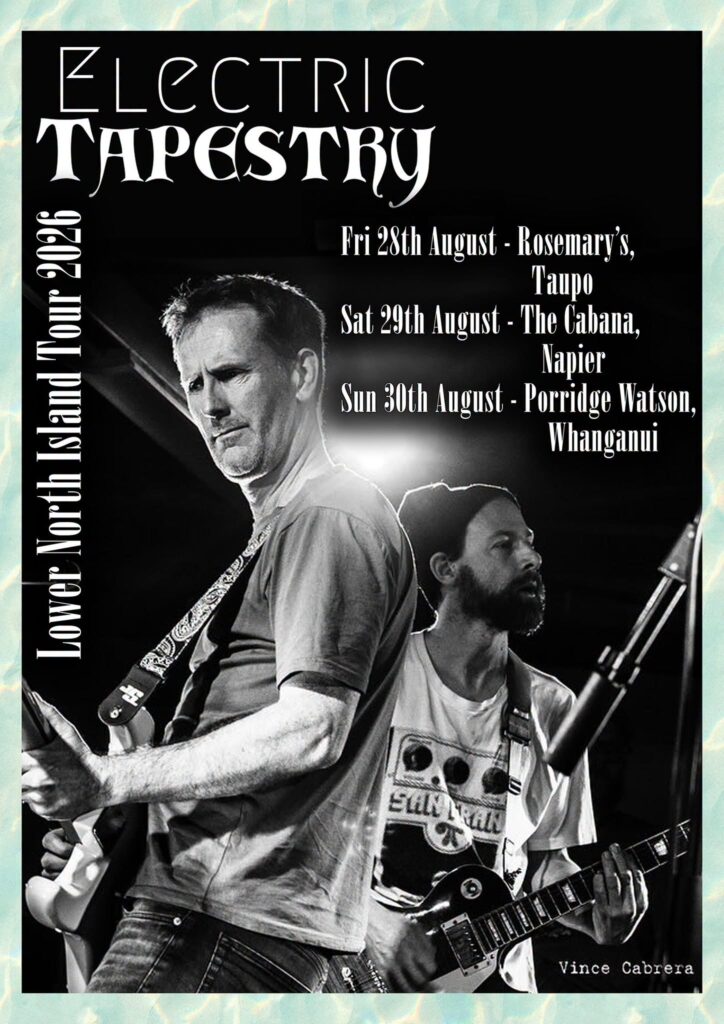
Electric Tapestry’s 2026 Lower North Island Tour kicks off this weekend:
Friday 28 August @ Rosemary’s, Taupō
Saturday 29 August, 7PM @ The Cabana, Napier – as part of 10th The Royal Variety Show
Featuring Electric Tapestry, The Favoured, Flowback, Dirty Mike, Total Disarray, Down With The System, and ‘Stars In Their Eyes’ segment hosted by Greg Webb.
Sunday 30 August, 4PM @ Porridge Watson, Whanganui
Related Acts:
About the interviewer Tim Gruar

Tim Gruar – writer, music journalist and photographer Champion of music Aotearoa! New bands, great bands, everyone of them! I write, review and interview and love meeting new musicians and re-uniting with older friends. I’ve been at this for over 30 years. So, hopefully I’ve picked up a thing or two along the way. Worked with www.ambientlight.com, 13th Floor.co.nz, NZ Musician, Rip It Up, Groove Guide, Salient, Access Radio, Radio Active, groovefm.co.nz, groovebookreport.blogspot.com, audioculture.co.nz Website: www.freshthinking.net.nz / Insta @CoffeeBar_Kid / Email [email protected]
More by Tim Gruar
Album Review: Motoring For Beginners
MNZ Interview: Capital City Big Band
MNZ Interview: Louis TM
MNZ Interview: Tourist
Album Review: Te Ngahere
EP Review: Welcome To The Dance Bunker
MNZ Interview: Ones To Watch: Fables
MNZ Interview: Ones To Watch: Heidi Simpson
MNZ Interview: Ones To Watch: Dawson