MNZ Interview: Anya Vitali – Cross Street Music Festival
Anya Vitali (Te Mahurehure, Ngāpuhi) is a prominent New Zealand event producer, arts director, and community placemaker based in Auckland (Tāmaki Makaurau). She is best known as the driving force behind the creative scene on Auckland’s iconic Karangahape Road (K’ Road), where she has founded and managed several landmark local music and arts festivals such as the upcoming Cross Street Music Festival.
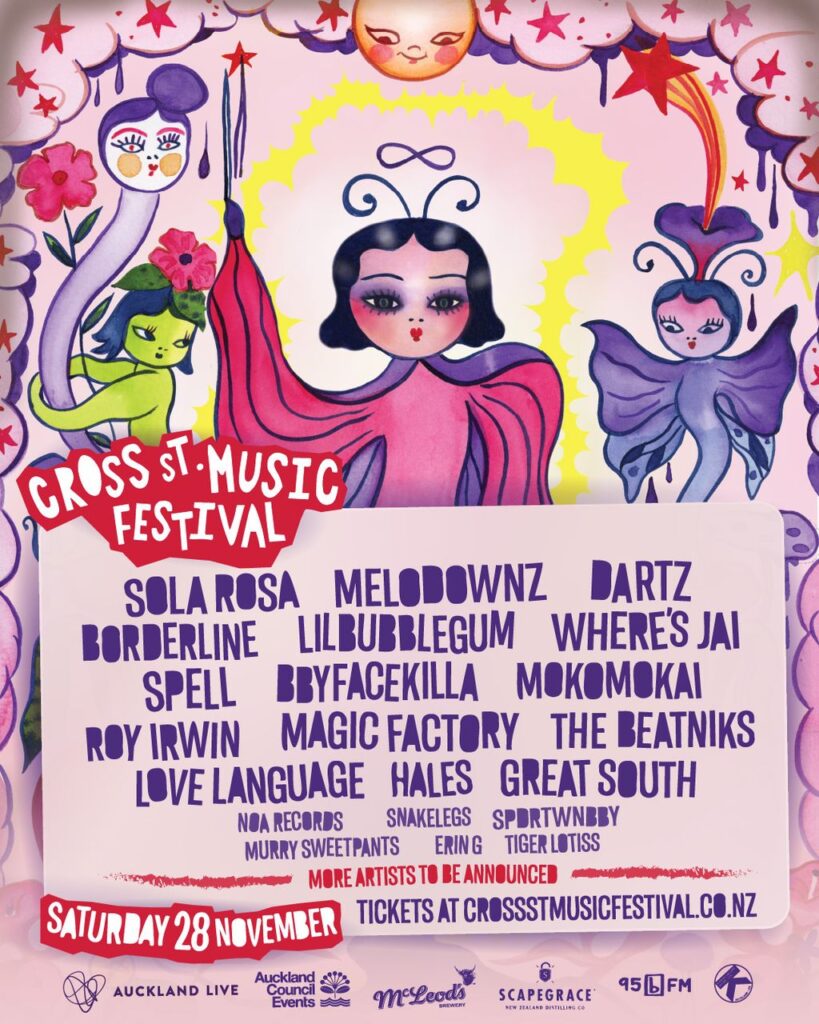
Cross Street Music Festival returns on Saturday 28 November, bringing together some of Aotearoa’s most exciting independent, underground and emerging music for its biggest edition yet. Now in its eighth year, Cross Street is expanding beyond Cross Street, spilling out across Karangahape Road, Mercury Lane and the surrounding precinct for an afternoon and evening of live music, art, installations, performances and unexpected things to stumble across. Free, all-ages music, art, installations, performances, activations and tamariki activities across Karangahape Road, Mercury Lane and Cross Street.
Muzic.NZ’s Nick recently spoke to Anya about all things Cross Street Music Festival:
Hi Anya, how are you going?
Busy. I curate everything, but then I also do all the logistics. It’s a lot. There’s little roadblocks along the way, I’ve got permissions and permits and road closures and alcohol licensing and waste management stuff… It’s all the boring stuff too.
Good on you. Because it’s people like you that actually keep the scene alive.
Well, you know, venues are one thing, and I’ve worked in New Zealand Fashion Week, I’ve done all kinds of different style events and things over the years, but what’s really lovely about doing events outside is that if you go to a gig, you’ve paid a ticket, you know what the artist is and kind of know what to expect. But when stuff happens on the street, that’s really magical, because you’re getting people that maybe would never hear that artist ever. That’s why I love CubaDupa, and I love the whole idea of having street activations and theatre and music outside. I feel like what we’ve been doing with Cross Street is just keeping that going and kind of ensuring that we can. Show new artists and get them new audiences, and also just platform New Zealand music and creative people.
So, this is Cross Street Festival’s eighth year? What does reaching this milestone mean to you personally and what are you excited about for this one?
Well, working in a community like ours, it’s all about creative drive, we all spark off each other. Infinity sign is an eight on its side. I feel like there’s definitely an element to draw creative people to it. As a kid I was working in bars like Khuja Lounge and Galatos, and these major venues back in the day for creative stages and platforms. So being around that, I guess in my youth understanding the area and what it was offering. I guess it’s just, fast forward 25 years now, you see yourself in another stage where you are helping again to probably lift and support the community. You know, keep the flame alive. It’s really just a combination of all the hard work and not just me, my whole team and everyone that supported me along the way.
It’s a real win for everyone. It’s not a solo mission. It just feels like we can all kind of maybe come under this umbrella now. It’s not really about me doing this event, it’s about me being able to facilitate it and make this platform bigger, and hopefully people can make their own ownership within that. And that’s really what I think is gonna be the cool next step is that I’m providing spaces and all that, and then other people can come in, so hopefully I can platform them and they can do their own thing.
Do you think Auckland has become a better or worse place for underground emerging musicians?
I think it’s always been very, very strong for emerging artists. And I think that with the good work, from Whammy Bar or Neck of the Woods, we can see that, even with the fundraiser recently, you know, that, that there is a very, very strong support here. It’s just that it’s so hard to run these places with. Karangahape Road area is a creative sector, so it’s not just about music, it’s about architecture, tech space. There’s all kinds of things that are going around in K Road that actually are a spectrum of creative offering. I mean, music and culture, but then there’s a whole creative sector under that. Studios and galleries and music studios and all kinds of collectives that are quietly working and are collectively bringing this amazing melting pot of ideas and energy to this area. There’s definitely an underground feel to K Road, but yeah, there’s definitely positivity for the future, especially with now the rail station open.
How do you go about choosing the lineup? I mean, it looks very diverse.
I literally go out and I do listen to a lot. I do need to hear live music. I think that produced music is never the same as a live element. And I’ve been called out a few times where I booked someone when I didn’t hear them, and it can be disappointing live, you know? So, you’ve got to get out there and see them. You’re not just curating it. You’re part of the culture, so you need to be seen to be there and to be out. Being part of that and seeing what’s going on, but it’s about stories, for me. It’s not just about music. I love every type of music, I grew up being trained as an opera singer, and then I also was in a hip hop group from South Auckland. I used to play trumpet as well. And then the other flip side to that is that our lunchtimes were always full of hip hop and, you know, all the boys kind of spitting out all their stories and things like that, and then we obviously had our grunge bands and things like that at school, so I don’t feel like I want anyone to miss out. I think that also it’s a reflection of Karangahape Road.
So, for you personally, what responsibilities come with changing a stretch of the CBD into a temporary cultural space – what does it entail to achieve that?
There’s definitely a lot of paperwork involved and yeah, I guess it’s just really talking to a lot of people in the area. You’ve got residents and businesses and stuff who obviously want to bring in the event. So, it’s about getting out there and really talking to people and letting them know what’s going on. Been doing that for the last seven years, and when there’s any changes and things to the model that you’re presenting, which is definitely happening this year with multiple stages in us moving out of Cross Street, so it’s not just Cross Street. This year we’re going to be using Mercury Lane too, and then over to the station, and then other little pop-up spaces. And we’ve also been looking to do kind of small little things inside arcades. So yeah, there’s a lot of work and paperwork, but there’s also just a lot of getting around and talking to people and just making everyone feel like they’re a part of it rather than just plopping yourself in the middle of the street and doing stuff.
We want everyone to feel like it’s their event as well, and to come and participate and with it being a Manaakitanga event as well, we want to ensure that there is Te Ao Māori present, that there is consultation and that there is, you know, some kind of presence of a Māori perspective on it all. So, yeah, there’s paperwork and then there’s consultation with everyone. And really just trying to get everyone excited about it, ’cause you know, we all just wanna have a good time at these things and make it safe as well.
Has Karangahape Road changed much in the eight years, in your perspective?
Yeah, I was doing First Thursday during COVID, which was a popup space, literally on the corner of Pitt Street and Karangahape Road, which was somehow signed off by RA Link and Auckland Council. And it was like a, basically just a four by three popup stage that we were able to activate with music like once a month. At that time it was, it was just, it was dead. There was not much going on in Karangahape Road. I think COVID really nailed the whole space, which it did across the world, I guess. Look, it bounced back from that, but yeah, K Road goes through transitions as well, and obviously with the high homelessness numbers at the moment, we are feeling that here as well, just like anywhere else. So that always presents some issues for being able to keep things running in a positive way. So these are things that you need to mitigate around and be able to create events, but also keep them safe.
We still need to continue as a community and the community means everyone. It doesn’t mean one group. It means everyone. Everyone is in community. That’s my perspective anyway, because that’s the only way that you can really bring things together. It’s not an easy job and sometimes you feel like you are in the community growth sector. It’s just about trying to create harmony and not chaos. Everyone’s got their own journey and you don’t know where anyone’s been in their life, so you can’t judge them. You also need to be very strong and in what you’re projecting and what your vision is when you do anything like this, I just think you just need to say, this is what we’re doing. I mean, I’ve got to a point now where I feel confident in what I’m doing ’cause it’s working and people are respecting the brand and what we’re offering.
Can you tell me a little bit about an artist or an audience reaction or a moment in the festival’s history that made you realize the event was achieving something different or beyond just a normal gig?
I’ve got a few, but I think from last year I’m just gonna mention Ardon England, because I actually spoke to him maybe the year before, and he’d said to me that he was finding it hard to find appropriate events. And so he came in to the event and I gave him a really good spot. It was pretty much maybe it was 10, 10.30 or something like that. And he just promised me he’d nail it, and it was just amazing. And I think everyone was probably shocked by his level of professionalism and just how amazing the performance was. We helped to grow his performance and his brand and what he was doing and now he’s doing really well and he is getting booked for a lot now.
Is there an artist that you are really looking forward to seeing? I mean, obviously you’ve chosen them and curated them, but is there one that you’re especially looking forward to seeing yourself as an audience member?
Tiger Lotiss. I think he’s just got the most beautiful voice and he has got such a nice energy and he is just out there and he just wants to get in front of people and I love that, that confidence as well, you know? Also, I’ve got Erin G as well, she’s a young female songwriter. I love her story, so for me it’s about the story. So yeah, I guess it’s just those two artists are kind of up and coming and The Beatniks, I love them. I do like Dartz as well. I’ve seen them a few times in Auckland. They always have sold out shows, so I’m really looking forward to seeing them again live. It’s been a few years. I mean, I love everyone that we’ve put on the lineup. So yeah, hopefully this year, infinity really means for me, connection, that connection to this place and to people and to maybe connect people to it and looking back to our past and bring things into the future and using that as a way of bringing those stories forward so people can understand everyone else’s struggles and hopefully learn something from that.
Hopefully we can drive a little bit more of an artistic kind of feel, and have more family things happening too. So, this year it’s a little bit different too, because from 12pm we’ll have family activities and skating and puppetry and comedy shows and opera and fun little picnics so there’s gonna be heaps of cool things for people hopefully to come on the train too, with their families. Later on, we’ve got heaps of things to transform the whole of K Road. So hopefully we kind of create that into a bit of a living artwork. So yeah, we’re just getting people across the street to kind of apply, to do installations, and we’re looking at doing a little micro rave, which we’ve seen online so kids can come in and have a little rave and just, you know, fun happenings.
Can you tell me a little bit about the theme – Infinity?
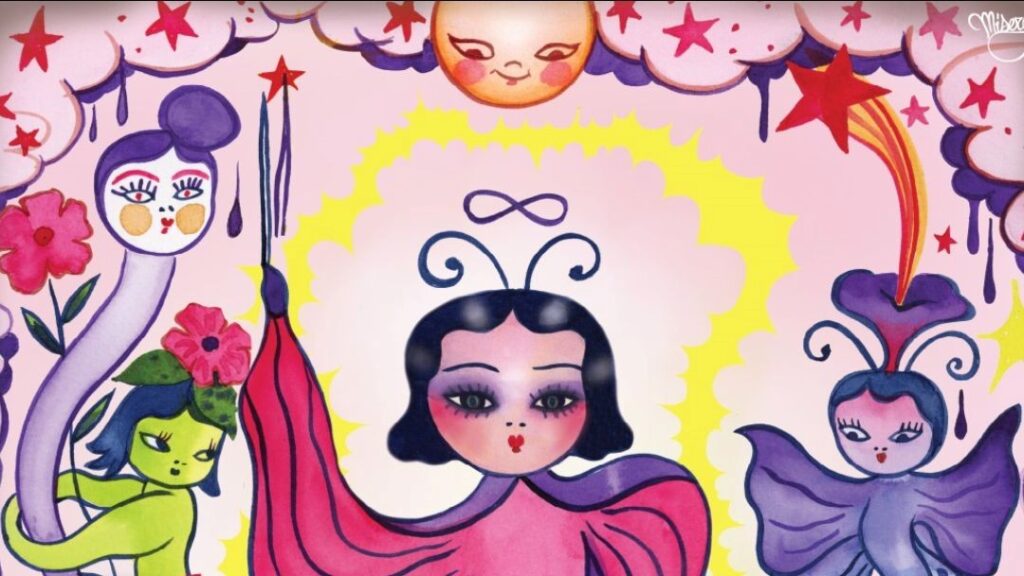
So the artist Tanja Jade McMillan, (Misery), we worked with her just because it’s the year eight, but also if you turn it on its side, it’s kind of like the Infinity sign. So Infinity, is basically just the energy of Karangahape Road. I think that basically it kind of encompasses what we’ve been doing for the last eight years, and then building up to this hopefully ever flowing infinity of what we can do, the endless opportunities.
Related Acts:
About the interviewer Nicholas Clark
Aspiring Writer / Musician / Philosopher / Caffeine enthusiast. I like to create, write about and talk about music. Let’s have a coffee sometime and nerd out.
More by Nicholas Clark
Gig Review: Wet Denim @ San Fran, Wellington – 26/09/2026
Album Review: Foothold
Album Review: Plastique
Gig Review: Katelyn Henshall @ Vogelmorn, Wellington – 04/09/2026
Gig Review: Mister Unit @ San Fran, Wellington – 18/08/2026
Book Review: Home Again by Jon Toogood
Album Review: An Olive Tree and a Warm Breeze
MNZ Interview: Stretch To Mould
Album Review: The Fallen