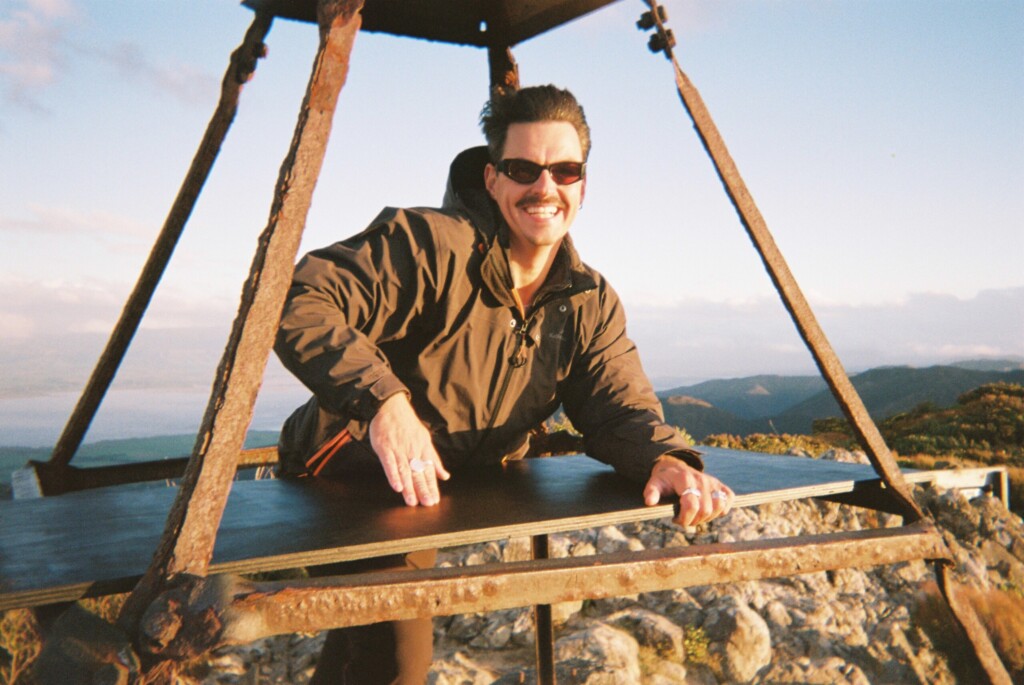
A sunrise set by Lennox Broderick (AKA broderbeats), on the exposed summit of Te Ara Tirohanga/Remutaka Trig is not your typical music video. For Jean Thoral, the French-born filmmaker, producer and part-time electrician behind it, it was never meant to be just another clip.
Jean did not want the film to be “just another cool thing, someone performing somewhere really pretty, but no human connection.” Stories, Jean says, are what matter: “that’s what we are, humans, the stories that have carried us through the years.”
That conviction is why Jean makes these films. “My aim was to provide artists a place to perform somewhere that they connect with, and then tell the story of the land,” Jean says. The whenua comes first: the performer is there because the place means something to them.
We’re talking about Scenic Soundscape, a short-form documentary series at the intersection of music, landscape and visual storytelling, in which each episode follows a musical artist performing live somewhere personally significant to them, so the landscape becomes part of the story rather than just a backdrop.
The idea grew out of university projects. Jean launched the series in 2024 with a friend, Zoe Scott, who has since stepped back to focus on her own art but is credited with behind-the-scenes photography on the film. Jean has kept it going.
The spark came from Jean’s own roots. Although originally from France, Jean lived in Australia for more than 13 years before settling in New Zealand four years ago. A similar French series gives a major artist a spectacular place to perform but, Jean says, “there’s no connection.” Jean has “always loved the outdoors and music as well,” and the aim was “bringing storytelling to those two elements.”
The first video was “kind of like a real proof of concept,” made on a tight deadline, recording a band’s final set at the Baring Head lighthouse site. That band, Bruce, comprised Ruby Ross, Kate McKenna, Thomas Clark, Ben Bonetti and Harry Blyde. “I was just trying to prove that I could put together something like that,” Jean says, and there was little bond between artists and place. But the storytelling was already there: “I still told the story about the land.” Jean interviewed and recorded the last lighthouse keeper, Steve O’Neil, who worked there, and spoke with Maritime New Zealand, NIWA and the council about the site’s history. “It was really awesome.” O’Neil’s reflections on his 13 years give real weight to the story and the place.
For the second film, Jean wanted to step things up. “I really wanted to make another one, and just step it up, and get proper funding so that I could pay everyone,” Jean says, “and then also really wanted to have the concept of the connection between the artist and the land come together.” The answer came through a friend, DJ Lennox, who performs as broderbeats. He proposed Te Ara Tirohanga/Remutaka Trig.
For Lennox, the choice was never about the view. It was a return. “He used to go there as a kid,” Jean says, “somewhere that really has a lot of significance for him.” Remutaka is the whenua he connects to, and by setting up his decks there at sunrise, broderbeats was playing to a camera but also to the land of his childhood.
That history is built into the film. The package, Jean says, starts with “a bit of an intro to the land and that’s actually his mum talking at the very start.” Lennox’s mother, Emily Broderick, narrates it in her own words, and interviewing her was “the most wholesome thing ever.” Then comes the performance, followed straight away by an interview with the DJ. The audience meets the whenua through the people who love it before a single beat drops.
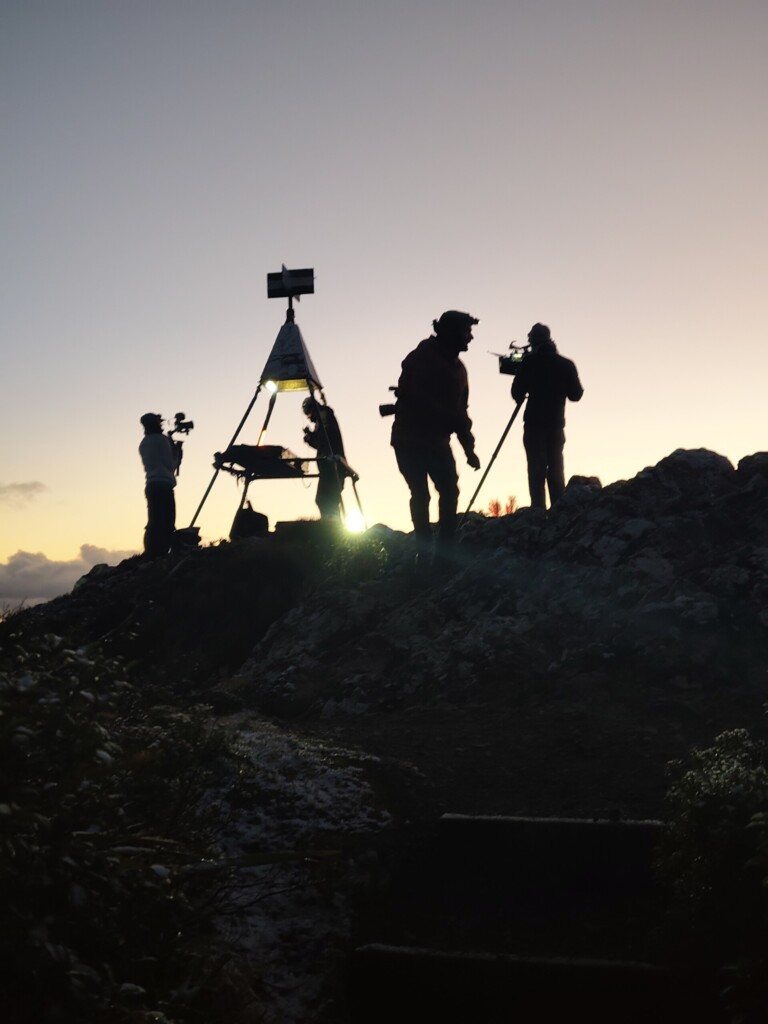
Photo Credit: Jean Thoral
Crucially, Jean has no say over the location or the music. “I had no creative control over the music that was performed,” Jean says, and “I do not choose locations. So this is the whole point again, instead they chose it.” The sets mix Lennox’s own tracks with other musicians’ work: “It was his, I guess, kind of choice and journeys.”
That is also why Jean wants to move beyond DJ sets. “I don’t want it to be just one of those DJ things, even though I really love it,” Jean says. EDM is “kind of my main background stuff,” but “I love all sorts of music,” and Jean is already talking with a couple of artists about what might come next.
The “why” is personal too. Jean spent years as an electrician on mine sites in Western Australia, in the Pilbara and the goldfields. Around the age of 30 came a hard realisation. “I was pretty miserable,” Jean says. Jean left his well-established electrical career, divorced, sold his assets and moved to Aotearoa, where one of his younger brothers lived. “I just felt like I wasn’t doing what I was meant to be doing.” Already making music on the side, Jean enrolled in a three-year degree at Massey University in the music industry, with film studies alongside: the bridge between the two worlds these videos join. “It’s never too late to kind of follow your dreams and passion,” Jean says.
On the film itself, Jean did “everything from pre-production to production to post-production,” working as producer, director, director of photography and editor, and operating a camera for a stretch on the day. Katy Comar and Seb Boyes were the camera operators. The drone was flown by Eddie Rice and Peter Peng, as Jean holds no licence. “Delegating is part of the process and I am super happy with what my team did,” Jean says.
Safety came first. “There were a fair few cogs moving, and health and safety is a pretty important thing for me,” Jean says. “So I had to make sure that everyone had one role. It was very specific.” Finn Gordon, William Giles and Johnny Appleby worked as production assistants and Arlo Andrew handled grip and gaffer duties. Knowing their jobs left the crew free to capture a place and performer that belong together. Johnny Appleby also performed the karakia credited on the film, a fitting thread in a project about connection to the whenua.
The hilltop is, in Jean’s words, “a pretty crazy exposed bit of land,” and the wind can change in an instant, so Jean went up around five times beforehand to “have a really good understanding of what the forecast was compared to real life.” A surfer “on the side,” Jean is used to watching the wind. The performance itself is a single take. “There’s no repeat,” Jean says. The shoot produced around 600 gigabytes of footage, much of it B-roll. In post-production, Jean edited the film and Seb Boyes handled the colour grade. Jean interviewed Emily Broderick over the phone, and that audio provides the narration at the start of the film.
None of it is cheap. The second film cost around $5,000. “I made this one for the 5 grand paying all my crew,” Jean says. “I got paid a little bit, but it was minimal compared to the amount of work that was involved.” The French Embassy was a core funder, contributing around $1,000 after Jean pitched the project through French and Australian connections there. “They were super keen to help out,” Jean says, and “they gave us like a grand… which is amazing.” Staff attended a screening at the Massey University cinema, where Jean’s 5.1 mix gave “a bit more of an immersive experience.” They “all came” and “stayed throughout.”
Jean is now working towards a series, and the main obstacle is money, not talent. “Finding artists isn’t a problem,” Jean says. “It’s the funding that’s going to really make it.” Brands may be wary, and it is “a bit of a tough time to be looking at that,” but “I’ve had a really good response so far with the second one,” and the embassy’s backing “carries a little bit of weight” with potential funders.
In the meantime, Jean still works “as a Sparky from time to time,” shooting photos and making music videos for other artists, “wearing heaps of hats to make sure I can pay bills.” Asked about a main focus, Jean admits: “I don’t know if I really have a main focus. I have many focuses.” Yet of the series: “It’s definitely something that I really strongly believe in, and I want to keep going.” The reason is the same as on that first shoot: music means more when it belongs to a place, and a story is what makes people feel it.
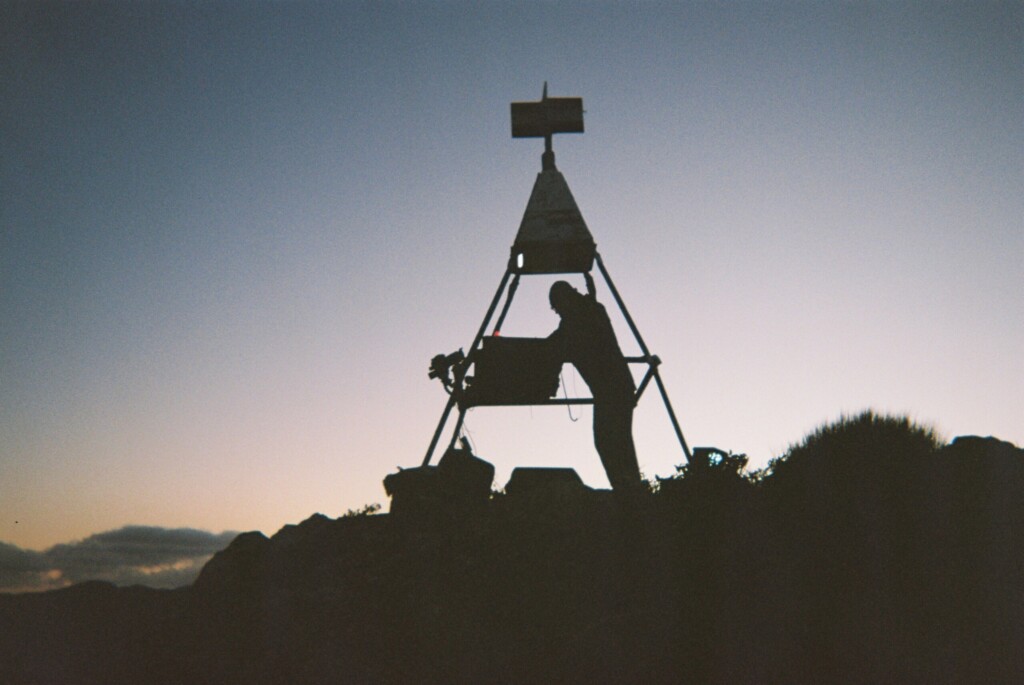
Photo Credit: Jean Thoral
Related Acts:
About the interviewer Tim Gruar

Tim Gruar – writer, music journalist and photographer Champion of music Aotearoa! New bands, great bands, everyone of them! I write, review and interview and love meeting new musicians and re-uniting with older friends. I’ve been at this for over 30 years. So, hopefully I’ve picked up a thing or two along the way. Worked with www.ambientlight.com, 13th Floor.co.nz, NZ Musician, Rip It Up, Groove Guide, Salient, Access Radio, Radio Active, groovefm.co.nz, groovebookreport.blogspot.com, audioculture.co.nz Website: www.freshthinking.net.nz / Insta @CoffeeBar_Kid / Email [email protected]
More by Tim Gruar
Album Review: Sangria
EP Review: Destined for Loneliness
Album Review: Bits

Gig Review: So So Modern @ Newtown Community Centre, Wellington – 7/11/2026
Gig Review: Anthonie Tonnon @ Hannah Playhouse, Wellington – 31/10/2026
Album Review: ¡Blaze!
MNZ Interview: Devin Abrams
Gig Review: Hikurangi Schaverien-Kaa @ Te Ao Kōhatu Wellington Jazz Festival, Wellington – 18/10/2026
Album Review: Motoring For Beginners