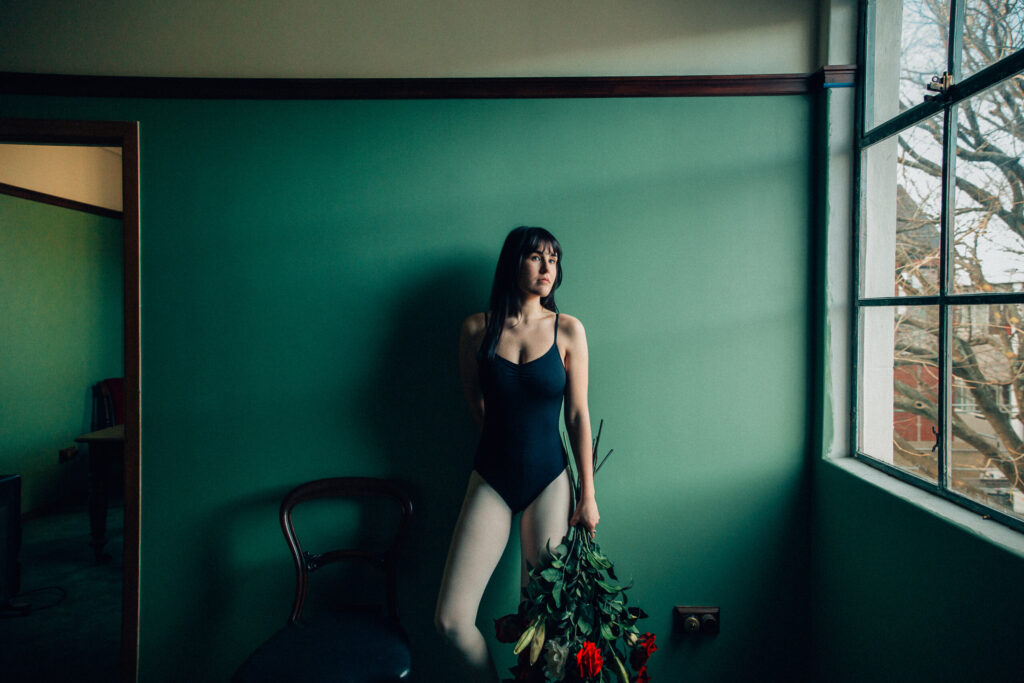
Wouldn’t you know it? Five minutes before I’m due to kōrero with Hina, my laptop chooses violence: shutdown, refresh, existential crisis. By the time I log in – late and mildly frazzled – I’m ready to apologise to the entire internet. I needn’t have worried. Amy Boroevich, better known as Hina, appears on screen radiating easy charm and bright creative voltage. We begin with the usual evil tech grumbles, the surprisingly sunny weather, the new-record circuitry, then happily ricochet through law school, early morning career pivots, desk life at Parachute Studios and a surprise Silver Scroll nod, before finally landing in the beautifully unruly world of Descending Dreams.
Hina is the creative mantle of Tāmaki Makaurau songwriter Amy Boroevich, who carries Te Rarawa and Ngāti Raukawa whakapapa and treats genre less like a border than a politely ignored road cone. Folk, soul, indie rock, alt-country and reo Māori drift through songs shaped by memory: doors open into other rooms, old selves cross the frame, and melodies often arrive before their meanings do.
The name arrived in suitably Hina fashion. “(It) came to me in a dream, which sounds crazy,” she says. “I woke up and I’d had this sort of ‘hard-to-put-my-finger-on-what-exactly-happened’ kind of dream. And I just thought, ‘Oh man, that’s the name that I should use for my solo music project.’” It felt instinctive rather than strategic, linked to Hina – the moon figure found across Polynesia, a traveller, tide-keeper and shapeshifter – but roomy enough for whatever came next.
Change quickly became central. “The project itself has undergone quite a few evolutions,” Boroevich says. “It started in this very room that I’m in now.” Songs written alone became home productions, then widened as musicians entered the frame. “It’s forever shape shifting, I think.”
Music had been there since childhood, with songwriting beginning in her teens, but the first serious fork came after school. Boroevich planned to study commercial music at Massey – until a 2AM documentary about the 13th Amendment sent the itinerary flying. “I just thought, ‘Oh my goodness, I need to do law and figure out how I can learn about that world and maybe give back to my indigenous people in New Zealand,’” she says. By sunrise, she had applied to Victoria University of Wellington and rerouted her future. Music, unimpressed by the administrative change, stayed put: her songs moved from “just me and my guitar” to “me and my computer”.
“I was really delving into learning production,” she says. “It started to bubble away when I was at uni.” Law and music ran in tandem; international law, diplomacy and specialist courts still fascinate her, but music kept returning with the patience of something permanent. “You could call it a passion, but it would almost be better to call it a lifelong friend.”
The first Hina release, 2020 EP Muse, was a home-made solo experiment. “To be completely honest, I had no idea what I was doing,” Boroevich says, before softening the verdict: “That’s probably not fair. I had very few clues.” An APRA panel connected her with producer Greg Haver, who demystified mixing, mastering and distribution; Māori music mentoring programme Pao Pao Pao provided a “wonderful nesting environment” for learning the industry.
“It was all just a learning experience,” she says, “figuring out what on earth it meant to put music out into the world.” Omen, released in 2023 and co-produced with Haver, added a band, a studio and the useful discovery that demos need not be guarded like holy tablets; other musicians could challenge them and make them better. Boroevich also co-wrote Me Pēhea Rā with Noema Te Hau III and Hēmi Kelly, performed by MOHI; it won the 2023 APRA Maioha Award.
For a time, the practical scaffolding was a support role at Parachute Studios: near enough to music to see its machinery, but still a desk job – steady, useful and increasingly difficult to confuse with the destination. That desk hosted one excellent office secret. Encouraged to enter the 2026 APRA Silver Scroll, she submitted Coucou! – “then forgot about it”. The Top 20 email arrived at work. “I was just squirming in my seat,” she says. Unfortunately, it was embargoed: “I wanted to tell my co-workers… I was like, ‘I’ll tell you, but I can’t.’” A career high, performed silently beside the stationery cupboard.
Soon after, Boroevich made the bigger wager: she saved for the album, resigned and moved into music full time. A relationship ended too, creating “a big period of transition and change” – the unstable ground from which Descending Dreams emerged.
Released on 31 July 2026, Descending Dreams began in Boroevich’s childhood bedroom and charts a world contracting before it opens again. “These songs are the rooms I lived in for a long time,” she has said. “I don’t live there anymore, but sometimes I visit.” The title “sort of bubbled to the surface from my subconscious,” she says, starting as a placeholder before becoming “almost like a self-fulfilling prophecy”.
Made over roughly a year at Roundhead Studios, the record was produced with Navakatoa Tekela-Pule, mixed to tape by Paddy Hill and mastered by Josh Llewellyn. Dave Khan, Tiare Kelly, Stenn Frances-Deare, Hamish Milne, De Stevens and Finn Scholes formed the studio ensemble; James Milne refined arrangements, while strings from players including Sandy Niu and Olivia Wilding added lift and shadow.
The launch band featured Dave Khan, Fen Ikner, Hamish Morgan and Francesca Parussini. Personnel might shift, but the principle held: the songs had escaped the laptop. “My music taste is super eclectic and all over the place,” Boroevich says. Six musicians plus a producer turned the album into a “melting pot” – “a meeting point for all of those different sounds and flavours and genres”.
Coucou! carries a feather-light trace of 1960’s French pop over longing, self-doubt and the fear of being too much. The atmosphere arrived indirectly: Boroevich’s parents had lived in France, and she later visited Bordeaux and Paris. “I was old enough to go out on the town,” she says. “I went to a few jazz bars.” Family history, travel and borrowed listening “subconsciously settled into Coucou! as a song”.
House Within a Room underwent more drastic surgery. A slow acoustic demo with an extra verse became drum machine, synth and quicker pulse through Tekela-Pule, James Milne and the band. Boroevich hears “a bit of Lorde’s Melodrama” and “some Springsteen feelings”, while Hill’s mix nudges the ending psychedelic. “There’s a whole lot going on there that I never planned for and never even envisioned,” she says. “That’s a really great example of how collaboration can expand your horizons for songwriting.”
Hollywood Graves arrived almost whole: chords, voice memo, then words that “kind of just tumbled out”. Its meaning stayed slippery enough for Boroevich to crowdsource interpretations at a tiny performance in a container venue at Te Komititanga Square. One listener heard a song about getting out of your own way and not blocking your blessings. “It sparked something in my head,” she says. “I was like, ‘That’s got to be it.’” Even now, “It reveals parts of itself to me.”
River to Mouth reconnects with the legal education she never discarded. Te Tiriti o Waitangi, Aotearoa’s legal foundations and Māori writers including Patricia Grace and Becky Manawatu stayed with her. “I was thinking to myself, probably can’t write a book at this point in my life, so I’ll write a song.” She wanted it to feel buoyant -“not victorious in a conflict sense”, but empowering.

The brightness still carries shadow. House Within a Room grew from claustrophobia, recurring dreams and the looped questions: “Where on earth am I going? What am I doing? How am I doing it? How am I going to get there?” Rather than one grand rupture, the album catches the aftershocks of a breakup, a job ending, full-time music beginning and identity rearranging itself under pressure.
Hina now works at two scales. The full band brings muscle, colour and unruly electricity; duo shows with Dave Khan return to the writing room. “It’s a really great way of stripping it back to the writing and inviting people back into that intimate space in which it was born,” she says. “Those two simultaneously are really working at the moment.”
A foul-weather show at Wellington’s Undercurrent crystallised the appeal. Twenty or thirty people braved the conditions; afterward, musicians sat in a circle and played for another hour. Boroevich had watched folk-festival jams before without joining. This time escape was impossible. “It was sort of just thrust upon me,” she says. “So, I was like, ‘Okay, if not now, when?’”
Ambitions remain: another full-band show, more reo Māori work, perhaps a Māori-language version of Hollywood Graves. Beyond that, no fake certainty. “For the next album, who knows?” she says. “I certainly don’t at the moment.” It suits the method. Hina began with a dream-name, became a private home-studio experiment, then expanded into a many-handed record. Shape-shifting is not branding; it is how the songs stay alive – and possibly how laptops seek redemption.
As for my laptop? After its dramatic opening-act breakdown, it eventually returned – refreshed, rebooted and apparently having undergone its own Hina-style reinvention. Hey, at least it didn’t try it at 2AM!
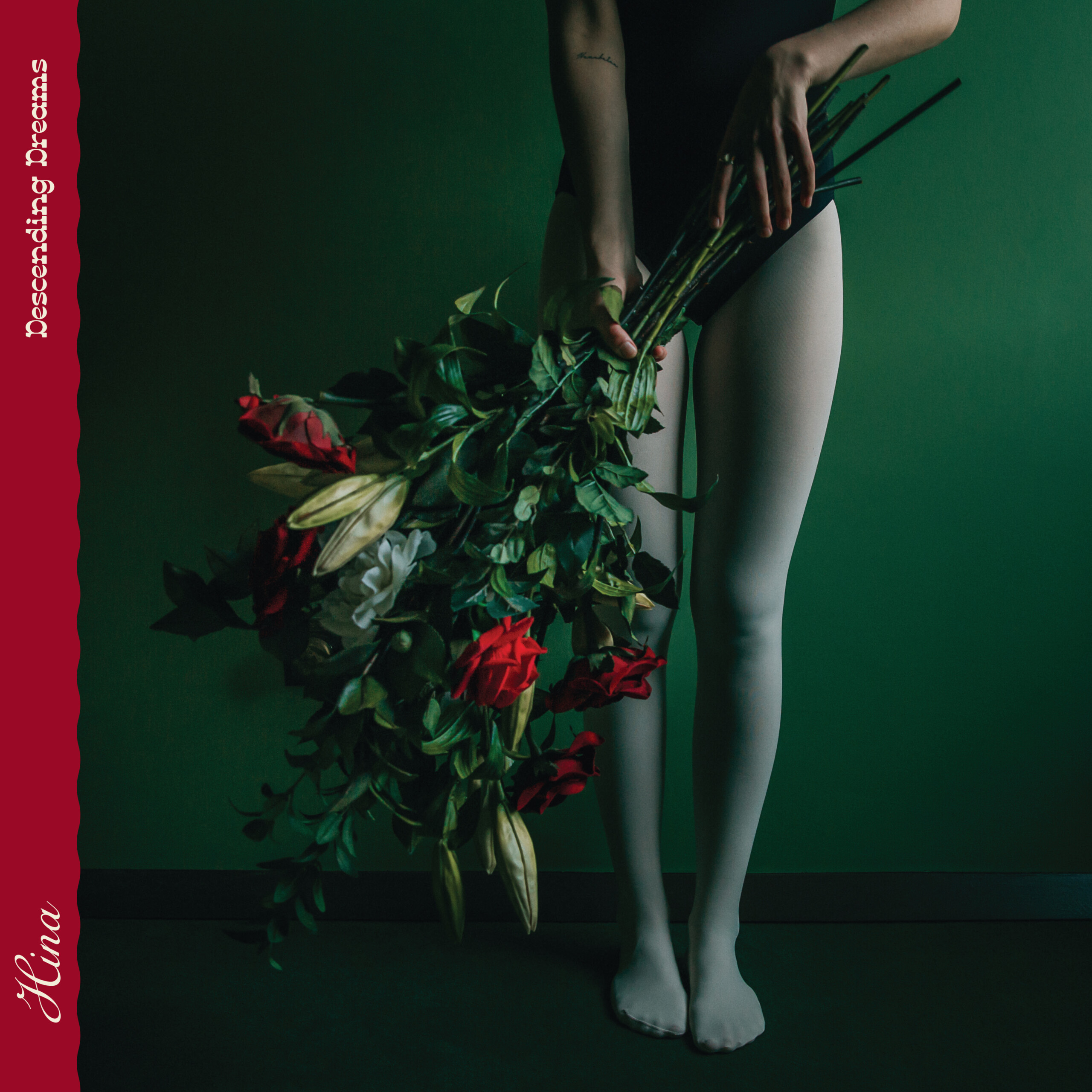
Hina’s debut album Descending Dreams is out now.
Descending Dreams – The Duet Tour (with Dave Khan) continues on Wednesday Sep 23rd, 2026 at Cardboard Comedy Club, Tāmaki Makaurau.
Main Photo Credit: Ebony Lamb
Related Acts:
About the interviewer Tim Gruar

Tim Gruar – writer, music journalist and photographer Champion of music Aotearoa! New bands, great bands, everyone of them! I write, review and interview and love meeting new musicians and re-uniting with older friends. I’ve been at this for over 30 years. So, hopefully I’ve picked up a thing or two along the way. Worked with www.ambientlight.com, 13th Floor.co.nz, NZ Musician, Rip It Up, Groove Guide, Salient, Access Radio, Radio Active, groovefm.co.nz, groovebookreport.blogspot.com, audioculture.co.nz Website: www.freshthinking.net.nz / Insta @CoffeeBar_Kid / Email [email protected]
More by Tim Gruar
Album Review: Leap!

MNZ Interview: Hikurangi Schaverien-Kaa (Wellington Jazz Festival)

Festival Review: Great Sounds Great Part 1 @ Cuba Street Precinct, Wellington – 5/09/2026
Festival Review: Great Sounds Great: The Night Before @ Newtown Village, Wellington – 4/09/2026

Gig Review: Mel Parsons @ Opera House, Wellington – 05/09/2026

MNZ Interview: The Broken Heartbreakers
MNZ Interview: Electric Tapestry
MNZ Interview: Jon Toogood
Album Review: Descending Dreams