
MNZ Interview: Norman Meehan (Little Prayers, Lōemis Festival Event)
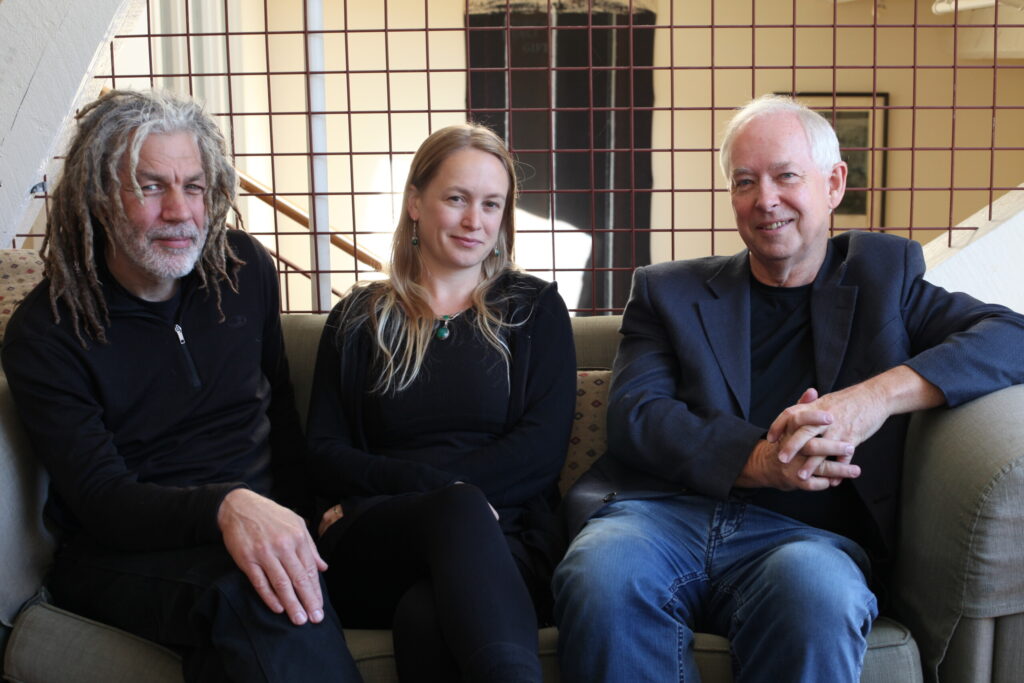
Each winter, Wellington’s Lōemis festival draws audiences into unexpected spaces – chapels, memorial halls, and botanical structures – inviting music to be heard in dialogue with place, memory, and reflection.
One of this year’s most powerful events is Little Prayers, which includes a song cycle piece by pianist and composer Norman Meehan, performed with vocalist Hannah Griffin and a small chamber ensemble in the Hall of Memories at the National War Memorial. The work sets poems by Bill Manhire, centred on his 2016 sequence Known Unto God, written for the centenary of the Battle of the Somme, and framed by Huia and Little Prayers – texts shaped by profound loss, the extinction of a native bird and the 2019 Christchurch mosque attacks.
To learn more about the project, I spoke with Meehan, a Wellington‑based pianist, composer, writer, and educator whose work moves fluidly between jazz, contemporary music, and poetry. Active in Aotearoa New Zealand’s jazz life since around 1990, he first gained recognition as a jazz pianist performing original music across New Zealand and Europe, before shifting from around 2008 toward composing extended song cycles that set literary texts. Much of this work has grown from long‑standing collaborations with Griffin and Manhire and has been released primarily on the Rattle Records label.
Alongside his creative practice, Meehan has been a significant commentator and educator on the local scene, authoring Serious Fun: The Life and Music of Mike Nock (2010), New Zealand Jazz Life (2017), and Jenny McLeod: A Life in Music (2023).
Reflecting on the idea of a ‘jazz scene’, Meehan is careful. For him, jazz in Aotearoa is less a fixed style than “a set of shared practices – improvisation, listening, lineage, and curiosity.” While universities have played an important role in preserving historical forms, many musicians now move fluidly between jazz, pop, electronic, and experimental worlds, creating what he calls “beautiful practice”: drawing deeply from jazz while living and working elsewhere.
This hybridity has shaped generations of performers, from jazz‑trained musicians in major pop acts to improvisers who cross styles freely. Meehan sees this not as dilution but as continuity – jazz as “a way of listening and responding,” rather than something boxed up on a shelf.
Little Prayers reunites Griffin, Manhire, and Meehan after more than two decades of collaboration. Their work together began around 2009 with Buddhist Rain and has since included Making Baby Float (2010), the Antarctic project These Rough Notes (2012), Small Holes in the Silence (2015), and the book‑length riddle sequence Tell Me My Name (2017). They have also collaborated on less jazz‑oriented projects, including a 2017 Massey University event inspired by Bifröst, the Norse mythical bridge. “That was for a small ensemble performing under the name Aakneson. Bill wrote a sequence of poems for that, and I wrote music for Hannah to sing, but with a band, and the reference was mid-70’s Pink Floyd. So, it sounds very different from, you know, the jazz of Making Baby Float. It’s much more like Traffic, Talk Talk or something like that.”
Over time, deep trust has developed between poet, composer, and singer. Meehan describes his long partnership with Griffin as one rooted in clarity, restraint, and close attention to text – often shaped privately, through rehearsals in living rooms, before reaching the stage.
“Hannah is an extraordinary musician,” he says. “She has a beautiful instrument, but she has also worked incredibly hard. Over more than 20 years, I’ve watched her evolve into a very sophisticated interpreter of lyrics and a wonderful vocalist… Some of the peak moments of my life have been just rehearsing at home with Hannah, while my partner sits in the next room, blissing out on what she’s hearing.”
Meehan describes several ways of working with Manhire. Sometimes a poem arrives fully formed; sometimes a theme comes first. With Known Unto God, he sought Manhire’s permission to set an existing sequence and approached the task slowly and carefully, conscious of its commemorative weight.
Written in 2016 and commissioned by 14‑18 NOW: WWI Centenary Art Commissions, in association with the BBC, Norfolk & Norwich Festival, and Writers’ Centre Norwich, Known Unto God comprises fourteen short, epitaph‑like poems voiced by unidentified New Zealand soldiers killed in World War I, extending that anonymity to contemporary refugees lost to modern wars. For Meehan, the poems demanded respect: “These poems are important. They commemorate people who died.” Manhire was invited into a gentle editorial exchange and approved the final settings.
The title piece Little Prayers emerged differently. Manhire wrote the poem immediately after the Christchurch mosque attacks. “It’s an astounding poem,” Meehan says. “Full of pathos, yearning, sadness, and hope.” Violinist Martin Riseley joins Griffin and Meehan in the setting, which he describes as one of his proudest works.
Manhire also suggested Huia, a poem previously set by Gareth Farr. Meehan’s version takes a different path, closer to folk‑song traditions – “more Joni Mitchell or Elton John… maybe Randy Newman, without the cynicism.” What remains jazz‑informed, he notes, is the attention to space, phrasing, and collective shaping of sound.
The Lōemis performance features Griffin (voice), Meehan (keys), Riseley (violin), Inbal Megiddo (cello), and Don Maurice (viola). It also includes an animated film by English filmmaker Suzie Hanna, created for Known Unto God, shown before the music as a visual preface. “We wanted people to really hear the poem first,” Meehan explains, “to understand the words before they’re sung.”
For Meehan, performing in the Hall of Memories is both unexpected and deeply fitting. “I’m incredibly grateful that Andrew has gone to the trouble of organizing this. It wouldn’t have occurred to me to play there.” The space, he acknowledges, is central to New Zealand’s remembrance culture, commemorating more than 30,000 lives lost in war, and housing the Tomb of the Unknown Warrior just outside its doors. And, of course, Known Unto God explicitly references unnamed soldiers and collective loss. To perform it in a room surrounded by flags, inscriptions, and resonant stone surfaces brings the work into direct conversation with national memory. Meehan speaks of the emotional tension embedded in that setting: pride, sorrow, discomfort, and reflection coexisting in the same space. “It’s right there, the Tomb of the Unknown Warrior, right outside the door. To be in a room with those flags showing who we are, you know, there’s a part of us maybe that is faintly patriotic and a part of us that is sickened by what gets done in the name of patriotism. To be confronted with that dichotomy, with those contradictions is, I think, really powerful.”
I should probably reveal a small secret: my very first job, straight out of university, involved maintaining the Carillon at the National War Memorial – the building that houses the Hall of Memories – and I even helped purchase and install the Bourdon bell with the carillonist at the time, Timothy Hurd. As New Zealand’s most significant civic space for national remembrance, first dedicated in 1932, the memorial has recently undergone major conservation and renewal, including the creation of Pukeahu National War Memorial Park and the Arras Tunnel (2014–15) and a four‑year programme of seismic strengthening of the Carillon and Hall of Memories, completed just in time for ANZAC Day this year; that act of strengthening, and the history embedded in the place, adds weight and gravity to the performance itself.
Acoustically, the Hall of Memories is challenging, being lined with marble and concrete – it’s bright, reverberant, and revealing. Yet these qualities suit the music’s spacious textures. Minimal amplification, careful dynamics, and world-class musicianship allow the room itself to become part of the performance, its long decay amplifying the sense of stillness and presence.
Little Prayers is not an endpoint, Meehan tells me, but part of a continuum. “This music”, he says “the Known Unto God piece, actually I think almost all of it was written in 2019. It took a couple of years for us to finish the recording for a bunch of reasons. I was living in the US between 2019 and 2023. So, the rehearsals and things happened only when I came home… the finalizing of the mix didn’t actually happen until 2024.” The recording will be released to coincide with the Lōemis performance, marking the culmination of a project begun several years earlier and shaped across time zones and circumstances. For Meehan, the work affirms a lifelong commitment: to collaboration, to listening closely, and to making music that speaks gently but clearly to human experience.
Little Prayers is presented at Lōemis Festival on Saturday 13 June 2026 at 6:00 pm, in the Hall of Memories at the National War Memorial, Pukeahu Park, Pōneke.
Related Acts:
About the interviewer Tim Gruar

Tim Gruar – writer, music journalist and photographer Champion of music Aotearoa! New bands, great bands, everyone of them! I write, review and interview and love meeting new musicians and re-uniting with older friends. I’ve been at this for over 30 years. So, hopefully I’ve picked up a thing or two along the way. Worked with www.ambientlight.com, 13th Floor.co.nz, NZ Musician, Rip It Up, Groove Guide, Salient, Access Radio, Radio Active, groovefm.co.nz, groovebookreport.blogspot.com, audioculture.co.nz Website: www.freshthinking.net.nz / Insta @CoffeeBar_Kid / Email [email protected]
More by Tim Gruar
MNZ Interview: Ones To Watch: Fables

MNZ Interview: Ones To Watch: Heidi Simpson

MNZ Interview: Ones To Watch: Dawson
Muzic.NZ Interview: Hina
Album Review: Leap!

MNZ Interview: Hikurangi Schaverien-Kaa (Wellington Jazz Festival)

Festival Review: Great Sounds Great Part 1 @ Cuba Street Precinct, Wellington – 5/09/2026
Festival Review: Great Sounds Great: The Night Before @ Newtown Village, Wellington – 4/09/2026

Gig Review: Mel Parsons @ Opera House, Wellington – 05/09/2026