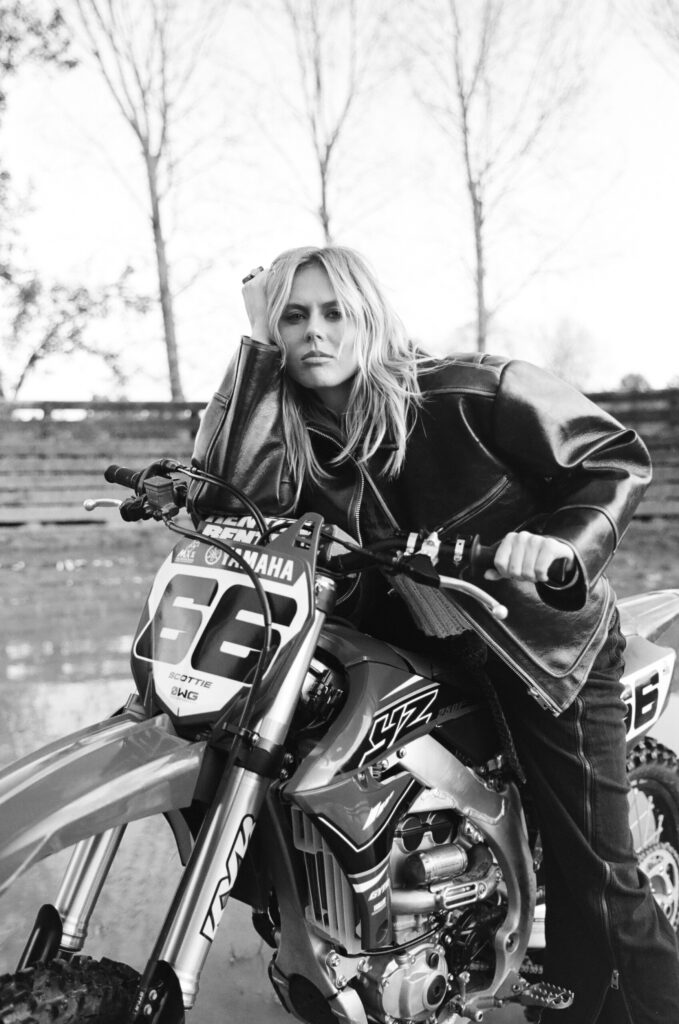
Most debut artists don’t arrive with a fully formed visual world, a slate of striking songs, and credits spanning productions like Mulan, Time Bandits, and Territory – but Greta van den Brink does. The South Auckland-born actor, stunt performer, and singer-songwriter has taken an unusual route, from horses and stunt work to acting and, almost accidentally, music. Trained at Sam Neill’s Actors Program and working across projects including The Rings of Power, Cowboy Bebop and Sweet Tooth, she stepped into a breakout role in Territory, where her own music also featured. That instinct-led shift now shapes her debut album This Wasn’t Planned, due 6 June: a cinematic, emotionally sharp set grounded in lived experience and reinvention.
Greta may have grown up around chickens, dairy and horses, but she resists any neat country label. Her sound, she says, is more “like a kiss of country” – somewhere between Americana, indie pop and soft rock. That in-between quality feels central to both her music and the path that led her here. Horses are central to Greta’s story – her parents met riding; she grew up riding. “I live above horse stables.” Riding taught her humility as much as discipline: “If you want to do something and it doesn’t want to do something; you won’t be doing that thing.” Horses also led her to her first film job on Mulan (2020), looking after horses on set, before she stepped into stunt work and screen production.
That first set was no small introduction. Greta remembers Mulan as “mind blowing”: horses charging through a market, stunt performers crashing into fruit stalls, people fighting, falling and flying in every direction. “It was just like so crazy … and I was like; this is so cool!” More stunt jobs followed, and from the outside it looked like a dream run.
Stunt work taught Greta how to be a beginner. During COVID, when productions were running but borders were tight, she found herself doubling actresses because she was the right height and build, then learning fast: motorbike riding, taekwondo, Brazilian jujitsu, gymnastics. “At the beginning, you go, like, oh my God, I suck. But of course you’re going to suck. You’ve never done it before.” She jokes that she has simply kept walking through open doors, but stunts were never quite the end goal. “What I wanted to do was tell the emotional story and to play a character.” For a long time, that acting door did not open, and that tension – visible success, private frustration – would later feed directly into her songwriting.
Music began quietly. Greta taught herself to play at acting school with a ukulele, YouTube tutorials and a fascination with lyrics. Writing her own songs felt riskier. Then Shane Rangi intervened. While Greta was working on Apple TV’s Time Bandits (2024) in Wellington, stunt doubling for Lisa Kudrow with Kiwi stunt queen Zoë Bell as her boss, he turned up with a guitar and a notebook and told her, “I think you’re going to write music.” Greta’s response was honest: “I just felt that if I tried, I would prove that I couldn’t do it, and that would be heartbreaking.”
She did it anyway. The first song was Road to Hell, a sparse, cinematic track she calls “a spooky Western.” Soon after, she met producer Ethan Jupe at a 21st and asked, “Do you know how you get songs onto a computer?” He did, and together they recorded in his garage and in the barn at home. While working on Territory, Greta told actor Michael Dorman that songwriting felt less like invention than reception: “It didn’t actually, I don’t think it came from me, it just was there and I just happened to get to have the honour of receiving it.” Dorman heard the song, passed it on, and Greta landed a sync opportunity with the Netflix show.
Greta later connected with Noema Te Hau III, not realising quite who he was or what he had already achieved. “I didn’t know what a Silver Scroll was,” she says. A week of writing at Parachute Studios changed everything: by day two they had three songs, and by week’s end they had eight, with one more added during production. Noema became co-writer, producer, mixer, mastering engineer and, in Greta’s words, “the most incredible mentor.” The process confirmed that music could carry the storytelling and emotional weight she had always been chasing through acting.
One of the most striking things about Greta’s debut is how fully formed it is. Six videos accompany the project, and none feel like afterthoughts. That is partly down to her film background: she knows crews, understands set dynamics, and knows how to pull together ambitious work through relationships, favours and trust. For Bodies, Emmy-winning stunt coordinator Steve McQuillan came on board with 20 stunt performers who turned up, Greta says, “for a free lunch” and “literally for the love of the game.” The result is a slick, hard-hitting clip that turns the starlet on a director and crew who are not respecting her, before she goes full ‘Jackie Chan’ on them.
There is urgency behind that ambition. Greta talks candidly about being 26 and wondering whether she is already behind in an industry where some artists start in their teens. That helped drive her determination to make the debut feel complete. “I know who I am right now,” she says. She is equally clear that the vision was collective: Luke Penny, James Moore, Alex Farley, Steve McQuillan, Ethan Jupe, Shane Rangi and Noema all helped bring it to life.
Chill Cool Girl, the first song Greta and Noema wrote together, grew from conversations about early relationships and the exhausting performance of trying to seem easy-going, beautiful and undemanding. Greta links it to the Gone Girl “cool girl” monologue and Olivia Rodrigo’s song, Lacey. It’s about that feeling: “You feel like you’re walking on eggshells while you’re trying to be really cool, relaxed, and laid back,” she says.
The video for Chill Cool Girl pushes that discomfort into lush excess. Greta wanted “a debaucherous last supper,” with red fruit, long-table chaos and creeping dread. References included Pan’s Labyrinth, Saltburn, Babylon and the trapped glamour of Hotel California: “you can see everything for what it is and you go, I don’t want to be here anymore, but you can’t leave.” With Luke Penny directing and James Moore behind the camera, she watched an image from her head become tangible.
The same visual instinct runs through God, It’s Good to be Loved by Me, where a split self plays out like a fever dream somewhere between Thelma and Louise and Natural Born Killers, and An Alpine State of Mind, which draws on Barbara Kingsolver’s Demon Copperhead, misty landscapes and dream-logic imagery from Labyrinth, Inception and Shutter Island. Not on the album but worth checking out is U + I, with its slightly stalkerish girlfriend vibe. There is also plenty of equine action in Levi Jeans, including Greta riding her mum’s horse.
What makes those clips stand out is not just style, but performance. Greta likes working with actors because they know how to make every corner of a frame live. Her mood boards often draw on Renaissance paintings and gallery works, so each video feels less like a promo clip than a place with its own internal life.
Asked about the unheard songs, Greta describes the album as a family, or a solar system, with each track belonging to its own emotional planet. Dancing on the Moon was sparked by her fascination with Beth Dutton from Yellowstone – “this very flawed, very cool person” – and grew into a big, fiery song built to make you “stomp and throw your head around.”
Tripping Over Yesterday sits at the other end of the scale: brief, sad and uncertain, written from the fear of not knowing where you stand in a relationship. Then there is 1000 Papercuts, perhaps the most autobiographical of the lot, drawn from Greta’s experience of rejection in the acting world. “It’s not personal,” she says, “but you can’t tell yourself that.” The chorus came to her while on an acting job: “Every script that you get, that you don’t get, literally just felt like another little paper cut. And it’s like, well, at some point, if you have so many paper cuts, you’re going to bleed out.”
Greta may describe her route into music as “backwards,” and “unplanned”, but there is nothing accidental about where she has landed. What gives the debut weight is not just the polish, but the tension underneath it: the instability of creative work, the toll of rejection, and the demand to stay open-hearted while bracing for disappointment. “It’s a balance,” she says, and that line feels like a key to the whole conversation.
That balance will be tested again at her June 6 launch show at Whammy in Auckland, where these carefully built songs will be handed over to a room, a crowd and a live band. For an artist whose life has moved from horse paddocks to Disney sets, from stunt doubles to studio sessions, that next jump feels less like reinvention than continuation.
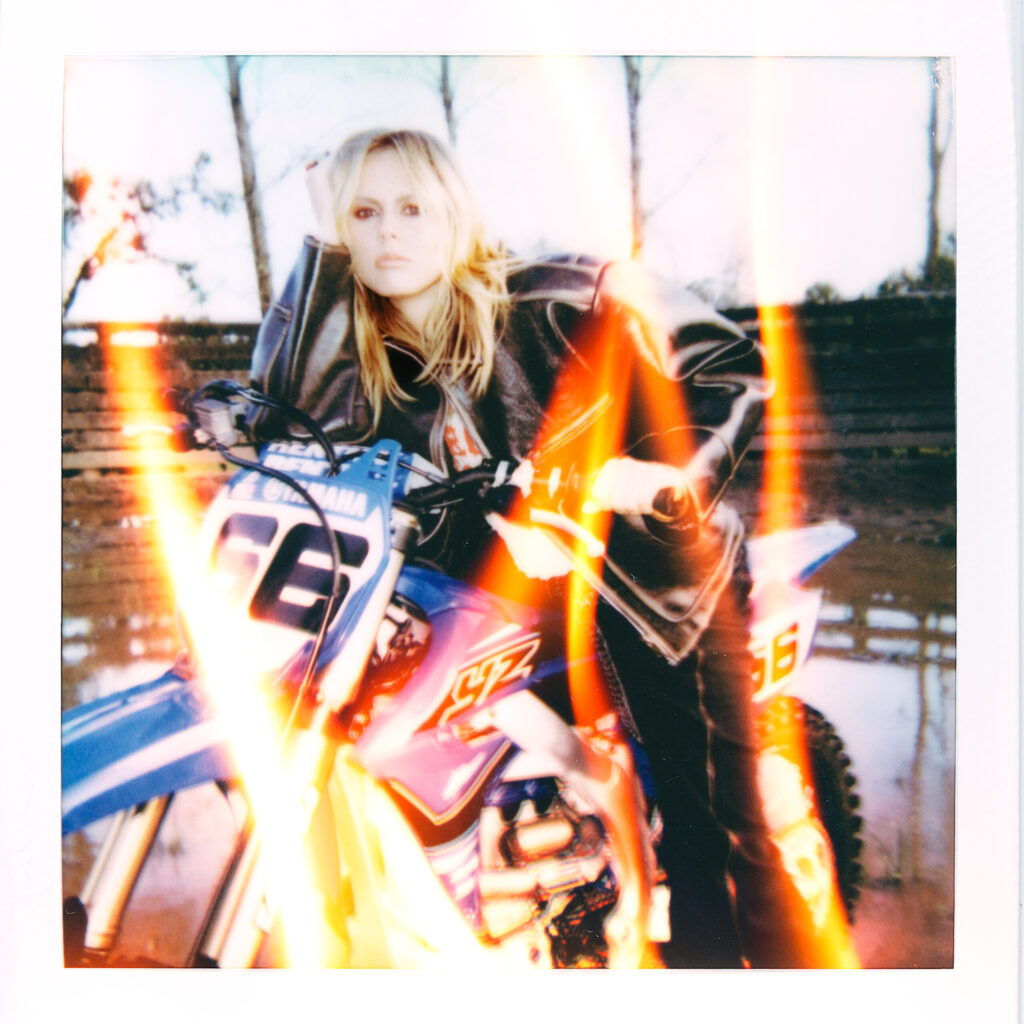
This Wasn’t Planned releases on Friday 6 June
The album will be released at Whammy Bar, Tamaki Makaurau, 6 June
Related Acts:
About the interviewer Tim Gruar

Tim Gruar – writer, music journalist and photographer Champion of music Aotearoa! New bands, great bands, everyone of them! I write, review and interview and love meeting new musicians and re-uniting with older friends. I’ve been at this for over 30 years. So, hopefully I’ve picked up a thing or two along the way. Worked with www.ambientlight.com, 13th Floor.co.nz, NZ Musician, Rip It Up, Groove Guide, Salient, Access Radio, Radio Active, groovefm.co.nz, groovebookreport.blogspot.com, audioculture.co.nz Website: www.freshthinking.net.nz / Insta @CoffeeBar_Kid / Email [email protected]
More by Tim Gruar
Album Review: Motoring For Beginners
MNZ Interview: Capital City Big Band
MNZ Interview: Louis TM
MNZ Interview: Tourist
Album Review: Te Ngahere
EP Review: Welcome To The Dance Bunker
MNZ Interview: Ones To Watch: Fables
MNZ Interview: Ones To Watch: Heidi Simpson
MNZ Interview: Ones To Watch: Dawson