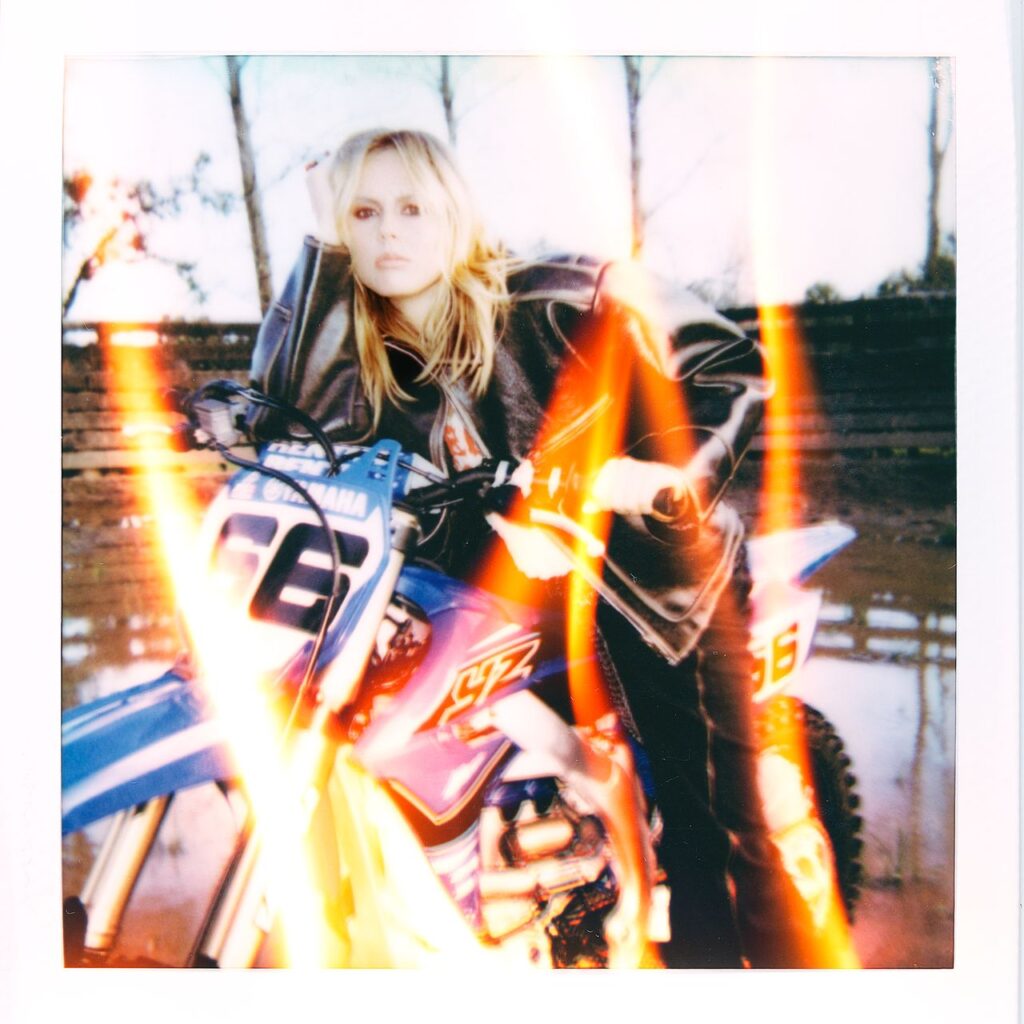
This Wasn’t Planned arrives with the confidence of a record that already knows its identity. Actor, stuntwoman, singer and songwriter Greta van den Brink brings a multidisciplinary background to a debut that moves across desire, ego, role-play and self-protection with a sound that is polished, restless and highly visual. Across nine songs, the album establishes itself as pop with bite, pairing shimmering hooks with videos that add tension, attitude and narrative depth. The result is more immersive than a simple sequence of tracks.
The album opens with the mostly acoustic Chill Cool Girl, which takes the familiar idea of becoming what someone else wants and gives it a sharp, uneasy edge. Van den Brink sings about studying another woman so closely she becomes “an expert in you”, turning romantic rivalry into a portrait of eroded selfhood. The song is immediately catchy, but its unease is what gives it weight. The accompanying video deepens that tension, presenting glossy social cool on the surface while isolation simmers beneath it. Rather than simply illustrating the song, it clarifies the cost of that performance.
Alpine State of Mind shifts into dreamier territory. Drawing on Barbara Kingsolver’s Demon Copperhead, along with the misty landscapes and dream-logic imagery of films such as Labyrinth, Inception and Shutter Island, it reveals an intelligent, folky approach that feels assured beyond Van den Brink’s relative experience. The arrangement begins in an intimate register before gradually darkening. As noted in an interview last month, Van den Brink leaves much of the song’s meaning open, and that ambiguity is central to its pull. What remains clear is its cinematic atmosphere. The video follows the same logic, privileging mood over literal explanation. The video adds an extra layer of surrealism to emphasise the effect..
Irony and country-pop attitude drive God It Must Be Good to Be Loved by Me, one of the album’s clearest demonstrations of Van den Brink’s songwriting range. The song is cutting, vulnerable and self-aware, with a title that functions as both boast and defence. Its lyrics remain deliberately unstable, shifting between desire, threat and familiar emotional patterns. The Thelma & Louise-styled video extends that divided energy through fractured imagery and heightened styling. Van den Brink plays both roles in the video and has described them not as ‘devil and angel on the shoulder’ trope, but as alter-egos of the same person. That tension is what gives the song its force, and it marks one of the album’s strongest singles.
Mr. Ego and Bodies provide a strong pairing in the middle of the record. Mr. Ego is a sharp, entertaining takedown of masculine vanity and one of the album’s most immediate tracks. Bodies moves in a more physical and tension-driven direction, carrying the pull of a dancefloor track while allowing desire to tip toward objectification and damage. Its video, shaped in part by Van den Brink’s stunt background, has a distinct visual identity. If there is any doubt that the visual dimension of this album matters, Bodies makes that case clearly. Given her propensity for irony, I can’t help thinking that some of these lines are a dig at the male gaze and judgement. Try this. Reverse these lines. Instead of a compliment, make them into mimicry of the usual female objectifications: “She got lockjaw / Can’t keep this body off the dance floor / No more / I bet you never seen her move like this before / You know she makes you want it more.” No wonder the director in the video gets his ass whipped.
Levi Jeans is built around lust, religion and cowboy imagery, arriving with considerable swagger. It could easily have tipped into overstatement, but Van den Brink commits fully to its mood, keeping the song seductive rather than self-conscious. The horse imagery in the video extends that half-sacred, half-neon atmosphere without reducing it to a literal explanation.
Dancing on the Moon is the emotional pivot point of the record and one of its strongest songs. It captures Van den Brink balancing abandon and control, with desire becoming its own form of danger. The restraint in the performance is key: rather than overstating the emotion, the song allows tension to accumulate naturally, avoiding sentimentality.
By the time A Thousand Paper Cuts arrives, the album has dropped any pretence that its wounds are merely aesthetic. It is one of the record’s more exposed moments, turning slow, cumulative damage into something palpable. The song works because Van den Brink understands that pain more often accumulates incrementally than arrives in a single collapse.
Tripping Over Yesterday, the album’s closing track, is also its most stripped-back. Barely touched by production, it ends the record on a quieter, more fragile note. Rather than reaching for a grand climax, Van den Brink leaves the ending slightly unresolved, a choice that suits the album’s larger interest in performance, vulnerability and instability.
Noema Te Hau III is central to the album’s sound. Having worked with artists, including Troy Kingi, Anna Coddington, Paige and Kaylee Bell, he plays most of the instruments here and was closely involved in both the songwriting and the recent RNZ live performance. His influence is substantial, but so is his restraint. There is clear care in bringing forward a fuller band sound when required without allowing it to overwhelm the material. Crucially, the songs still feel like Van den Brink’s. This remains unmistakably her record.
One reservation concerns the speed of release. The album appears to have bypassed much of the live circuit and road-testing that often sharpens emerging performers before a full-length debut. If Van den Brink intends to build a sustained career in music, these songs will need the stage time that turns strong material into a live reputation. The songs suggest she has the capacity to do that. The next step is proving it across the rooms and audiences that build an enduring following.
This Wasn’t Planned is more than a promising debut. It is a fully realised record with a clear identity, sharp instincts and genuine staying power. Strong songs and a defined aesthetic are one thing; what distinguishes this album is the way those elements deepen each other. Van den Brink’s videos do not merely complement the music — they expand it, bringing added tension and complexity to songs already rich with character. The result is a debut that feels assured, stylish and in command of its own voice. For all its themes of self-invention, longing and emotional instability, what lingers most is how distinctly Greta van den Brink this record sounds.
Related Acts:
About the author Tim Gruar

Tim Gruar – writer, music journalist and photographer Champion of music Aotearoa! New bands, great bands, everyone of them! I write, review and interview and love meeting new musicians and re-uniting with older friends. I’ve been at this for over 30 years. So, hopefully I’ve picked up a thing or two along the way. Worked with www.ambientlight.com, 13th Floor.co.nz, NZ Musician, Rip It Up, Groove Guide, Salient, Access Radio, Radio Active, groovefm.co.nz, groovebookreport.blogspot.com, audioculture.co.nz Website: www.freshthinking.net.nz / Insta @CoffeeBar_Kid / Email [email protected]
More by Tim Gruar
Album Review: Motoring For Beginners
Album Review: Te Ngahere
EP Review: Welcome To The Dance Bunker
Album Review: Leap!

Festival Review: Great Sounds Great Part 1 @ Cuba Street Precinct, Wellington – 5/09/2026
Festival Review: Great Sounds Great: The Night Before @ Newtown Village, Wellington – 4/09/2026
Gig Review: Mel Parsons @ Opera House, Wellington – 05/09/2026
Album Review: Descending Dreams
EP Review: Extended Paranoia
Album Review: Brain Storm
Album Review: Ceiling Waves
Album Review: Castle Hill