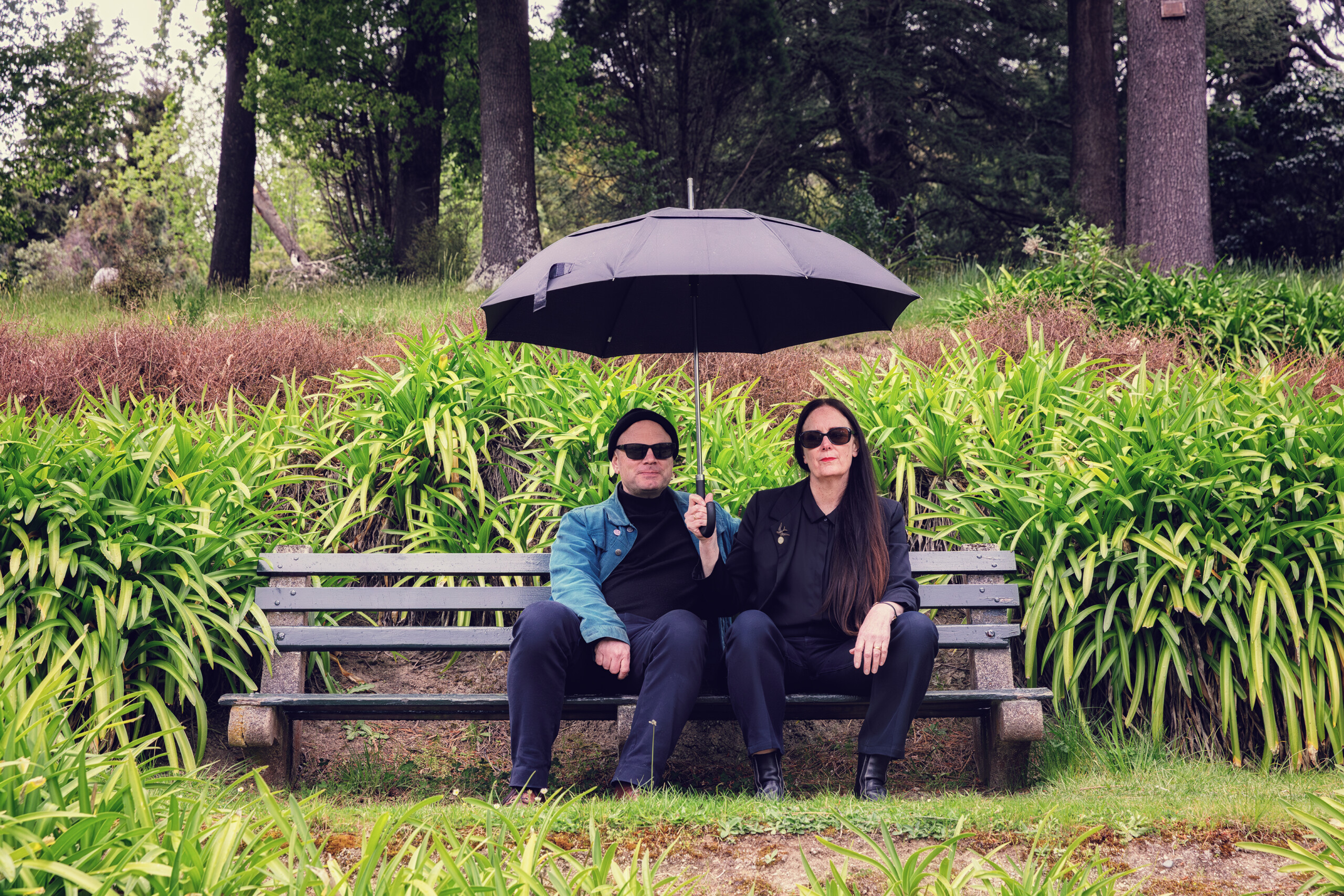
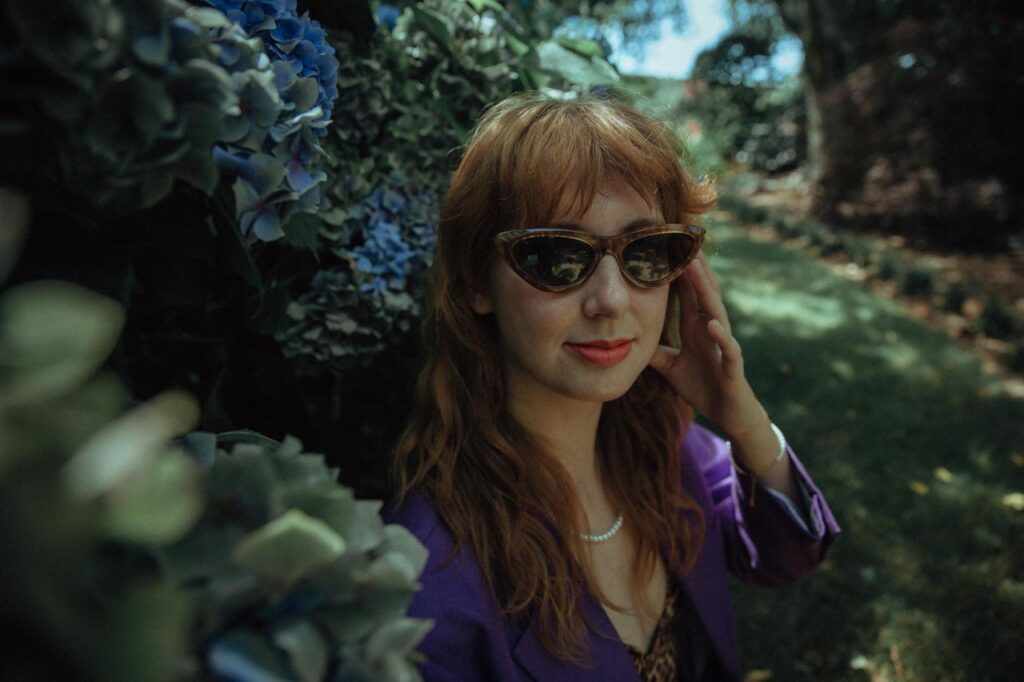
Live Nation’s Ones To Watch returns to Auckland’s Tuning Fork on Wednesday 23 September, bringing together three distinctive emerging Aotearoa artists: Heidi Simpson’s indie- and dream-pop, Ethan Jupe’s jazz-house project Dawson, and Jess Bailey’s intimate indie-folk vehicle Fables. Ahead of the showcase, Tim Gruar reached out to each artist to explore the stories, collaborations and creative directions behind their music.
That began with Bailey and Change Is a Slow-Moving Beast – an album shaped by a blunt paradox. Everything in her life seemed to change at once, she told me, yet understanding those changes took years. Arriving eight years after her 2018 EP Portraits, the record does not feel delayed so much as weathered: 12 chambers of dream-folk, alt-country and bruised pop, carried from house to house and friendship to friendship until they were ready to stand on their own.
Bailey is still slightly ‘startled’ by the response. “The reception has kind of exceeded all of my expectations I had for myself,” she says, before adding: “I think it’s because the album’s good.” She laughs, but the point holds. “You can do good work and that doesn’t necessarily mean that you’re in the right place at the right time.” This time, somehow, she was.
Friends helped create that right place. An album track was previewed on Afternoons with Jesse Mulligan (RNZ) and, as Bailey recalls, “they were just kind of ‘so gushy’ about it, and it was beautiful.” Sir Dave Dobbyn and his partner happened to be listening, prompting an invitation for Fables to open at The Civic. Bailey’s response was admirably direct: “Don’t question it. Just say ‘yes’, just turn up and do a good job.” She later returned to RNZ for a full NZ Live session. Mel Parsons called immediately afterwards to say, “That was beautiful, Jess” – one of several moments when artists Bailey had long admired reached back with encouragement. After a decade of dive bars, The Civic’s attentive silence reset her sense of scale. “It’s kind of blown the roof off whatever ceiling I had made for myself,” she says.
The album’s title predates the album itself. Bailey first used Change Is a Slow-Moving Beast for a 2016 art installation about transformation, decay and preservation. A decade later, the phrase had become less thesis than survival mechanism. “Everything is always fluid and always changing,” she says, “to the point where change is almost like the anchor.” A missed appointment, a friendship shifting shape, a home no longer being home – each event seems discrete until they mass together. “They all kind of join together and create this huge, cumbersome thing that is kind of always coming towards you.”
So, she gave the chaos ‘a body’. “It felt easier to bat away if I could think of it as the slow-rolling glacier rather than a whole bunch of ping-pong balls going everywhere.” That image explains the record’s pacing: it does not sprint towards catharsis. It advances by pressure, accumulation and small disclosures. “We are always just becoming ourselves, whether we like it or not,” Bailey says. The only constant across the songs is her: “It is just one big story that is always unfolding.”
During the years in which that story took shape, Bailey moved through COVID-era uncertainty, bought a house believing she would remain there for decades, later left it, and spent time couch-surfing while establishing a new life, getting back on her feet. The past is at the edge of the frame, where it belongs; what matters here is the chain of consequences and the work of creating stability for two children while her own ground was shifting. “I have to show up and be normal every day somehow,” she remembers thinking, “but I feel like I’m never going to be the same again.” Music became the familiar place she could return to. “I just came back to the things that I know that I can do, where I feel like I’m in the right place.”
The origin story of the recording is less a funding plan than a chain of generosity. A former drummer, Pete, gave his drum kit to Parachute Studios. When the studio offered him a day in return, he passed it to Bailey. She had a newborn and knew she was not ready. Parachute simply told her to come back when the time was right. Later, while couch-surfing and learning how to use the hours when her children were elsewhere, she booked that day as “a line in the sand, something to work towards.”
An unexpected payment of about $500 from a Brokenwood Mysteries placement bought a second day. Bailey called in favours from friends and session musicians, intending to cut a live EP. Mark de Jong, owner of Parachute, heard the sessions and asked what came next. Bailey’s answer was pure exhaustion: “Listen, Mark, I don’t know what is next for me. I am just doing my best today.” When she admitted she had hundreds of songs, he offered ten more studio days – five in the main room and five in the producer studio.
Even free studio time still requires engineers, players and the invisible cost of keeping a project alive. Bailey hesitated. Producer and multi-instrumentalist Dave Khan did not. “If somebody wants to support your art, you just say ‘yes’ and you make it happen,” she remembers him insisting. “You just say yes, and we’ll figure it out.” Khan came aboard as producer and player; bassist Cass Basil and drummer Arahi Whaanga formed the core ensemble. Engineer Joshua Strand worked at Parachute, with further engineering by Emily Wheatcroft-Snape at The Lab and Fountain Ranch Studios; Dan Luscombe mixed the album, and Wheatcroft-Snape mastered it.
Money arrived through friendship rather than infrastructure. An ex-bandmate lent Bailey money for recording, then when they heard the first tracks, told her not to repay it. Brooke Singer – of French for Rabbits and the Home Alone Music circle – personally helped with the deposit for pressing the vinyl pressings. Bailey later repaid her after receiving the modest proceeds from selling her share of the house. Yet Singer’s support was never merely financial. “She’s been this constant source of support,” Bailey says, someone with whom she could bat ideas around when the logistics of releasing the record became overwhelming.
Home Alone is not a conventional label machine. Bailey remains fully independent, describing it as “as close to an independent kind of friendship circle as you can get” – clever people helping artists solve the practical problems that might otherwise swallow the art. NZ On Air also funded the release of two singles from Change Is a Slow-Moving Beast, helping those songs travel beyond the community already carrying the album. “This is definitely a crowd-sourced – a closeted crowd-sourced – project,” Bailey says.
That phrasing matters. The record was not publicly crowdfunded; it was privately, repeatedly rescued. Friends gave money, studio time, playing, engineering, advice and belief, often before Bailey could imagine a return. “My friends lent their time,” she says. “I eventually was able to pay them back because somebody else gave me money. This is just a miraculous thing that has happened.” Her voice catches when she talks about it. “It’s the first time in my life that I’ve been so well resourced to be able to make art, and it feels like such a privilege.”
There were further obstacles. A concussion just before a major recording session forced Bailey to retrack much of the singing later. Reb Fountain opened her studio for those vocals, comped takes and coached Bailey back into the emotional centre of each song – not by polishing technique so much as restoring intent. “She helped me talk through the heart of the song, or what a lyric means to me,” Bailey says. “When I was delivering the song, I wasn’t just singing the notes or phoning it in. We were really engaged in the world of that song.”
That method carried through the band and into Luscombe’s mixes. “It wasn’t, ‘It should sound like this,’” Bailey says. “This time we honed in on, ‘It should feel like this.’” The result is cinematic without becoming grandiose: Khan’s strings, guitar and electronics; Basil’s grounding bass; Whaanga’s drums; small synthesiser abrasions; voices close enough to fog the glass.
Forgiving opens the album as a miniature poem and an outstretched hand. Its pivotal idea – missing “the year I never had” – is, Bailey says, “this longing for all of the things that you imagined would happen… that didn’t turn out the way that you had in mind.” The phrase catches the record’s central ache: grief not only for what ended, but for futures that never entered the room.
Cacophony is the album’s thesis in motion. Bailey chose the title as the opposite of euphony: abrasive sound rather than harmony, collapse and rebirth occurring at once. In the interview, she describes the song as change becoming a “transformational anchor”; on the record, its repeated admission that change is hard sounds less like surrender than a fact finally spoken without decoration. It was planned as the focus track, while its restless momentum also made it the song student radio seized upon.
Enough is even less defended. “It’s one of the few songs that I’ve written where I don’t hide behind imagery or metaphor,” Bailey says. “I kind of just say exactly what I mean. And that felt like a really scary thing.” The first live arrangement was almost bright – jangling guitar, trumpet, too much daylight. Khan heard the song beneath the decoration and asked why so much else was happening. They stripped it back, then discovered they had stripped away too much. Basil’s bass returned the necessary weight, with small sonic artefacts carrying Bailey forward rather than distracting from her. “I learned a lot making that song,” she says.
Listeners have treated Enough as both warning and mirror. “It resonates with people that have ever considered leaving their person,” Bailey says, “or any of the dips and troughs that might happen in a relationship.” Its intimacy is not gossip. It is recognition.
Minibar, by contrast, gives frustration a pulse. Bailey calls it “weirdly triumphant” because anger is not her usual pathway: “I normally revert straight to defeated.” Here she tries something different – the fantasy of walking away from a scene armed with all the lines that arrived too late. Its sweetness and hookiness sharpen, rather than soften, the bruising underneath.
Eyes Closed names the gap between what was hoped for and what actually existed, its gentle surface holding a quiet dread. Elsewhere, Notebook, Sundown, Woman and Back Up Plan gather the record’s recurring states – grieving, yearning, pining – without pretending that one clean revelation will resolve them. Bailey says all her writing begins autobiographically, even when character, poetry or metaphor intervene. “Part of it is always just me trying to understand myself and what I’ve lived through and what I’m thinking about and how to exist in the world.”
By the end of the interview, the domestic picture is quieter. Bailey has a place of her own. It is “warm and dry and beautiful.” One child has started school; the other is at preschool. The album has moved from private coping mechanism to public object, pressed onto vinyl because friends decided the songs deserved a physical life. “I wasn’t sure if I was documenting a collapse or a becoming,” Bailey has said of the record. “I think it’s both.”
That refusal to force a neat ending is the album’s strength. Change Is a Slow-Moving Beast documents material reality: free studio time, a sync payment, gifted sessions, a forgiven loan, a vinyl deposit fronted by a friend, and two singles supported by NZ On Air. Its sound is the sound of those interventions – not charity, but a community insisting the work had value.
Bailey is already chipping away at another record, with no certainty about when it will be finished or how it will be paid for. That uncertainty no longer sounds like paralysis. “Who knows?” she says. “We’ll just keep chipping away.” It is an appropriately modest plan for an artist whose grandest metaphor is a glacier: keep moving, accept that movement, and trust the people willing to walk beside it.
Live Nation’s Ones To Watch, featuring Heidi Simpson, Dawson and Fables, arrives at Auckland’s Tuning Fork on Wednesday 23 September 2026.
Related Acts:
About the interviewer Tim Gruar

Tim Gruar – writer, music journalist and photographer Champion of music Aotearoa! New bands, great bands, everyone of them! I write, review and interview and love meeting new musicians and re-uniting with older friends. I’ve been at this for over 30 years. So, hopefully I’ve picked up a thing or two along the way. Worked with www.ambientlight.com, 13th Floor.co.nz, NZ Musician, Rip It Up, Groove Guide, Salient, Access Radio, Radio Active, groovefm.co.nz, groovebookreport.blogspot.com, audioculture.co.nz Website: www.freshthinking.net.nz / Insta @CoffeeBar_Kid / Email [email protected]
More by Tim Gruar
MNZ Interview: Ones To Watch: Heidi Simpson
MNZ Interview: Ones To Watch: Dawson
Muzic.NZ Interview: Hina
Album Review: Leap!

MNZ Interview: Hikurangi Schaverien-Kaa (Wellington Jazz Festival)

Festival Review: Great Sounds Great Part 1 @ Cuba Street Precinct, Wellington – 5/09/2026
Festival Review: Great Sounds Great: The Night Before @ Newtown Village, Wellington – 4/09/2026
Gig Review: Mel Parsons @ Opera House, Wellington – 05/09/2026
MNZ Interview: The Broken Heartbreakers