EP Review: We Are Learning Too High
Lucy Summerfield
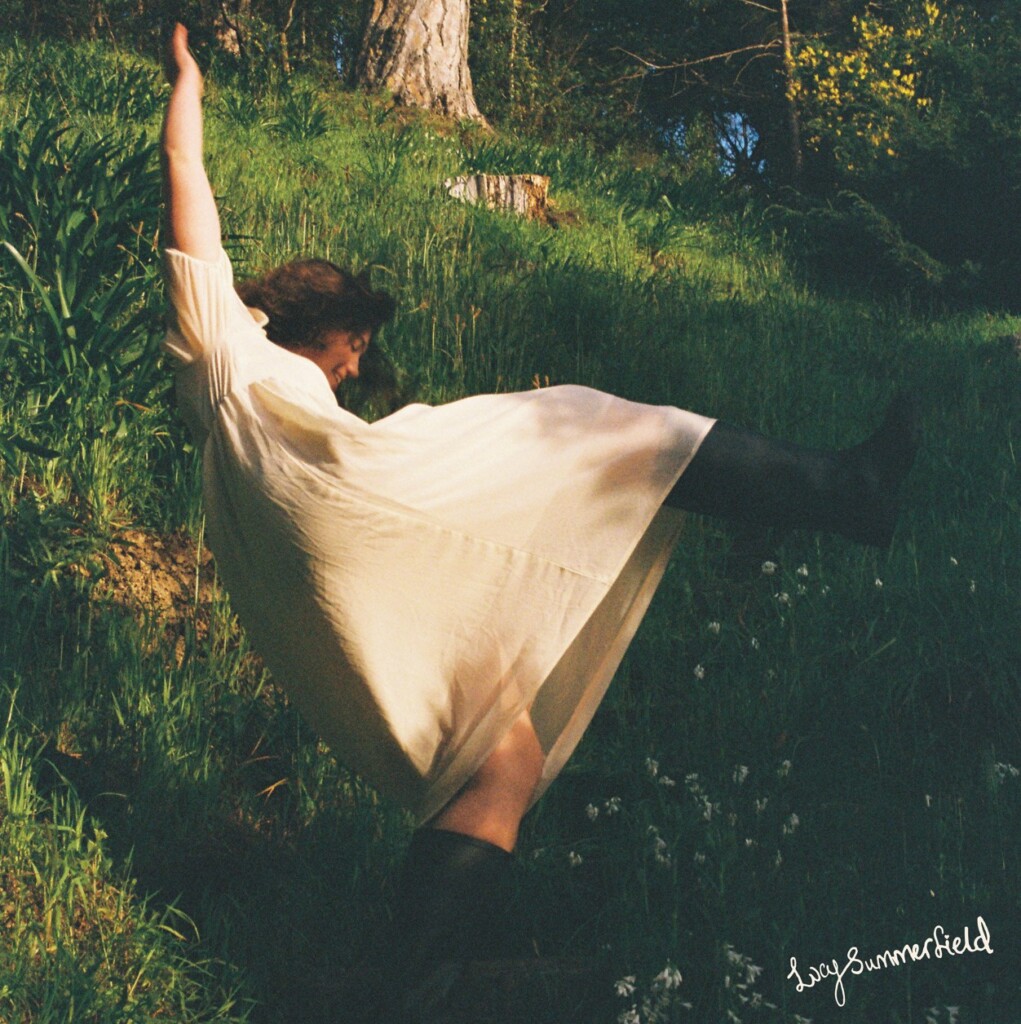
Lucy Summerfield ends We Are Learning Too High by abandoning melody altogether. After five tracks of intricate harmonies, cinematic string arrangements and some frankly outrageous vocal writing, she simply speaks.
And somehow, it might be the most powerful moment on the entire record.
Originally from Motueka, the Wellington-based songwriter, producer and composer has been steadily establishing herself within Aotearoa’s contemporary folk landscape. Since her 2022 debut Hurihia, which received coverage on Te Ao Māori News, Summerfield has earned airplay on RNZ, performed at CubaDupa, Gardens Magic and the St James Theatre and received the Joan Prior Award for folk music.
Drawing inspiration from Joni Mitchell, Bic Runga and Lizzy McAlpine, her latest offering expands beyond traditional singer-songwriter territory, incorporating full-band instrumentation, a string quartet and an adventurous approach to melodic composition.
Across six tracks, We Are Learning Too High examines identity, belonging, vulnerability and the complicated process of finding strength in ourselves. What immediately impressed me was Summerfield’s ability to balance considerable musical complexity with an almost disarming sense of intimacy.
The opening track, Kia Kaua, establishes this beautifully. Performed entirely in te reo Māori, delicate guitar textures and expressive strings surround Summerfield’s crystalline vocals, while lush harmonies introduce subtle moments of dissonance that resolve with satisfying elegance.
The arrangement is wonderfully economical. Gentle folk-rock percussion and occasional bass movement provide momentum without overwhelming the melody, while the production preserves the natural resonance of the instrumentation. There’s a palpable understanding of musical space here, with every element contributing to the wider composition rather than competing for attention.
It’s an exquisite introduction, and one that immediately establishes Summerfield as a composer with a highly developed ear.
When I Leave opens with a gorgeous, suspended chord progression, creating a sense of harmonic uncertainty that perfectly complements its exploration of absence and belonging. Summerfield’s conversational vocal delivery occasionally recalls Lily Allen or KT Tunstall, although her melodic choices possess a character entirely their own.
And those crunchy harmonies. Good heavens.
The interplay between close vocal intervals, gentle dissonances and eventual resolution is particularly delicious, building towards a closing passage that feels less like a conventional climax and more like an emotional confession.
Lyrically, Summerfield captures the contradiction of feeling misplaced wherever we go, yet desperately wanting somewhere to call home. What happens when leaving feels necessary, but staying feels equally impossible? Rather than offering an easy answer, she allows that uncertainty to linger.
Then comes Fire, and suddenly we’re moving.
Syncopated percussion and an infectious rhythmic foundation introduce a welcome burst of energy, while Summerfield’s distinctly New Zealand vocal inflections lend the performance a wonderfully authentic character. In an industry where transatlantic pronunciation has become almost second nature, hearing our own accent celebrated is rather refreshing.
Beneath its buoyant arrangement, however, lies a confronting question. What happens when the passion that once defined us begins to disappear?
Summerfield wonders whether her internal fire was extinguished by circumstance or whether she somehow drowned it herself. It’s a rather devastating thought, particularly in a world where the demands of adulthood can quietly erode the things that once made us feel most alive.
Yet there’s defiance here too, the suggestion that whatever has been suppressed might eventually resurface. I can imagine this absolutely flourishing on a summer festival stage. Sunshine, an infectious groove and a song about existential uncertainty?
Quite frankly, that’s my kind of juxtaposition.
Breathe, meanwhile, transports us somewhere considerably more mystical.
Modal melodic passages intertwine with an expressive violin line, creating an atmosphere that feels simultaneously ancient and cinematic. Summerfield’s vocal performance is mesmerising, navigating intricate intervals and unexpected changes in melodic direction with remarkable agility. Her articulation is crisp, her phrasing precise and her voice carries an almost birdlike clarity, reminiscent of a lark singing into the last light of a summer evening.
It’s the kind of composition that demands attention. Even a passive listener would struggle to ignore the unusual melodic contours and the sheer inventiveness of the vocal writing.
The lyrical imagery is equally striking, exploring the tendency to deliberately diminish ourselves to accommodate others. As the narrative progresses, that internalised smallness transforms into strength, with the image of a woman evolving from a ripple into a storm providing a particularly powerful moment.
Somewhere during my listening experience, I found myself imagining a medieval fairy emerging from an enchanted forest, no longer running from whatever frightened her, but walking directly towards her throne.
Yes, an incredibly specific image. No, I won’t be apologising for it.
He aha tāku introduces a delightful jazz-influenced rhythmic sensibility, with the natural cadence of te reo Māori interacting beautifully with the underlying groove. The string quartet provides an almost orchestral expansiveness, lending the composition a strong sense of cinema without sacrificing its intimacy.
And can we please discuss this woman’s vocal technique?
Because genuinely, it’s ridiculous.
Summerfield demonstrates impressive tonal consistency, fluid register transitions and exceptional dynamic control, particularly throughout the more demanding melodic passages. Yet what distinguishes her performance is the absence of unnecessary vocal exhibitionism. She possesses the technical ability to do considerably more than she chooses to, allowing the emotional intention of the composition to take precedence.
The song’s celebration of togetherness and collective strength gives it an anthemic quality, with an unmistakable sense of mana running through the arrangement. I could genuinely imagine He aha tāku becoming a treasured contemporary anthem in Aotearoa, such is the conviction of its message and the richness of its musical presentation.
By this point, I thought I had a reasonable understanding of Summerfield’s artistic universe.
And then she threw the rulebook out the window.
What I’ve Learned concludes the EP with spoken-word poetry, abandoning conventional song structure in favour of an intimate reflection on whakapapa, ancestry and intergenerational healing.
Atmospheric textures, unusual low-frequency movements and sounds evocative of traditional Māori instrumentation create an immersive, almost cinematic soundscape. I could easily imagine this accompanying the closing moments of a film, where the narrative has reached its emotional conclusion and the audience is left to contemplate everything that has unfolded.
Summerfield reflects on her tīpuna, the wounds inherited from previous generations and her determination to participate in their healing. Her acknowledgment of her mother’s strength is particularly moving, recognising how profoundly we are shaped by those who came before us.
And goodness, I had goosebumps.
The closing affirmation that she is exactly where she is supposed to be brings the EP’s exploration of belonging and self-discovery to a deeply satisfying conclusion.
After demonstrating considerable vocal range and compositional versatility, Summerfield chooses not to finish with an enormous orchestral crescendo or final display of virtuosity.
She simply speaks.
And somehow, that says everything.
Ultimately, We Are Learning Too High is a beautifully realised exploration of identity, cultural connection and the often uncomfortable business of becoming ourselves. Summerfield’s command of melody, harmony and arrangement is undeniable, but it’s the sincerity behind her songwriting that makes this record so affecting.
Her integration of te reo Māori, contemporary folk and orchestral textures feels entirely organic, creating a musical language that is unmistakably her own. It’s sophisticated without being pretentious, vulnerable without becoming self-indulgent and ambitious without losing sight of what makes a genuinely compelling song.
Lucy Summerfield isn’t offering definitive answers to life’s great existential questions. She’s reminding us that perhaps we don’t need to have everything figured out to appreciate where we stand.
And if this is where she stands now, I cannot wait to hear where she goes next.
Five thoroughly deserved stars. An absolute triumph.
Related Acts:
More by Veronika Bell
EP Review: That Feeling
Album Review: Winters In The World
EP Review: INtroSPective (I Need Some Peace)
Album Review: The Girl Next Door

Album Review: To The Heartland
Album Review: Empress Era

Album Review: Wooden Leg

EP Review: My Limbo

Album Review: Love and Comfort
Album Review: Hometown Therapy