
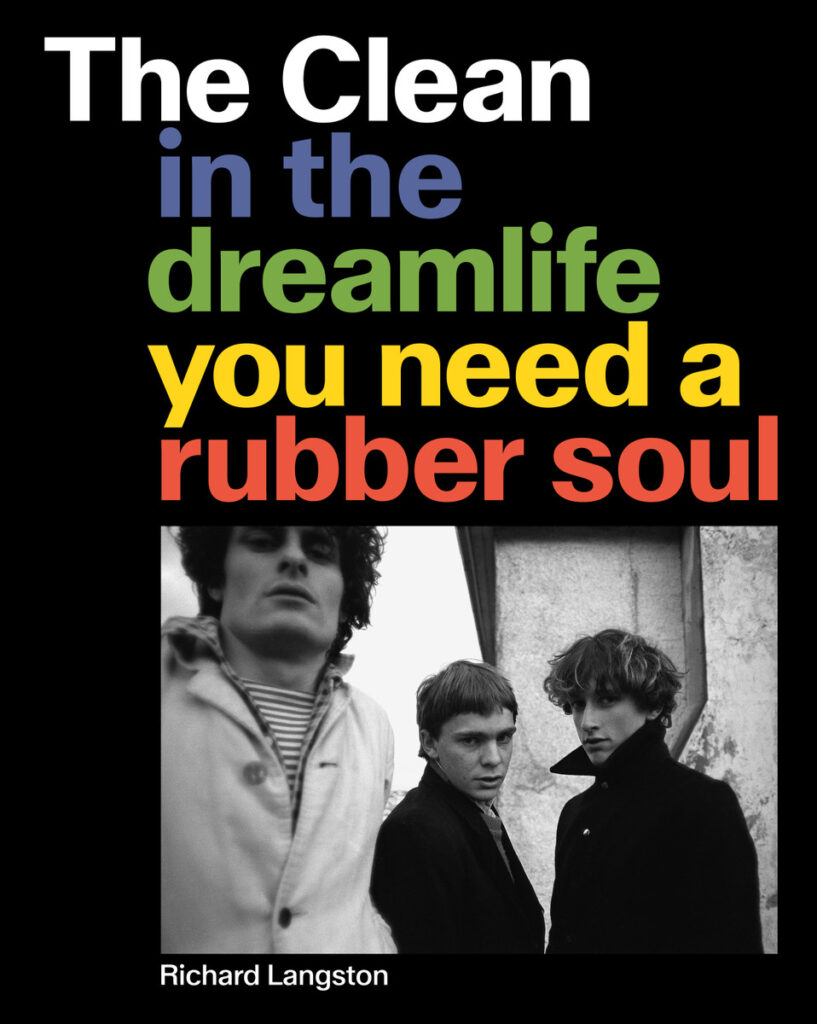
Journalist and author Richard Langston has been deep in the Flying Nun universe since the early 1980’s. He once produced a fanzine that championed iconic bands like The Clean, The Enemy, The Chills, The Verlaines and Doublehappys – right at the heart of the scene. Fellow Nun fan Tim Gruar caught up with Langston to talk about his compilation Pull Down The Shades: Garage Fanzine 1984–86 (HoZac Books, 2023) and his latest project, The Clean – In The Dreamlife You Need A Rubber Soul, a biography of The Clean, out via Auckland University Press on 9 April.
It was 1978, Dunedin, the Kilgour brothers, Hamish and David, and their school friend, Peter Gutteridge, got together to form a band named The Clean (from a character called Mr. Clean in the 1977 road movie Free Ride). When Robert Scott joined in 1980 the band found a combination that endured for nearly forty years. The Clean profoundly changed alternative music: hitting the New Zealand charts for months with a single made for $50, Tally Ho! helping establish Flying Nun and a music scene independent of the big labels; pioneering a low-fi, do-it-yourself approach to rock music; and touring internationally to influence bands like Pavement and Yo La Tengo. Raw and immediate, Langston’s new book is the story as told by members of The Clean and their inner circle – fellow musicians such as Chris Knox, Martin Phillipps, Graeme Downes and Ira Kaplan, friends and family, pub promoters and sound engineers, and their good friend, Richard Langston. His new book documents, in their own words, the band’s journey from teenagers in a Dunedin practice room to New York City on 9/11.
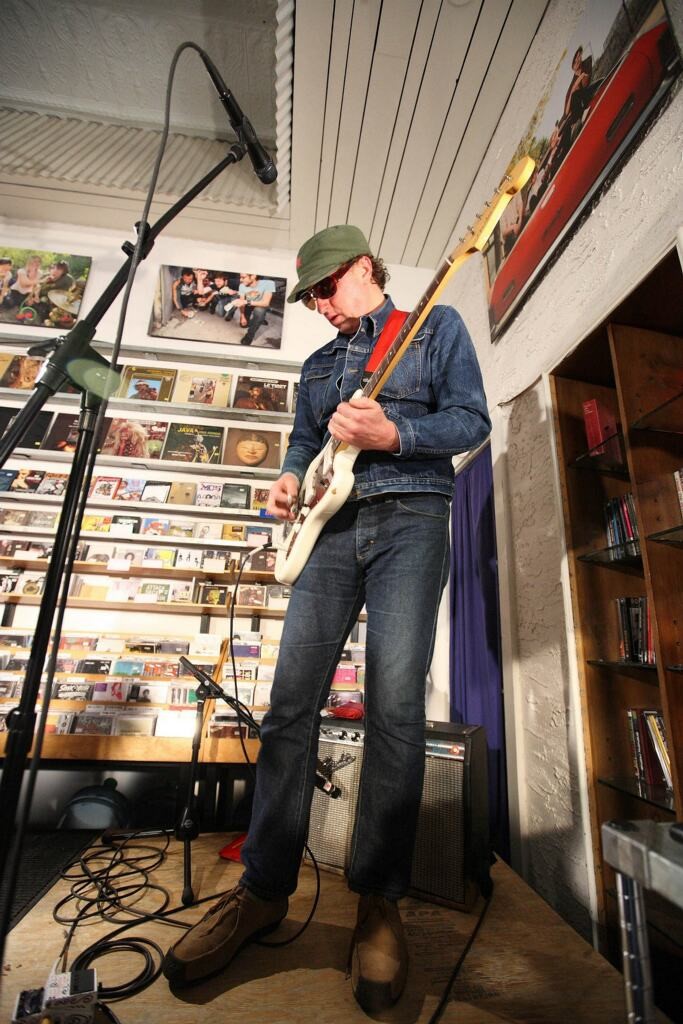
Dunedin, back in the late 1970’s and early 1980’s, was pretty conservative, staunch, traditional. Not a place anyone expected a musical revolution to begin. It was a small, windswept university city at the bottom of the world, affordable, especially to students, and isolated. But it was alive with restless young energy. Yet it was here that a cultural shift quietly took hold – one that would evolve into what some argue is the definitive ‘Dunedin Sound’ and produce bands that changed the shape of independent music – bands whose influence would travel further than any of them could have imagined.
Punk had detonated the first shock wave. The Enemy, led by Chris Knox, had blown down the doors. And The Clean – then Hamish and David Kilgour and Peter Gutteridge – had already completed their first, explosive burst of creativity. Langston remembers his earliest encounters in 1980 with the band with a mixture of awe and bewilderment.
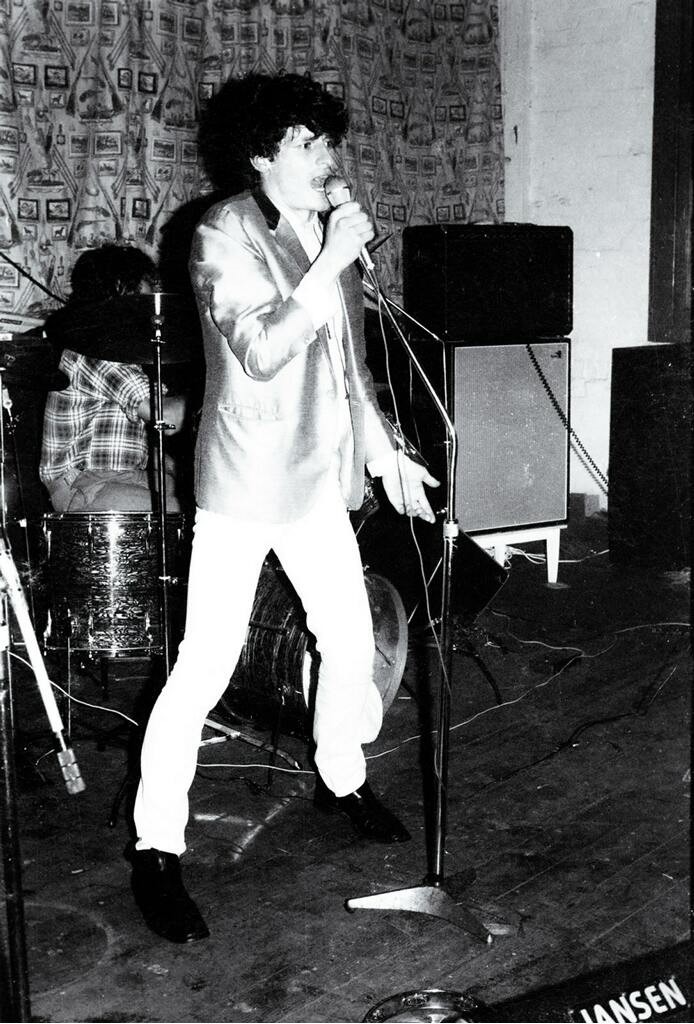
The Clean’s sound was entirely their own, Langston tells me. It was raw, hypnotic, minimal, and defiantly DIY. They built their own sound system, booked their own gigs, and avoided managers on principle. Yet they weren’t alone in shaping the Dunedin scene. A network of community halls and makeshift venues gave bands the physical space they needed to be loud, messy and ambitious. “The Enemy played the Beneficiary Hall; The Chills began at the Coronation Hall; The Clean played pubs like The Prince of Wales and The Empire”, sometimes “having the power cut mid-performance by the staff, because the sound was too intense.” These places became crucibles where young musicians learned to trust their instincts. These were formative spaces where noise, youth, and possibility collided. In the early days, fans and bands were often underage and couldn’t thrive in the usual bar spaces. These halls were essential: without them, the entire scene might have dissipated.
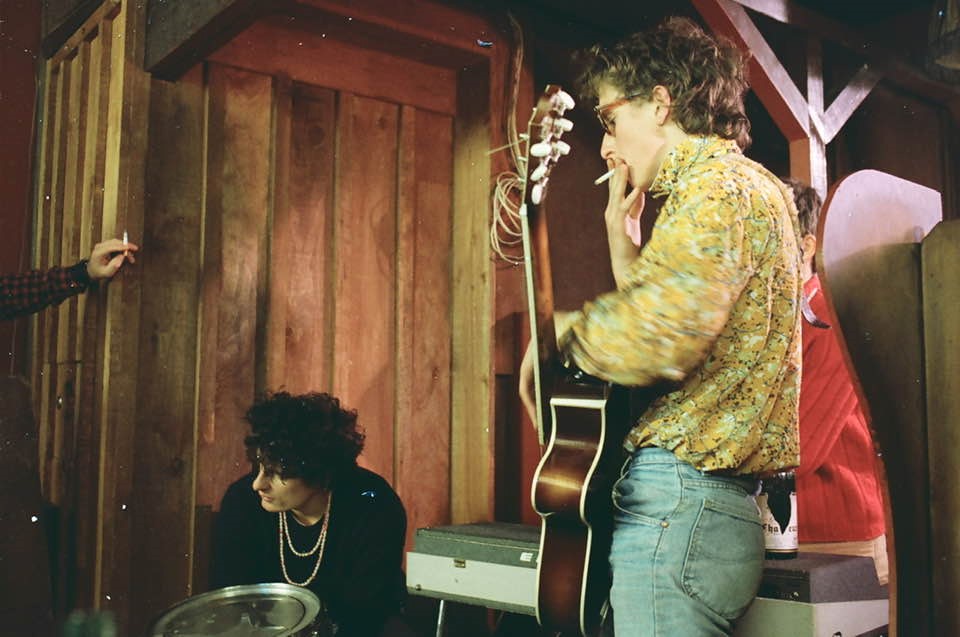
Langston first saw The Clean at the Prince of Wales pub in Dunedin in September 1980. “I just thought, wow, that is hell of a noise! I couldn’t quite get my head around it.” He says he saw them multiple times after that until 1982 when he went overseas. “In 1982 The Clean played with the Tall Dwarfs at the Star and Garter – that year is one of my favourite gigs ever. I took two cassettes of NZ music mainly The Clean and Tall Dwarfs with me and played them to any music fans I encountered. I was overseas for two years. When I was in London, I helped get The Clean on an Australia compilation record Beyond the Southern Cross on Ink Records. I also took Flying Nun records sent to me in London by Hamish Kilgour to the Rough Trade shop and to the English DJ, John Peel. I came home in 1984 and started Garage then, producing six issues between 1984-86.” It was the document for the moment, capturing all the scene’s chaotic edges, its humour, its invention. Though trained in conventional journalism, he saw an opportunity to create something more personal, less orderly, and more reflective of the scene’s irreverent spirit. Garage ran from 1984 to 1986, a mere six issues, and quickly became one of the most important cultural artifacts of the Dunedin Sound. At a time before the internet, before social media, before PR departments, Garage served as both witness and participant.
Reading Garage Fanzine, it feels like it’s an insider job, strong familiarity with every band. Langston remembers the energy and effort, experimenting with the idea of how to present these bands to the world. “I think, well, it was a weird because, you know, I had done conventional journalism. So, I knew I could write newspaper stories, and I could write magazine stories, and I was working in radio, as well, at that time. So, I knew how to do conventional journalism. And we wanted to do something different. Something that wasn’t as orderly. Something a bit wild. We tried to tell stories too. And there was an enormous amount of goodwill with the bands. I didn’t even ask Hamish Kilgour – I think I wrote to him and said we need stuff for a particular edition and he immediately sent me a whole lot of his graphics. So did Chris Knox, he drew an image for the back cover. He drew these two figures in a tussle, sitting in a big white space, signifying the Dunedin sound (a perfect metaphor for the time). You know, (those bands and artists) they worked with us in spirit from the outset. I always appreciate the fact that everybody got on board and was helpful. We just had a curiosity for the music (and that was our focus).”
Garage circulated far beyond Dunedin. Langston mailed copies overseas, connecting distant underground communities with music coming from a place many had never heard of. When the fanzine was compiled into the 2023 book Pull Down the Shades, it revealed just how crucial those early pages were – not only as journalism, but as an emotional record of life inside the Dunedin scene.
When it comes to The Clean, Langston says he first met Hamish in 1979 when he worked briefly at the same newspaper, the Evening Star in Dunedin. He worked there only for three weeks. And I thought this was an interesting guy. It seemed to me that he had a lot of ideas going on and that weren’t necessarily anything to do with journalism. Being nervous, I initially didn’t want to approach them until I started Garage and that’s where I really got to meet and to know them – David, Hamish and Robert – especially David, because we used to go surfing together. There were so many great surfing spots, so that was a good way to get to know David, because we didn’t necessarily talk about music.”
“I’d seen a lot of bands overseas, but even then, I thought: the world should be hearing this music… even though they were kind of our secret.” Through their DIY approach – building their own sound system, booking their own gigs, and avoiding managers entirely – The Clean set a pattern that many Dunedin bands would follow.
“The whole music scene was really DIY and accessible then. No PR people. And I just really loved it, and you know, you could talk to musicians so easily. You just immediately ring up Shane Carter. You could ring up anyone, like Graeme Downs, and just go and see them and chat to them. Yeah, that was a very good time to get to know them while they were young and sort of on the rise.”
When Langston agreed to tell the story of The Clean, he was soon caught in the grip of it. Writing the book became an almost obsessive undertaking. “I’d be working 13-14 hour days because I couldn’t stop… I was learning stuff. I didn’t know these stories.” He dug up interviews with band members, partners, friends, and collaborators that revealed details even he had never known. The influence of the Sex Pistols, moments of violence at gigs, the close-knit creative relationships that formed naturally in Dunedin’s compact geography – all of it helped reconstruct the lived experience of the era. Letters from David Kilgour about early shows and diary entries from Hamish about travelling to London became emotional anchors.
One emblematic story surfaced about the band’s first attempt to travel to Auckland in 1979. Their car broke down in Christchurch, leaving them stranded and spiralling through an all-night existential crisis. These small, very human moments would eventually find a home in the story.
The entire book is compiled in first person – in their own words. Letters, diaries and interviews with band members, partners, friends, promoters, and collaborators. Langston had several from his Garage days. They reveal hidden layers of the band’s formation: the role of punk in shaping their early sensibilities, the violence fans sometimes faced at gigs, and the creative energy that blossomed because, as Chris Knox once said, Dunedin was compact enough for everyone to “fall down the hill and meet in the middle.”
Langston enjoyed the process of getting closer, knowing more about the Kilgour brothers, through documents like letters and diaries. Hamish, for example, once wrote in his diary when he visited the UK for the first time, of feeling like “a colonial… a fish out of water and a South Pacific one at that.” He never felt he belonged in London; his identity was tied to an alternative New Zealand, a sentiment shared by many who grew up far from the centres of the music world. “So, he really understood where he belonged when he went to London. He did not belong there. He belonged in an alternative New Zealand and that is a common feeling. I think for a lot of New Zealanders, and that really rang a bell for me and I’m sure it will be other Kiwis who read the book.”
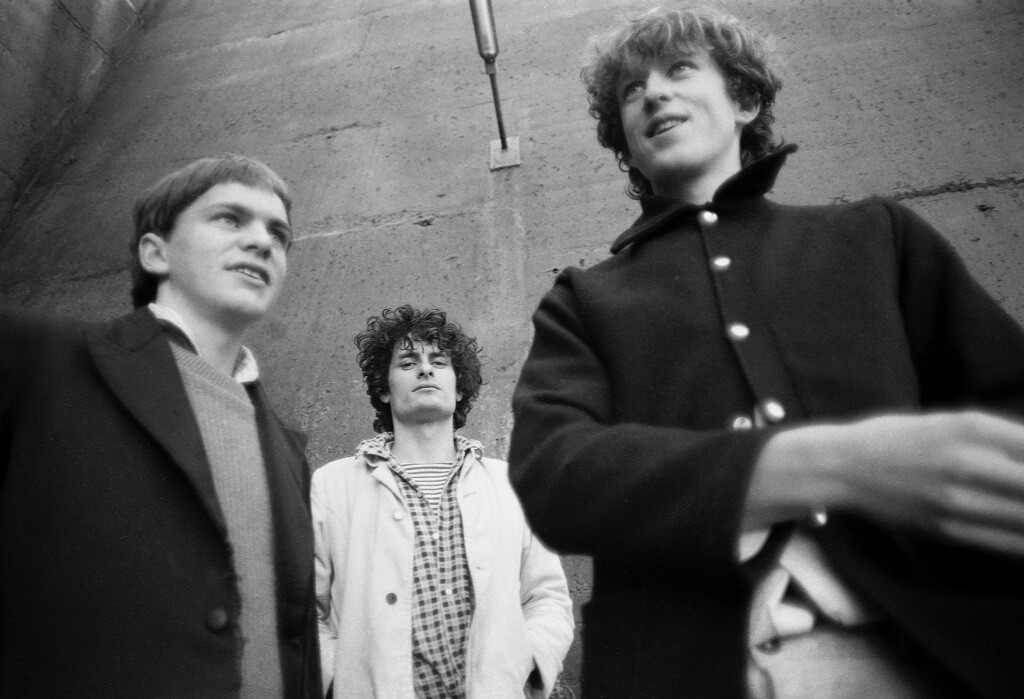
Photography became another vital layer of the story. Craig McNab, a close friend of the Kilgours, had taken hundreds of images over the decades – most unseen. After some persuasion, he opened his archives to Langston, revealing photographs of The Clean rehearsing, performing, from their earliest days until their last – there’s even a great one of the brothers standing beside the Berlin Wall. Terry Moore, Carol Tippet, and Chris Knox added their own collections.
Today, The Clean is recognised internationally. Merge Records continues to release their work. Young listeners discover them on YouTube and through reissued vinyl. Their 2014 Camp A Low Hum performance stands as a generational handover; Langston recalls Hamish describing how meaningful it was to see a young crowd responding to songs from decades earlier.
“Those were the children of our generation… communicating to a new generation was something he loved.”
Watch The Clean at Camp A Low Hum 9 February 2014
The Clean’s global reach remains surprising to many New Zealanders, but their influence is undeniable – felt across the United States, Germany, and particularly among American indie bands who heard in The Clean echoes of the Velvet Underground, psychedelia, and melodic 60’s pop structures.
Langston sent copies of the biography to the remaining band members. They saw their own story reflected through the voices of everyone who had lived it: musicians, partners, photographers, engineers, promoters, friends.
“I wrote the book for fans like you, but I didn’t realise for a long time that I might have to be the one to write it.” Langston acknowledges the long memories of those he interviewed and the strength of their recollections, which were sharpened rather than dimmed by time. Even the absence of Peter Gutteridge and Hamish Kilgour became part of the book’s emotional resonance, as decades-old interviews, diaries, and letters allowed them to speak within its pages.
Looking back, Langston sees Dunedin’s musical flowering not as something magical or mysterious, but as the inevitable result of a handful of creative, like‑minded people arriving in the same place at the same time – people who wanted to write songs, make noise, and build something of their own.
Through his writing, Langston preserves the reality of that world: a scene defined not by myth, but by lived experience. It was messy, brilliant, imperfect, and entirely human. And in capturing it, he ensures that this small, windswept city at the bottom of the world – and the bands who rose from it – continue to resonate far beyond their beginnings.
The Clean – In The Dreamlife You Need A Rubber Soul (Auckland University Press) launches on 9 April 2026
Special thanks to Richard Langston for supplying photos.
Related Acts:
About the interviewer Tim Gruar

Tim Gruar – writer, music journalist and photographer Champion of music Aotearoa! New bands, great bands, everyone of them! I write, review and interview and love meeting new musicians and re-uniting with older friends. I’ve been at this for over 30 years. So, hopefully I’ve picked up a thing or two along the way. Worked with www.ambientlight.com, 13th Floor.co.nz, NZ Musician, Rip It Up, Groove Guide, Salient, Access Radio, Radio Active, groovefm.co.nz, groovebookreport.blogspot.com, audioculture.co.nz Website: www.freshthinking.net.nz / Insta @CoffeeBar_Kid / Email [email protected]
More by Tim Gruar
MNZ Interview: Capital City Big Band

MNZ Interview: Louis TM

MNZ Interview: Tourist
Album Review: Te Ngahere
EP Review: Welcome To The Dance Bunker
MNZ Interview: Ones To Watch: Fables

MNZ Interview: Ones To Watch: Heidi Simpson

MNZ Interview: Ones To Watch: Dawson
Muzic.NZ Interview: Hina