The serious subject behind Christchurch (Ōtautahi) singer-songwriter Bryony Matthews’ new album Brain Storm sent me down a research rabbit hole. It’s our “silent epidemic”, according to medical journal The Lancet. Every year more than 40,000 Kiwis experience a traumatic brain injury, and recent research shows injury rates remain stubbornly high. Most cases may be classed as mild, but the fallout can be anything but: memory problems, poor concentration, fatigue, emotional swings and mental health challenges can linger for months or years, affecting relationships, work and quality of life. Many effects are invisible too; long after the physical wounds heal, people can still face headaches, sensory issues, memory loss, anxiety and difficulty processing information, leaving them isolated or misunderstood.
That makes Brain Storm even more striking. Matthews has lived through a brain injury herself, and here she turns that experience into a profound, poignant six-track concept album about confusion, fear, resilience, healing and the long road back.
Matthews writes the kind of indie folk-pop that puts the words right up front, then lets the textures creep in around them – little ambient washes, understated melodies, and just enough space for the emotion to land. On Brain Storm, she stretches that sound further than earlier releases, such as 2023’s We’re All The Same, pulling in darker moods, layered synths and a more cinematic feel without losing the plain-spoken honesty that makes her songs hit home.
The album unfolds as six chapters of a recovery journey. Opening track Storm captures the disorientation and fear Matthews experienced after being released from hospital, its shadowy textures mirroring fragmented memories and unsettling visions.
“It was liberating and fun to use my voice in different ways. I feel this song and album reflects me feeling comfortable in trying new ideas that I enjoy, without inhibitions,” Matthews said in her press release. The strong emotion in Storm is echoed in a beautifully shot video directed by Maria Webb, with cinematography and editing by Harry Knight. The clip leans into the song’s dark, shadowy imagery: “Vulnerable and weak like / Something I have never felt before / The lights are loud and dimming / Bright wires crossing / Sparks are painful on the eyes / Writing like I’m sick / In some bottomless pit / I lie awake control gone out the door.”
“Capturing the contrasts between light and shadow, sharp edges and blurry figures, this video is made to bring the watcher and listener into the gloomy depths of images that my mind created after my accident and how I pictured it all. It is made to feel sinister and unearthly, uncomfortable but artistically beautiful.” It certainly does that.
With layers of distortion, muffled music, fragmented beats and a nagging ring to finish, Tinnitus Train explores its namesake with real conviction. It also has an infectious indie rock groove, something Vera Ellen would kill for, I reckon, while the swirling synths add unease to the confusion at the song’s heart.
Tinnitus is more than ringing in the ears. It can disrupt sleep, affect concentration, make social situations exhausting and turn silence, conversation and everyday tasks into ongoing challenges.
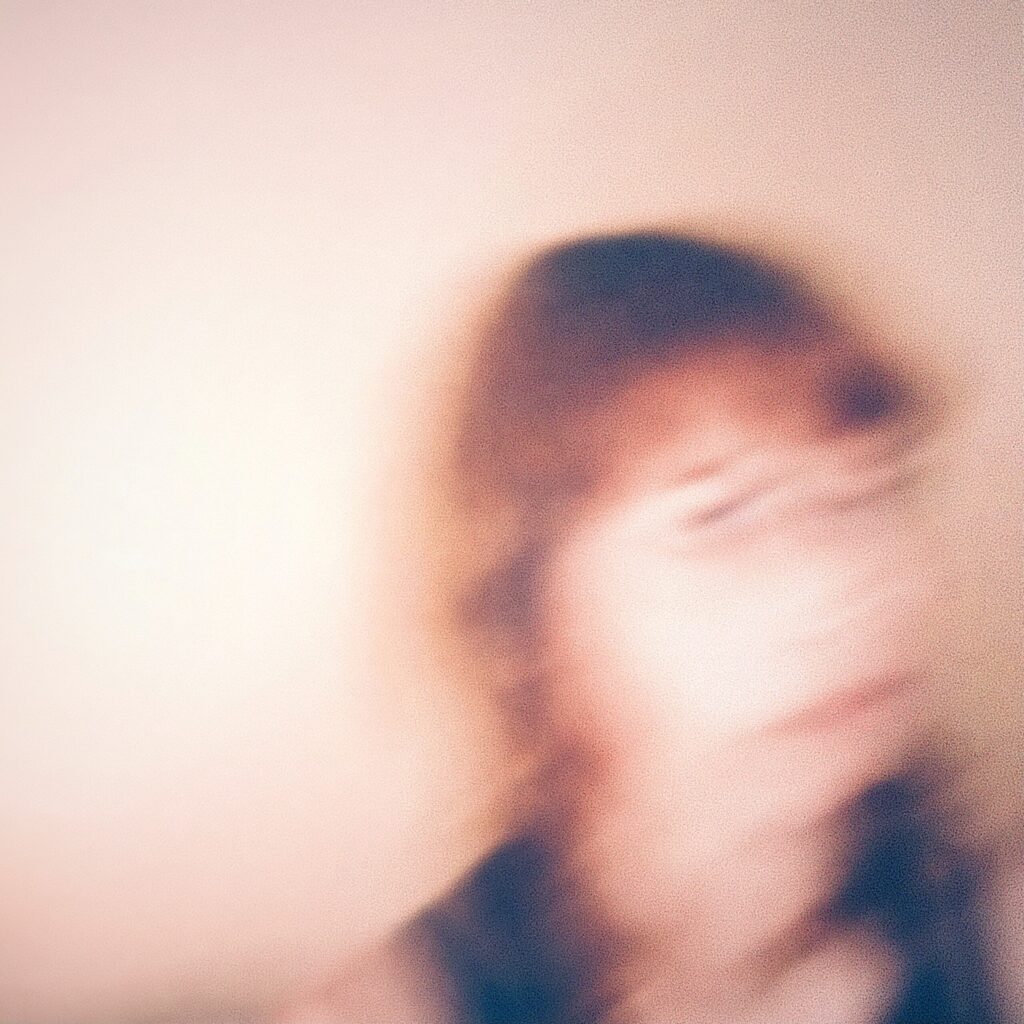
Drunk Symptom dives deeper into the strange physical and cognitive effects of brain injury. Matthews swims through oceans of confusion, like a drunken sailor trying to piece together the night before, while the album’s out-of-focus cover mirrors those same fuzzy blurs.
A quiet, brooding ballad, Trauma Waves captures the emotional turbulence of navigating a changed reality. The loss of control is there in both lyrics and music, with delicate, sombre guitar work framing a conversation between sufferer and carer: one offering thanks, the other promising protection.
Lush electronics wash in at times, recalling 80’s film scores like Pretty In Pink and The Breakfast Club. They surface on Recovery, released ahead of the album as its lead single, where uncertainty battles determination. “Is this my life now” she asks. “It goes on and on and on / Can’t remember all my words / Inside a prison / I miss the clarity of vision.” The song pushes through the daily struggle of doing ordinary things, and the impatience to return to the ‘old’ normal. “I miss the days without intrusion / The fear of crashing down / And every day I try try / To do the simple things in life / Eradicate this confusion / Shouldn’t I be getting better?” Define ‘better’.
“Telling my brain I’m ok” In the envelope of a desperate, grungy rocker, the closer A Letter To My Brain serves as a poignant reflection and reconciliation, ending the album on a note of hard-won acceptance.
A great deal of the album’s success lies in its production. Brain Storm was co-produced by Matthews and Steven Marr, whose previous work includes projects with Doprah, The Veils and Yumi Zouma. Marr also engineered, mixed and mastered the record, helping shape an immersive sonic landscape that never overwhelms. Rather than polishing away imperfections, Matthews embraces some of the vocal limitations and changes she experienced after her injury, making those rough edges part of the story. It’s what gives this fuzzy lolly its true flavour.
While the full performing lineup has not been publicly outlined, the partnership between Matthews and Marr is central to the album’s identity. The production wraps ambient electronics, atmospheric textures and subtle rhythms around Matthews’ expressive voice, while the record was manufactured through Stebbing, one of New Zealand’s longest-standing music production facilities.
What makes Brain Storm so compelling is its refusal to romanticise trauma. Matthews offers no tidy resolution. Instead, she captures slow healing, grief, uncertainty and the question of whether “getting better” ever means becoming who you were before. Yet the album never feels bleak; beneath the pain, there is quiet determination and empathy.
At the risk of sounding ungrateful, six tracks is not enough. There feels like plenty more simmering away, and I hope I get to hear it one day. The subject is uncomfortable, and maybe even a little familiar, given how much work already exists around mental health, but Matthews has a unique voice and a story that feels fresh and compelling. Brain Storm is concise, courageous and honest, turning personal hardship into something that resonates well beyond one person’s experience.
Make no mistake, writing about this kind of experience while trying to come back from it is no small thing. I have a friend who has lived with the effects of brain injury for years and still has days when the world simply does not work the way it should. That is the hard truth for many people. And for me, too. With Brain Storm, Matthews takes that bruising reality and turns it into something generous, raw and quietly powerful, opening a door onto the mental weight of recovery – the confusion, anxiety, exhaustion and self-doubt – and giving voice to anyone who has had to rebuild themselves from the inside out.
“The purpose of this whole project is to help people understand others that may have gone through head injury experiences and the symptoms people can live with afterwards, and to hopefully help those people feel a bit more understood and less alone, hearing me talk about my own experience. I hope to make more people aware of Laura Ferguson Brain Injury Trust and what they do for people like me and the amazing support they have available.” – Bryony Matthews
Related Acts:
About the author Tim Gruar

Tim Gruar – writer, music journalist and photographer Champion of music Aotearoa! New bands, great bands, everyone of them! I write, review and interview and love meeting new musicians and re-uniting with older friends. I’ve been at this for over 30 years. So, hopefully I’ve picked up a thing or two along the way. Worked with www.ambientlight.com, 13th Floor.co.nz, NZ Musician, Rip It Up, Groove Guide, Salient, Access Radio, Radio Active, groovefm.co.nz, groovebookreport.blogspot.com, audioculture.co.nz Website: www.freshthinking.net.nz / Insta @CoffeeBar_Kid / Email [email protected]
More by Tim Gruar
EP Review: Welcome To The Dance Bunker
Album Review: Leap!

Festival Review: Great Sounds Great Part 1 @ Cuba Street Precinct, Wellington – 5/09/2026
Festival Review: Great Sounds Great: The Night Before @ Newtown Village, Wellington – 4/09/2026
Gig Review: Mel Parsons @ Opera House, Wellington – 05/09/2026
Album Review: Descending Dreams
EP Review: Extended Paranoia
Album Review: Ceiling Waves
Album Review: Castle Hill
Gig Review: Parrotdog Presents @ Parrotdog, Wellington – 1/08/2026

Album Review: 4EPs
Gig Review: The Veils @ Meow Nui, Wellington – 04/07/2026