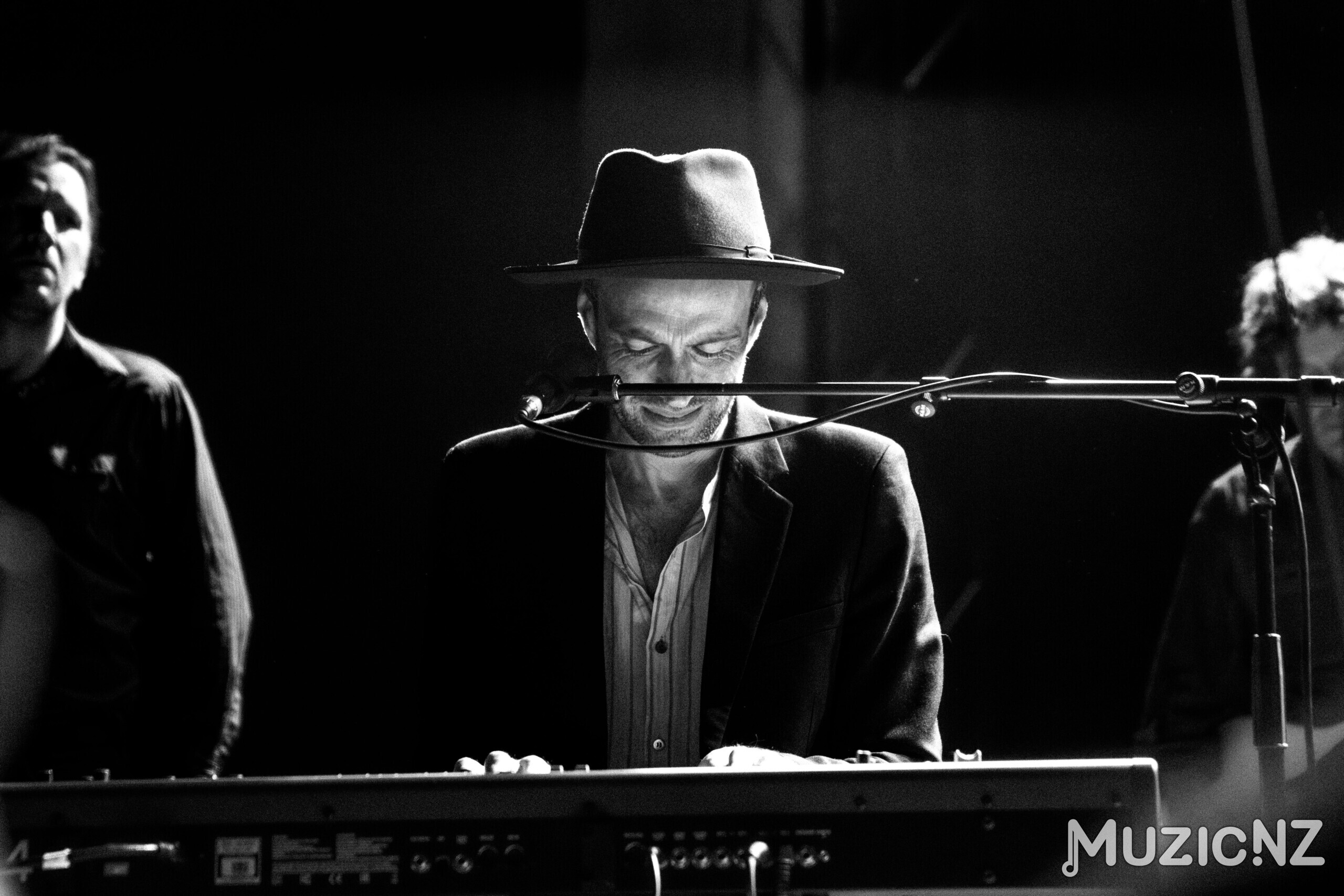
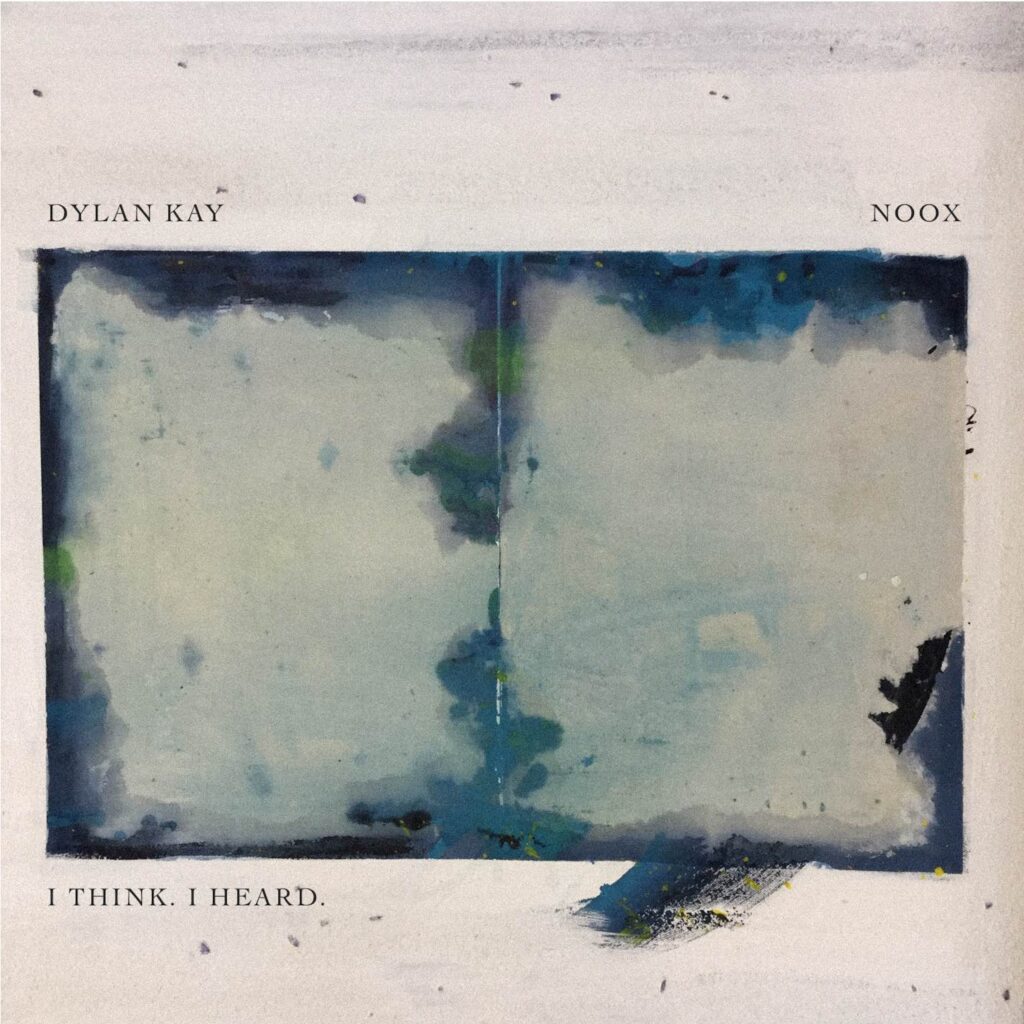
I won’t lie. I found Dylan Kay’s latest release, I Think. I Heard. to be challenging. It’s not a conventional blues, pop or even a jazz album. The tracks are raw and emotional. They are, ummm, how to say this…a bit like a collection of memos or sketches that will eventually form the basis of a bigger, more cohesive and richer project. Except, almost in defiance to that expectation, Kay has decided not to do that. Instead, he’s adopted a unique musical process which he calls “Blind Duets”, inspired by his time under the tutoring of slide guitar legend David Tronzo. In their sessions, Tronzo would begin playing, unannounced and force Kay to respond instantly and intuitively. And it was that stream of consciousness approach that inspired the ‘tunes’ you hear on this album. What’s also remarkable about this work is how ‘lo-fi’ it is. On one or two numbers you can pick out background noises – traffic or a chair creaking? Whilst looking after his terminally ill father in the UK, Kay recorded six spontaneous ‘duets’ using a loop pedal and a borrowed guitar and amp. He recorded everything on his mobile phone. Nothing else. Upon returning to Aotearoa, he made six more duets and an additional four tracks using live loop. The resulting listen is immediate, intimate and, now knowing how it was made, clearly deeply personal.
Minimalism and improvisation have their own place. Done well, it stands out. However, I don’t know if there was really enough here to carry this off. Many of these feel more like misdirected doodles. Perhaps they will appeal to serious musicians. To the lesser trained ear, like mine, you’d struggle to find even the glimpse of a tune or melody. This is not the kind of music to hum in the shower. To be fair, these tracks do sit in the ‘experimental’ category. So, I can sympathise with the intentions behind making these works. For instance, Blind Duet #1, #7 and #9 all exemplify Kay’s intuitive, meandering slide guitar work. It feels like he’s trying to navigate new harmonic territories without a map. But as adventurous as it may be, these still sound like the early days of a song writing session, when the writer is simply trying out chords and riffs before settling on the progressions and final chord structures.
Another series, called Pause 1, Pause 2, Pause 3 and Pause 4, is meant to be short interludes. They’d work better if music before and after was more substantial. Perhaps following a fully formed band piece with contrast or light and shade? Consequently, they were too subtle for me and I didn’t really notice them. Twenty-Seven is possibly the only piece that appears to be more fully formed – albeit still a minimalist effort. There’s some tension building around a recurring motif that loops constantly like a whirlpool of sound and almost incites a dizziness. Almost. I did enjoy the tinny, twangy reverbs and could almost see the possibility of a proper tune. But disappointingly that never eventuated.
The tracks Five-Five, It Is, and Slower all experiment with tempo changes and phrasing. They begin with protracted, slovenly, breathy blues grooves. I was hoping they’d evolve into a more recognisable melody. Instead, they all gently unravel like a fraying rope and you are left with these fragments of scattered audio dissonances. Rhythmically, Faster (Pussycat!), should be the most playful. The title gave me hope of a 50’s lounge bar groove. There were hints of that. But overall, it remains an overtly Avant Garde experimental piece, and little chance of being recognised in mainstream pop culture. When I think of Kay’s father, passing away as he did, I can understand the arc of grief, anger, despair, contemplation, memory, and final resolution that must be quietly bubbling under the surface of this work. Perhaps that explains why this album ends on an optimistic Shuffle instead of a sombre dirge. A quest for hope?
In conclusion, be prepared for different. Don’t file I Think. I Heard. under ‘Easy Listening’. It’s not meant to be café music. It’s more like a literary novel – deeply personal, poetic, abstract, heartfelt, sometimes inaccessible. You will need to have your ears wide open to fully receive this. Musically, Dylan Kay is a master of slide guitar. He embraces this work bravely, without consequence. He owns it. And while it may not be entirely to my taste, I have no doubt that those who love experimental guitar music will truly find value in the time they spend in this, Kay’s own special, private universe.
Related Acts:
About the author Tim Gruar

Tim Gruar – writer, music journalist and photographer Champion of music Aotearoa! New bands, great bands, everyone of them! I write, review and interview and love meeting new musicians and re-uniting with older friends. I’ve been at this for over 30 years. So, hopefully I’ve picked up a thing or two along the way. Worked with www.ambientlight.com, 13th Floor.co.nz, NZ Musician, Rip It Up, Groove Guide, Salient, Access Radio, Radio Active, groovefm.co.nz, groovebookreport.blogspot.com, audioculture.co.nz Website: www.freshthinking.net.nz / Insta @CoffeeBar_Kid / Email [email protected]
More by Tim Gruar
Album Review: Leap!

Festival Review: Great Sounds Great Part 1 @ Cuba Street Precinct, Wellington – 5/09/2026
Festival Review: Great Sounds Great: The Night Before @ Newtown Village, Wellington – 4/09/2026

Gig Review: Mel Parsons @ Opera House, Wellington – 05/09/2026

Album Review: Descending Dreams
EP Review: Extended Paranoia
Album Review: Brain Storm

Album Review: Ceiling Waves
Album Review: Castle Hill
Gig Review: Parrotdog Presents @ Parrotdog, Wellington – 1/08/2026

Album Review: 4EPs

Gig Review: The Veils @ Meow Nui, Wellington – 04/07/2026