
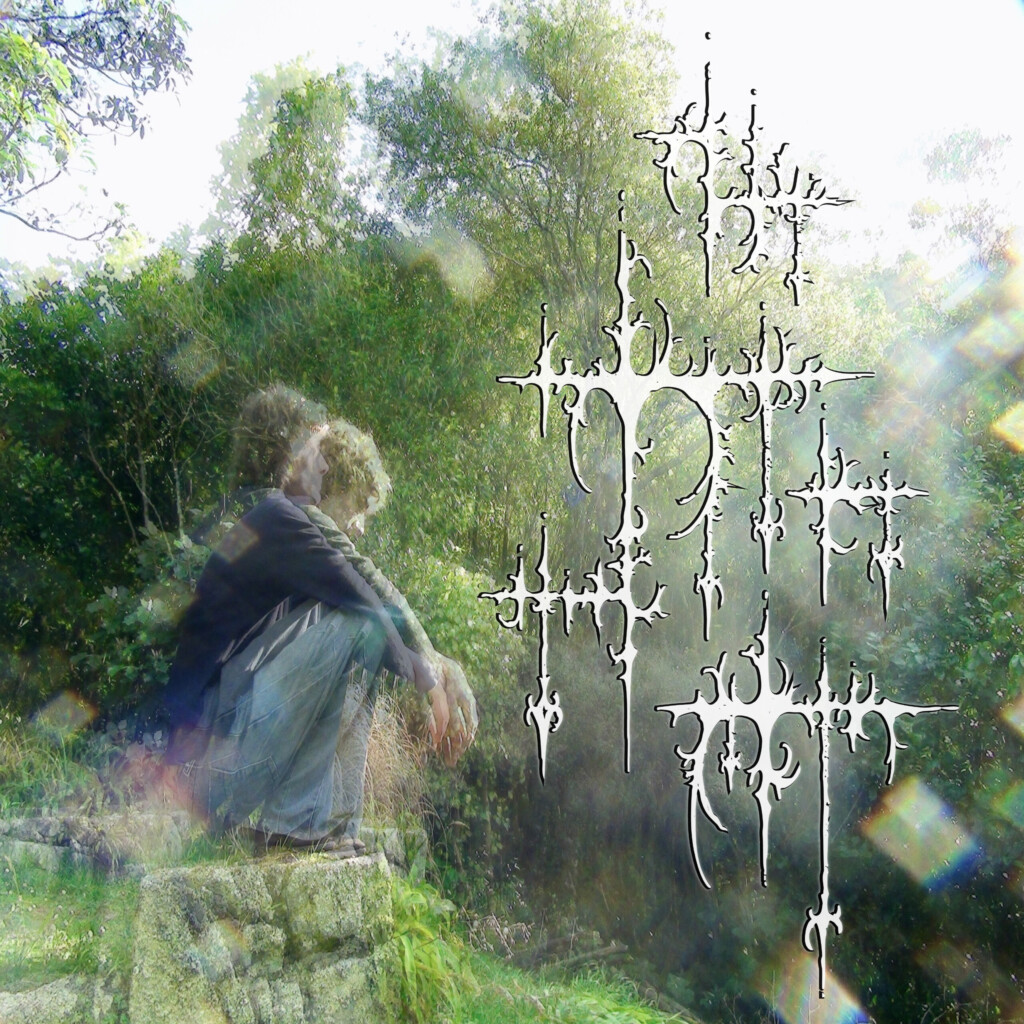
Te-Whanganui-a-Tara-based alternative-rock project Hexxer, the solo project of Samuel Butler, (formerly of Christchurch post-rock band Distance), brings together post-rock elements, indie, folk, experimental songwriting and jazz-influenced guitar on Mezdalorani, a five-song EP that is considerably more atmospheric and unpredictable than its genre labels initially suggest. You might expect Norwegian black metal influences from the sigil type on the blurry cover art and the name of the act, but there is much colour and variety here to be explored and enjoyed. There’s more a nod to jazz than metal, although the abilities to craft pummeling riffs is kept in pocket for this offering. There is something appropriately elusive about Mezdalorani. Across these five songs, Butler demonstrates an instinct for atmosphere and harmonic uncertainty, creating music that can be intimate one moment and surprisingly weighty the next.
The EP opens with Back Again which develops the more introspective side of the project. Butler’s songwriting is patient, allowing instrumental textures and vocal phrasing to carry emotional meaning without forcing everything into an obvious chorus-driven structure. There is a looseness to the performance that works well, giving the song an organic quality while the harmonic language introduces subtle unpredictability. The influence of jazz is particularly useful here, not as overt jazz-rock but through Butler’s willingness to avoid obvious resolutions and allow chords and melodies to retain ambiguity.
A Gentle Hug from Plutonium immediately establishes a world where heaviness doesn’t necessarily mean volume. The song introduces the combination of gritty guitar work, thoughtful harmonic movement and carefully controlled dynamics that becomes central to Mezdalorani. There is an underlying tension between warmth and unease, with the title itself suggesting the EP’s tendency to place contrasting ideas alongside one another.
Resin brings many of these qualities together. Its slow-burning character and extended development make it feel less like a conventional single and more like a gradual accumulation of everything the EP has been exploring (and continues to). The song builds its effect through patience and increasing density rather than rushing towards resolution. At around a slow, deliberate pulse, its movement feels physical and almost architectural: sections gain weight, recede and return, giving the track the kind of expansive emotional trajectory associated with post-rock. This also makes sense as a song that works in a live setting; its gradual development gives a band space to build collective intensity.
Hours, Seconds turns tension building inward. Its measured pace and spacious arrangement create a reflective atmosphere, with repetition becoming almost hypnotic. The title evokes two different experiences of time – the slow passage of hours and the fleeting nature of individual seconds – and the music reflects that contradiction. Butler seems comfortable allowing a musical idea to linger, trusting subtle shifts in harmony, rhythm and texture to maintain momentum.
A sense of uncertainty that permeates the whole EP becomes more pronounced on Chainsaws and False Floors. The title captures something about the music itself: a suggestion of danger beneath an apparently familiar surface. Here, the post-rock influence becomes increasingly apparent. Rather than relying purely on riffs or conventional verse-chorus dynamics, Butler uses changes in density, repetition, space and gradual accumulation to create tension. The track demonstrates a clear understanding that heaviness can be psychological as much as sonic.
Production is an important part of why Mezdalorani works. Butler has written, recorded, mixed and mastered the material himself, and the result retains a balance between clarity and rough-edged atmosphere. The instruments are not presented as an excessively polished wall of sound. Instead, there is enough separation for guitars, rhythm and voice to retain individual character while still allowing the arrangements to swell into something larger. That approach suits the material because these songs depend as much on texture and dynamics as they do on traditional songwriting.
The post-rock influence is therefore fundamental without becoming a genre limitation. Butler’s previous experience in that world can be felt in the EP’s patience, dynamic construction and interest in atmosphere, but Mezdalorani is considerably broader than post-rock. Folk-like intimacy gives the quieter passages their vulnerability; indie songwriting keeps the music grounded; alternative rock supplies the grit; and jazz-influenced harmony introduces an element of unpredictability.
Thematically, the EP’s concerns with war, love and addiction are reflected less through overt musical literalism than through instability and emotional tension. These are songs that often seem to exist in an unresolved state. They circle feelings rather than neatly explaining them, which makes the recurring ideas of return, time, danger and attachment particularly effective.
What ultimately distinguishes Mezdalorani is Butler’s willingness to let these influences coexist. There are moments that sound fragile, moments that sound abrasive, and moments where the two qualities become difficult to separate. The EP doesn’t attempt to demonstrate how many genres Hexxer can incorporate; instead, those genres become different colours within a single musical language.
As a five-song statement, Mezdalorani feels like an artist defining the boundaries of his own project. It is atmospheric without becoming vague, experimental without abandoning songcraft, and heavy without relying on conventional heaviness. Most importantly, it leaves space for the listener to inhabit the music. With Resin closing the EP on an expansive, slowly intensifying note, Hexxer leaves the impression of a project that is still developing – but already possesses a distinctive understanding of how space, tension, harmony and dynamics can turn alternative rock into something considerably more emotionally ambiguous and adventurous.
About the author Nicholas Clark
Aspiring Writer / Musician / Philosopher / Caffeine enthusiast. I like to create, write about and talk about music. Let’s have a coffee sometime and nerd out.
More by Nicholas Clark
Album Review: Patron Saint
Gig Review: Wet Denim @ San Fran, Wellington – 26/09/2026

Album Review: Foothold
Album Review: Plastique
Gig Review: Katelyn Henshall @ Vogelmorn, Wellington – 04/09/2026

Gig Review: Mister Unit @ San Fran, Wellington – 18/08/2026
Book Review: Home Again by Jon Toogood
Album Review: An Olive Tree and a Warm Breeze
Album Review: The Fallen

Album Review: Prime Corner
Album Review: Wanda’s Bicycle
Gig Review: Adult Friends @ Valhalla, Wellington – 19/03/2026