
Album Review: An Olive Tree and a Warm Breeze
Paper Mountains
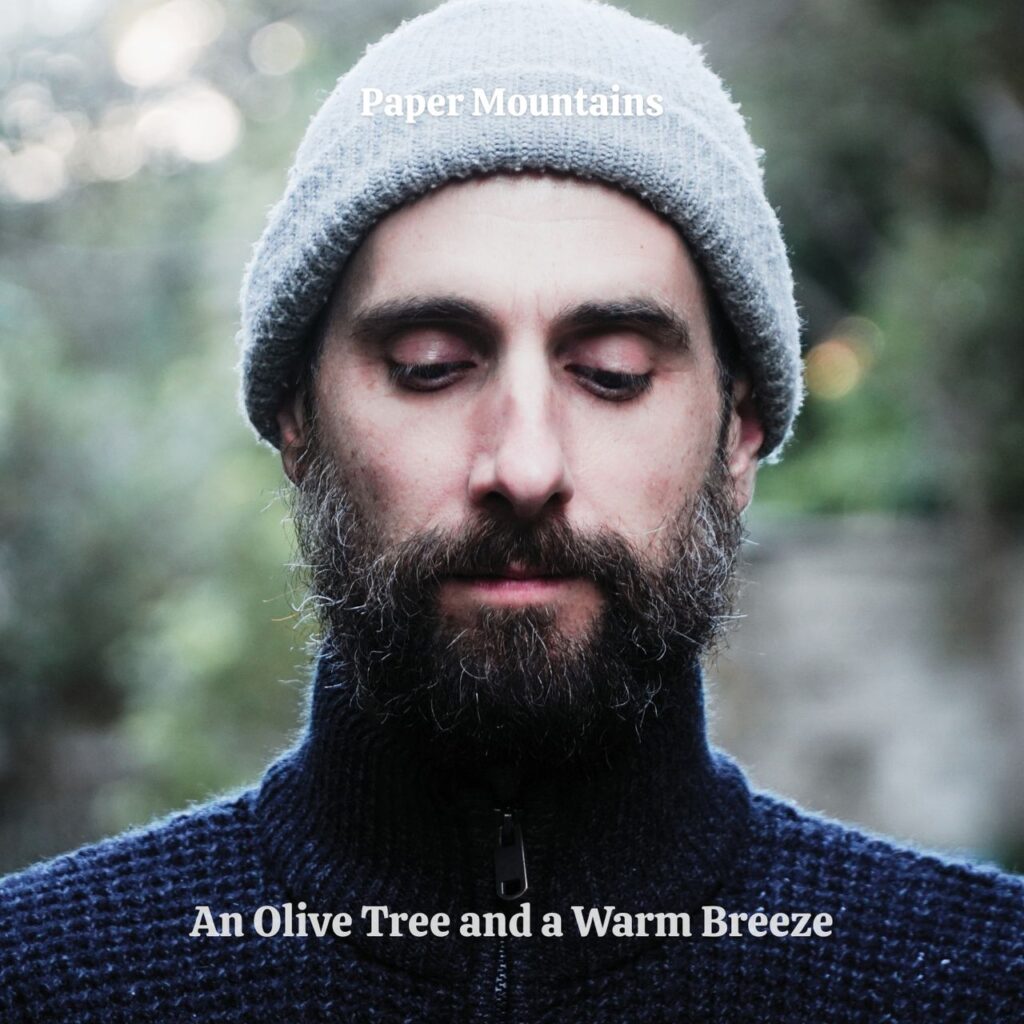
There is something inherently risky about making a record that tells the truth. Love songs are easier to write when they stay in the realm of fantasy, much harder is the work of documenting what happens afterwards and the person you once idealised becomes a complicated human being.
That tension sits at the heart of An Olive Tree and a Warm Breeze, the debut album from Wellington producer and songwriter Toby Lloyd, performing under the name Paper Mountains. Lloyd is perhaps better known behind the glass, through his work at Tiny Triumph Recordings and collaborations with some of Aotearoa’s best-known artists, but here he steps decisively into the spotlight. The result is a record that uses the vocabulary of indie folk, soul and pop to tell a deeply personal story.
The first five songs form a particularly compelling opening arc. Beginning in the intoxicating glow of new love, the sequence gradually introduces distance, longing and, eventually, the first unmistakable signs that the relationship at the centre of the album is beginning to fracture. Rather than treating heartbreak as a single dramatic event, Lloyd allows it to emerge gradually, which makes the emotional journey considerably more convincing.
The album’s title track is an appropriately expansive beginning. It feels like the sound of someone completely overwhelmed by the experience of falling in love: open-hearted, slightly breathless and unwilling to put boundaries around the emotion. Musically, it establishes many of the elements that define Paper Mountains’ sound: acoustic instrumentation, soulful vocals, rhythmic momentum and a production approach that allows the song to grow beyond conventional singer-songwriter territory. There is a pleasing contrast between the earthy intimacy of the folk elements and the broader, more cinematic arrangement. That contrast is important. This isn’t lo-fi confessional folk. Lloyd is a producer, and as one would expect, the mix is balanced and the sonic palette rich and wide. Instruments occupy distinct spaces while the arrangement continually suggests something larger beyond the immediate song. The effect is warm rather than glossy. The opening song also establishes one of the album’s great strengths: Lloyd’s voice doesn’t attempt to disguise the vulnerability of the material. There is a smoky, slightly weathered quality to the vocals that makes the romantic optimism feel lived-in rather than purely sentimental. Lloyd has described the song as one of the first pieces he wrote after falling head over heels in love, and that sense of wonder is audible in the music.
If the opening track captures the rush of falling in love, When I’m With You feels more intimate. The song narrows the focus from the grand declaration of love to the simple experience of being with another person. Its comparatively restrained pace gives the album some breathing room, and that restraint suits the subject. Rather than relying on a huge emotional climax, the song draws its appeal from warmth and closeness. There is a lovely sense of ease here to the performance. The arrangement feels less interested in showing what the production can do and more interested in supporting the relationship at the centre of the song. It is the musical equivalent of the early stage of a relationship when simply being together is enough.
That makes the song an important part of the album’s narrative. An Olive Tree and a Warm Breeze describes the overwhelming experience of new love; When I’m With You looks inward. The former is about falling in love, while the latter is about inhabiting that feeling. At this point in the record, everything still seems possible.
Then comes Come Home Darling, and the emotional temperature changes. It is perhaps the clearest indication so far that this album isn’t going to remain a straightforward celebration of romance. The song is built around absence, the ache of wanting someone who isn’t there, but remarkably, it doesn’t become musically miserable as there are some major shifts that keep the listener wanting the relationship to endure. That is one of its most effective qualities. The driving rhythm, acoustic guitars, horns and vocal harmonies create forward motion, even as the lyric is concerned with separation. The horns in particular give the song a sense of uplift that prevents longing from becoming self-pity. This is soulful folk with genuine pop instincts: immediately accessible, but with enough texture to reward repeated listening. Lloyd’s vocal sits comfortably between intimacy and theatricality, while the harmonies add another emotional voice to the story. The song’s central tension is therefore musical as much as lyrical: the heart wants to move forward while the mind remains fixed on the person who is missing. It is an especially effective piece of sequencing. After two songs concerned largely with the pleasure of togetherness, Come Home Darling introduces the first real crack in the picture. The song was Paper Mountains’ debut single and was presented as a soulful folk track built around uplifting horns, driving rhythms, acoustic guitars, smoky vocals and harmonies, characteristics that remain central to the project’s identity. The lyrics are poetic and revealing: “And all the darkness swallows me whole, But the light from your pictures permeate my soul.”
If Come Home Darling is about missing someone, Shipwrecked feels like being lost inside the relationship itself. The title provides a useful metaphor for the emotional territory of the song. There is a sense of instability here, of having lost the reassuring certainty that characterised the opening tracks. The music correspondingly feels more unsettled and inward-looking. What makes the song work within the album is its refusal to turn this point in the story into melodrama. Lloyd doesn’t need to overstate the collapse; the gradual shift in tone does the work. There is also something satisfying about the way the record continues to use a relatively rich musical palette while the emotional narrative becomes darker. This is not an album where sadness automatically means stripping everything back to an acoustic guitar. Instead, the rich arrangements become part of the storytelling. That approach gives Shipwrecked a cinematic quality. You can hear the world of the relationship becoming less stable while the music continues to move around it. It is the point where the listener begins to understand that this isn’t simply a collection of love songs. These songs are chapters in a relationship.
By the time Every Little Good Thing arrives, the album has travelled a considerable emotional distance from its opening track. On paper, the title sounds optimistic. In context, however, it becomes almost painfully ironic. This is the moment when the relationship has reached the point where good intentions and good memories are no longer enough to prevent things from falling apart. The song’s upbeat musical character makes that tension particularly effective. Once again, Paper Mountains refuses to equate emotional devastation with musical bleakness. Bright instrumentation and forward-moving rhythms sit alongside lyrics concerned with doubt and fracture. That juxtaposition gives the song its emotional sting.
Lloyd has described Every Little Good Thing as the album’s emotional midpoint and the moment where the story turns from love towards fracture. It was written during a period of strain in his own relationship and reflects on the realisation that love, despite everything, isn’t always sufficient to solve the problems between two people. The production is also among the most revealing aspects of the track. The optimistic horns and driving guitars suggest celebration, while the vocal performance carries the weight of someone beginning to question whether the relationship can survive. The contradiction is precisely what makes it unique and powerful.
And this is where the first five songs reveal their larger purpose. They aren’t simply five individually strong folk songs. Together they form a progression: infatuation, intimacy, separation, instability, fracture. That progression gives An Olive Tree and a Warm Breeze its strongest quality: narrative momentum.
Taken together, these first five tracks suggest an album that understands the difference between telling a story and simply writing songs about the same subject. Each track changes the emotional circumstances of the one before it. The listener isn’t merely being told that a relationship is evolving; the music itself evolves with it.
Track six, The Waves, is a tune that sets an ethereal, tender tone right out of the gate. Floating over delicate acoustic fingerpicking, the dual vocal harmonies pull you into a story of feeling untethered and navigating heartbreak. The female vocals over Lloyd’s lends the tune an extra emotional element. As the song progresses, the introduction of a soaring violin injects a swelling, bittersweet warmth. When the vocals declare “We were lost and found, we were never coming down,” it lands with an uplifting, cathartic energy that anchors the entire piece.
Shifting into heavier emotional territory, All At Once strips back the pace to spotlight raw vulnerability. Centred around a slow-burning acoustic progression, the track explores the weight of regret and letting someone down. The vocal delivery carries a raspy, aching honesty, particularly on lines like “I will blame myself for eternity”, while subtle lead fills and a patient build give the song a lingering, haunting resonance.
That earnestness carries straight into I Still Want To Live, a track built on sweeping sentiment and unconditional devotion. Driven by a bright acoustic rhythm and lush violin flourishes, the track swings between deep, confessional verses and an anthemic, desperate hook (“For you, my queen, I’d swim the seven seas”). It’s a classic, starry-eyed folk ballad that wears its heart proudly on its sleeve. The lyrics are a little quiet, almost shyly delivered.
I Need My Girl brings a welcome sense of movement and optimism to the mix. Kicking off with a gentle, rolling strum pattern, it gradually builds into a hopeful anthem about trust, second chances, and letting love play out naturally. The interplay between the driving acoustic guitar, soaring fiddle, and layered harmonies gives the track a buoyant momentum, creating one of the most uplifting moments in the set. This appears to be the part of the story where the protagonist decides to accept or change his fate.
Epilogue offers a hopeful, country lilt that, despite being delivered in a voice that alternates between a whisper-like, mournful sigh and a fragile tenor, indicates there is still hope. An important lyric here that gives a clue to how things are going is: “We thought the love had broken, but we couldn’t have been more wrong.” The lyrics also mention clouds, connecting to the album closer…
Rounding out the album is Lost In The Clouds, an infectious, up-tempo folk tune that injects a burst of pure, rhythmic energy. Bright guitar strums and a dancing violin lead set a lively backdrop for a story about falling hard and fast. Lines like “The only song I ever fell for was the one that comes so gently from your lips” carry a playful, romantic charm, closing out the showcase on a vibrant, nearly light-hearted high. To the listener there seems to be closure, but whether it hints at accepting the relationship as it was or whether it is saved is unclear, perhaps deliberately so.
Across this collection of tracks, the album serves up a masterclass in organic, emotionally charged indie-folk that feels as intimate as a late-night living room session. Throughout these tracks, Paper Mountains strikes a fine balance between melancholic reflection and radiant hope. With sweeping string arrangements, rich harmonies, and songwriting that isn’t afraid to be vulnerable, Lloyd has crafted a sound that feels both deeply personal and universally relatable. Lloyd’s background as a producer is evident throughout. The arrangements are detailed without feeling unnecessarily busy, and the combination of folk songwriting with soul, pop and cinematic production gives Paper Mountains a distinctive sonic identity. Acoustic guitars provide the foundation, while horns, harmonies, strings and pedal steel broaden the sonic palette. The result sits comfortably within the contemporary Aotearoa indie-folk landscape while retaining a classic soulfulness.
Most importantly, the record’s ambition never overwhelms its vulnerability. At its centre is simply a person trying to understand what happened to a relationship that mattered enormously. On the evidence of these first five songs, Paper Mountains isn’t interested in easy answers. It is interested in telling the whole story. If you’re a fan of honest, soul-baring kiwi folk, this is a journey well worth taking.
Related Acts:
About the author Nicholas Clark

Aspiring Writer / Musician / Philosopher / Caffeine enthusiast. I like to create, write about and talk about music. Let’s have a coffee sometime and nerd out.
More by Nicholas Clark
Gig Review: Wet Denim @ San Fran, Wellington – 26/09/2026

Album Review: Foothold

Album Review: Plastique

Gig Review: Katelyn Henshall @ Vogelmorn, Wellington – 04/09/2026

Gig Review: Mister Unit @ San Fran, Wellington – 18/08/2026

Book Review: Home Again by Jon Toogood
Album Review: The Fallen

Album Review: Prime Corner

Album Review: Wanda’s Bicycle

Gig Review: Adult Friends @ Valhalla, Wellington – 19/03/2026

Gig Review: Earth Tongue @ San Fran, Wellington – 21/02/2026

Album Review: Soothsayer