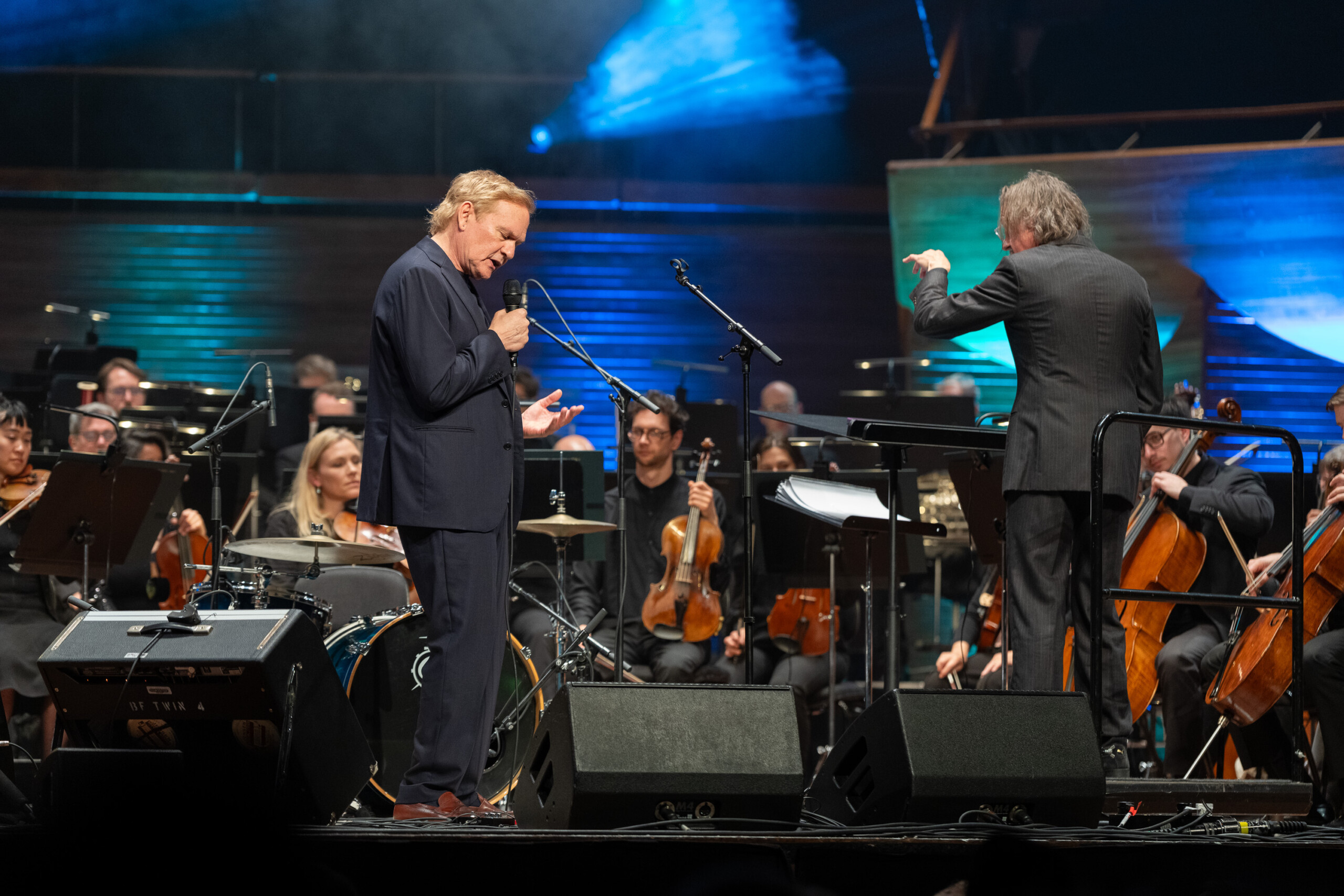
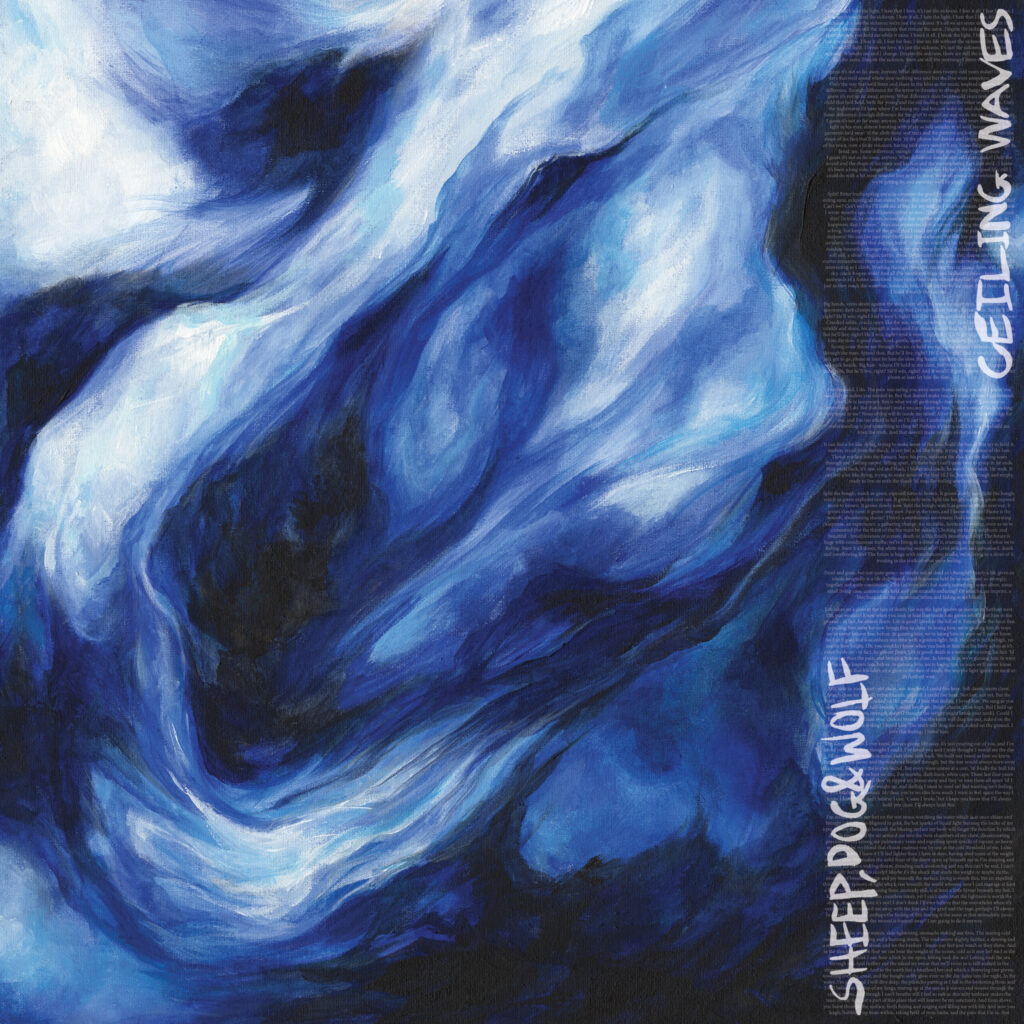
As we roll into Matariki here in Aotearoa – that moment when we look up, remember those who’ve travelled on in the sky waka, and quietly open the door to a new chapter – it feels fitting to sit with an album like Ceiling Waves. Sheep, Dog & Wolf – Daniel McBride, the Auckland kid turned London avant‑pop shapeshifter – has always made music that feels like stepping into someone’s private universe.
And not a tidy one, either. More like a bedroom studio where every instrument is within reach, every feeling is fair game, and every idea is allowed to collide with the next. McBride’s background is a bit of a beautiful mess: classically trained saxophonist, self‑taught producer, arranger, multi‑instrumentalist, tinkerer, perfectionist. What they make is more art than pop. But everything is perfectly formed, yet still indefinable. These are sonic sculptures in their purest form. And I’m not going to lie here. It will take a few listens to truly find the right wavelengths. But don’t worry, it’ll be worth it.
I’ll probably fail dismally at summing up their ‘sound’ cohesively. But here goes. What I’m hearing folds together math‑rock, emo‑folk, electronica glitchyness, mutant R&B, and even a bit of Reich-styled post‑classical minimalism. It’s all stitched together with a voice that’s been compared to Anohni, Moses Sumney or Sufjan Stevens. At times the vocals are almost alarming. Others, more tender, then maybe abrasive. It’s all over the place. And honestly, fair enough. It’s strange in the best way, and strangely beautiful. From the beginning, McBride has been allergic to genre border patrols.
No neat boxes, no tidy lanes. Just a restless imagination pushing through complex harmonies, uncanny rhythms and a kind of emotional honesty that feels almost too close sometimes. Even when the music shapeshifts mid‑song, it stays unmistakably human – a reminder that imagination still matters, especially now, when AI hovers over creative work like a weird, flickering shadow.
The story behind Sheep, Dog & Wolf has always been one of self‑determination. McBride started releasing music at seventeen, recording the debut EP Ablutophobia between high‑school classes. That early work caught the attention of The Guardian and Vogue Italia, and the 2013 debut album Egospect – ornate, fluid, euphoric – won the Critics’ Choice Prize at the New Zealand Music Awards and landed on the 2014 Taite Prize shortlist. Two‑Minds arrived in 2021, a dizzying blend of orchestral arrangements, off‑kilter beats and mutant R&B that captured a young life in disarray. It earned another Taite shortlist spot and cemented McBride as one of the most inventive musicians to come out of Aotearoa.
The acclaim opened doors: touring Europe with CocoRosie and Múm, playing New Zealand shows with Angus & Julia Stone, headlining Newtown Festival, and building a parallel career in music software engineering – designing stem‑separation algorithms for Serato and production tools for Akai’s MPCs. But life doesn’t always care about momentum.
Family illness pulled McBride back from the stage, and the years after Two‑Minds were heavy: a father lost after a long battle with cancer, a friend taken by depression, a relationship buckling under grief. And out of that wreckage comes Ceiling Waves, dropping 7 August 2026 – a 13‑track album that doesn’t tiptoe around sorrow. It walks straight into it with a torch held high.
The opener, It Breaks Me And I Change, erupts immediately: thunderous drums, scorched guitars, vocals torn at the seams. Imagine this as a beautiful aural car crash. Clearly, it’s an announcement – this album isn’t here to politely whisper about grief while dealing with a loved one slowly decaying from cancer. This is how it feels when everything inside you is cracking open. “I hate it all / I hate the light / I hate that I Love / It’s just the sickness / I fear it all / I fear his fear I fear my life without / The sickness”. This is a truly heartbreaking moment. Coming to terms with death after such a long, protracted period – you can become dependent on ‘the sickness’, it defined your purpose. And, so, after it all – now what?
Lead single Guessing, released on May 1st, was born in the shadow of McBride’s father’s terminal diagnosis. It’s that moment when the doctor gives the life expectancy estimation: “I guess it’s not so far away / Anyway / What difference / Does twenty-odd years make?” Delicate guitar work, hovering brushed snare drum effects, a racing kick-bass, then opening up to swelling synths and a distorted sax. This is how music describes that moment of utter confusion, despair, fear and surprise when you hear and digest terminal news of this magnitude. Devastation becomes luminous.
McBride has said grief carried not just sadness but rage against the rational: “Some difference / Enough difference / For the grief to engulf me / And wash up gasping for air”. The song’s furious, unruly, and also magnificent.
Epiphanies I & II, which popped out in mid-September ’25, pushes further into strange, bright territory. And a surprising directional swerve. This immediately made me think of Sufjan Stevens’ Carrie & Lowell (which was obviously, also about death and grief). Perhaps it’s the vocals, I dunno. It’s also different from that album, with a loose jazz groove that appears to bend time rather than keeping; delicate ‘Jose Feliciano’ guitar pickings, swollen bass chords, a distant choir which comes in towards the ending (sings “Heat / Heat / Heat”). And then there’s that beautiful, manically distorted recorder solo. As the song suggests, it’s about hope and moving on positively “But don’t trust the Darkness! / We can see past this! / Can’t we? / Can’t we?”
The video – filmed, edited and animated by McBride – turns inner turmoil into Y2K television chaos: alarmist news, goofy science shows, pixelated Zelda‑style quests. It’s very trippy. But also, it’s positive, too. The video turns the newsroom doom scroll on its head. ‘Reporters’ (and a weatherman), searching for the positive drop in to view. And the game screen keeps asking for participation confirmation supporting the irony in the optimism: “…to love / To where I’ve been / To Happiness that I believe.”
Then comes Big Hands, the final single, just released. It leans into mutant electronica and minimalism: these claustrophobic beats, affected woodwinds, heartbeat rhythms, a malaise of saxophones and a nagging constant, repeating synth note like the climatic music in the critical scene of a medical drama. The percussion sounds like shuffling feet in the sand. McBride pleads for time to slow down as their father slips away. “But if he’s got to go / Please / At least / Let him die slow.”
Across the album, grief becomes architecture. Sensemaking I and Sensemaking II balance spacious piano and otherworldly woodwinds with confessional vocals that swing between acceptance and bewilderment. The first (Part I) has a hint of Japanese flute, similar to the work of Ryuichi Sakamoto. The second (Part II) brings in a warming, comforting harp and strings. Both evoke delicious moments of calm and contemplation amid the swirling distraught. Opportunity to slow the racing thoughts and process it all. Part II, sums it up perfectly: It can feel a lot like dying / Trying to make sense of the loss … To live on with the shock / ‘till next the feeling sears / Through me.”
Split The Bough is the winding centrepiece bringing in deep notes of 60’s brass, pizzicato violins, ecstatic peaks, near‑hysterical valleys wrapped together in a blanket of Morricone‑like thematic. Even a hint of dry Western steel‑string guitars, a wandering lyrical saxophone and that high, high counter-tenor vocal. Just ‘Wow’!!!
Interstitial I erupts in a ball of fuzz. Distorted vocals overlap like receptions at an interstellar listening station. These are very close encounters (pardon the pun). Crushed recorders add further layers of confusion. Interstitial II later brings back the endless in voice chattering.
Lifeglow strips everything back to folk‑like openness, whilst We Sang As You Slept, released in early 2026 pairs up dreamy fingerpicking, graceful woodwinds and glockenspiel with more of McBride’s falsetto to provide an account of their final moments with their father. It’s shuddering. Yet the upbeat tempo allows the boat to drift out to sea. “Life / Takes on a glow / In the face of death.” “In losing him / We are gaining him / In ways we’ve never known / him before.” Grief shifting from torment to a painful reminder of love.
As Best We Knew turns toward a relationship undone by grief, while Interstitial II and Swimming Song close the record in a nine‑minute sweep of harpsichord cascades, clarinet flutters, interlocking piano lines and a voice moving from baritone to falsetto toward something like resilience.
What makes Ceiling Waves remarkable is how many shades of grief it holds. Pain, joy, fear, hope, rage, relief – all braided through frenetic rhythms, dense harmonies, deft instrumentalism and moments of heart‑wrenching delicacy. It’s intricate, emotional, inventive and honest. It doesn’t just describe loss; it lets you feel it, too as you journey alongside.
The title takes its name from the ‘waves’ of overwhelming pain and fatigue you get from living long term with a sick loved one. The ‘ceiling’ represents confinement, pressure, claustrophobia and containment. Everything on this album rides those currents explicitly. It’s not an easy listen. But it’s truthful, and remarkable, nonetheless.
And as Matariki rises – as we remember those who’ve travelled on and open ourselves to new beginnings – Ceiling Waves feels like exactly the kind of album we need. Refreshing, remarkable, utterly its own sound. Born from long suffering and the passing of McBride’s father, yes, definitely. But it also carries the wider weight of acknowledgement, release and, ultimately, healing. This is not a dour requiem. It is grief with its wires exposed – flickering, sparking, alive.
Related Acts:
About the author Tim Gruar

Tim Gruar – writer, music journalist and photographer Champion of music Aotearoa! New bands, great bands, everyone of them! I write, review and interview and love meeting new musicians and re-uniting with older friends. I’ve been at this for over 30 years. So, hopefully I’ve picked up a thing or two along the way. Worked with www.ambientlight.com, 13th Floor.co.nz, NZ Musician, Rip It Up, Groove Guide, Salient, Access Radio, Radio Active, groovefm.co.nz, groovebookreport.blogspot.com, audioculture.co.nz Website: www.freshthinking.net.nz / Insta @CoffeeBar_Kid / Email [email protected]
More by Tim Gruar
Album Review: Leap!

Festival Review: Great Sounds Great Part 1 @ Cuba Street Precinct, Wellington – 5/09/2026
Festival Review: Great Sounds Great: The Night Before @ Newtown Village, Wellington – 4/09/2026
Gig Review: Mel Parsons @ Opera House, Wellington – 05/09/2026
Album Review: Descending Dreams
EP Review: Extended Paranoia
Album Review: Brain Storm
Album Review: Castle Hill
Gig Review: Parrotdog Presents @ Parrotdog, Wellington – 1/08/2026

Album Review: 4EPs
Gig Review: The Veils @ Meow Nui, Wellington – 04/07/2026
Gig Review: Shayne P. Carter @ Lōemis Festival, Michael Fowler Centre, Wellington – 19/06/2026